
The Woman Who Ran Through History: Kathrine Switzer

The Race That Changed Everything
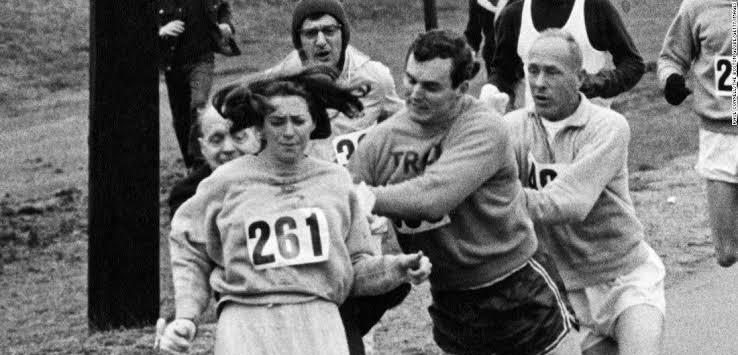
April 19, 1967. Hopkinton, Massachusetts. The starting line of the Boston Marathon. Among the runners was a 20-year-old woman registered as “K.V. Switzer.” She had not hidden her gender – the organizers simply assumed K.V. was a man.
Two miles into the race, a press truck passed and a photographer recognized her. The news spread to the finish line. Race official Jock Semple, furious, ran onto the course and grabbed her from behind, screaming “Get the hell out of my race!” He tried to rip her bib number off her chest.
Switzer’s boyfriend Tom Miller, a fellow runner, ran interference – shoving Semple off. Her coach Arnie Briggs blocked him from the other side. Switzer kept running. The photos of the attack went around the world.
She finished in 4 hours and 20 minutes – not fast, but it did not matter. She had run the Boston Marathon legally.
A Lifetime of Advocacy
Switzer did not let the 1967 controversy define her – it ignited her. In 1974, she won the New York City Marathon in 3:07:29. (The following year, she ran a personal best of 2:51:37 at the Boston Marathon, finishing second.) She used every platform to advocate for women’s running.
In the 1970s, women were still barred from most long-distance running events. The medical establishment claimed that running long distances would harm women’s reproductive health. Switzer fought that lie with data, persistence, and her own example.
Creating the Olympic Marathon
Switzer founded the Avon International Running Circuit – a global series of women’s races. The circuit grew to include races in dozens of countries, proving that demand for women’s distance running was massive. She lobbied the International Olympic Committee relentlessly.
In 1984, the women’s marathon was added to the Olympic program for the first time. Switzer ran it. Twenty-four years after she was attacked on the course, the event she had fought for finally existed.
Bib 261: Return to Boston
In 2017, exactly 50 years after her first Boston Marathon, Switzer returned to the starting line in Hopkinton. She was 70 years old. She wore the same bib number – 261 – that Jock Semple had tried to rip off her chest half a century earlier.
She wore the same number. She crossed the same finish line. And she did it legally, proudly, and with the knowledge that the marathon – now run by hundreds of thousands of women each year – would never belong to anyone else again.

References
- Switzer, Kathrine. Marathon Woman: Running the Race to Revolutionize Women’s Sports, 2007
- Boston Athletic Association – Historical Records
- The New York Times – “The Day Kathrine Switzer Ran the Boston Marathon” (1967)
- Olympics.com – Women’s Marathon Added to Olympic Program in 1984
- ESPN – “Kathrine Switzer: 50 Years Later, Still Running” (2017)