The Flying Scotsman Who Ran for Glory

July 8, 2026
6 min read
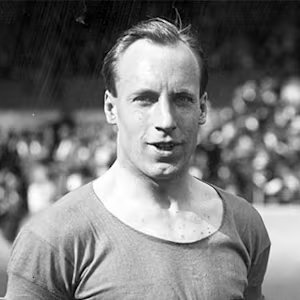
Eric Henry Liddell (李爱锐; January 16, 1902 — February 21, 1945) was a Scottish track athlete and Christian missionary who won the 400m gold medal at the 1924 Paris Olympics in world record time after refusing to run the 100m on a Sunday. He later returned to China as a missionary and died in a Japanese internment camp during World War II, his story later immortalized in the Oscar-winning film “Chariots of Fire.”
The Boy from Tianjin
Eric Henry Liddell was born on January 16, 1902 in Tianjin, China, to Scottish parents who had left their homeland to serve as missionaries. At age six, Eric and his older brother Rob were sent to England for schooling, settling in London with relatives before attending Eltham College, a boarding school for the sons of missionaries. It was here that young Liddell’s extraordinary athletic gifts began to bloom. He excelled in rugby, cricket, and especially running. His explosive speed and unorthodox running style — head thrown back, knees high, arms pumping wide — became his trademark. By the time he enrolled at the University of Edinburgh to study science, Liddell was already a star. He earned a coveted blue in athletics and quickly established himself as Britain’s fastest sprinter, tearing up tracks across Scotland and England with his raw, joyful power.“God Made Me Fast” — The Paris Stand
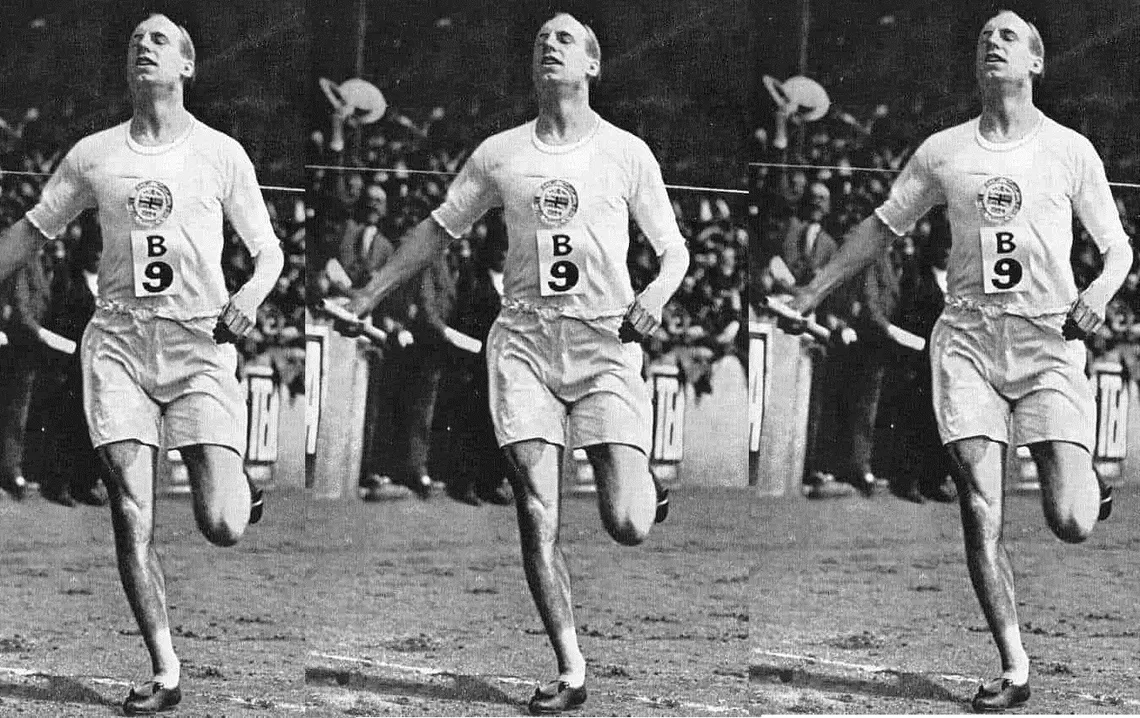
The 1924 Paris Olympics arrived with Liddell widely favored to win gold in the 100 meters. The sprinter they called “The Flying Scotsman” was the fastest man in Britain, and the world expected him to prove it on the biggest stage. Then came the schedule. The 100-meter heats were set for Sunday, July 6. For Liddell, the choice was absolute. His Christian faith — the same faith that had driven his parents to China, the same faith that shaped every corner of his life — forbade him from competing on the Lord’s Day. He withdrew from the 100 meters, stunning the Olympic world. Newspapers called it foolish. Officials pleaded. The Prince of Wales reportedly asked him to reconsider. Liddell would not budge. This was not stubbornness. It was conviction. In his pocket that day, he carried a slip of paper given to him by a teammate. On it was written a line from Scripture: “Those who honor Me, I will honor.” He would not run the 100. But he still had a race to win. Liddell shifted focus to the 400 meters — an event he had never trained for seriously. The distance was nearly four times longer than his specialty, demanding a very different kind of endurance and pacing strategy. Detractors whispered that it was a fool’s errand. On July 11, 1924, Liddell lined up for the 400-meter final in the pouring rain. He was drawn in the outside lane — Lane 6 — meaning he would have no visual reference of his competitors for the entire race. He would have to run blind. What followed was the race of his life. Liddell exploded out of the blocks and ran the first 200 meters at an impossibly fast pace — so fast that experts predicted he would collapse before the finish. But he didn’t. With his head tilted back and his arms flailing in that unmistakable style, he crossed the line in 47.6 seconds, shattering the existing world record and winning the gold medal. He also took bronze in the 200 meters, but it was the 400 that would echo through history.A Missionary’s Return to China
The Olympic glory opened doors to fame, fortune, and a comfortable life in Britain. Liddell walked through none of them. Instead, in 1925, he returned to Tianjin, the city of his birth, to serve as a missionary teacher — exactly as he had planned before the Olympics ever began. He taught science and sports at a missionary school, coaching boys in rugby and athletics with the same discipline and joy he had shown on the track. In 1932, he was ordained as a minister. Two years later, he married Florence Mackenzie, a Canadian missionary nurse. They had three daughters together. Life in China was far from the roar of Olympic stadiums. Liddell worked in obscurity, teaching, preaching, and serving a people he had always considered his own. When asked about his Olympic fame, he famously replied: “It’s been a wonderful experience to have been in the Olympics and to have won, but the work I am doing now is of much greater value.”War and Interment
The Japanese invasion of China during World War II shattered Liddell’s quiet mission. In 1941, as the situation grew increasingly dangerous, Florence and their daughters were evacuated to Canada. Liddell stayed behind — torn between his duty to his family and his commitment to the mission. “It is a thousand pities,” he wrote in a letter to Florence, “that we had to part, but I feel it is the only thing.” In 1943, Liddell was arrested by Japanese forces and sent to the Weihsien internment camp in Shandong Province. Conditions were brutal: overcrowding, malnutrition, disease, and ever-present uncertainty about the future. Yet even in captivity, Liddell’s spirit refused to break. He organized sports and games for the children in the camp, taught classes, and became a source of hope and steadiness for hundreds of prisoners. A fellow internee later recalled: “He was the finest Christian gentleman I have ever met… He was always thinking of others, never of himself.”The Final Race
In early 1945, Liddell began suffering from severe headaches. The camp’s limited medical resources could offer little help. He was diagnosed with a brain tumor — in a place with no surgeons, no proper equipment, no hope of treatment. On February 21, 1945, five months before the camp was liberated by Allied forces, Eric Liddell died at the age of 43. He never saw his wife or daughters again. He never saw freedom. But the prisoners he had served and lifted in the camp buried him with honor, marking his grave with a simple wooden cross. Decades later, his story was brought to the world in the Oscar-winning film “Chariots of Fire” (1981) , which immortalized his 1924 Olympic stand and his unwavering faith. The film won four Academy Awards, including Best Picture, and its haunting theme became one of the most recognizable scores in cinema history. In 1991, a memorial stone was unveiled at the Weihsien camp site. In 2008, a statue of Liddell was erected at the Weihaiwei Road campus of Tianjin’s 19th Middle School. The Eric Liddell Centre in Edinburgh continues to honor his legacy of service and community. He ran the race set before him — not for medals, not for fame, but for a purpose far greater than himself.