
The $225 Million Profit That Saved the Olympic Games

The 1984 Los Angeles Olympics were the first Games in history to turn a profit — $225 million — and in doing so, they saved the Olympic movement from financial collapse. Organized by Peter Ueberroth without a single dollar of government funding, the LA Games proved that the Olympics could be a business.
Before LA84: The Ghost of Montreal’s Debt
When Los Angeles won the bid to host the 1984 Games, the Olympic movement was in critical condition. Montreal 1976 had been a financial disaster of historic proportions: the city spent an estimated $1.5 billion (mostly on the Olympic Stadium alone) and left taxpayers saddled with a debt that took three decades to fully repay. Denver had rejected the 1976 Winter Games after voters refused to fund them. Moscow 1980 cost the Soviet Union an estimated $9 billion, though official numbers were never published.
By 1978, the only two cities to officially bid for 1984 were Los Angeles and Tehran — the Iranian Revolution and subsequent instability eliminated Tehran’s bid. The Olympics had become a financial poison pill. No city wanted them. No government would fund them.
California taxpayers, remembering Montreal’s disaster, passed a state law explicitly forbidding the use of public funds for the Games. The LA bid, led by a then-unknown travel executive named Peter Ueberroth, had to be structured differently: it would be a private, for-profit enterprise, not a public spectacle funded by government checks.
It was either reinvent the Games — or watch them die.
Peter Ueberroth: The Man Who Turned the Olympics Into a Business
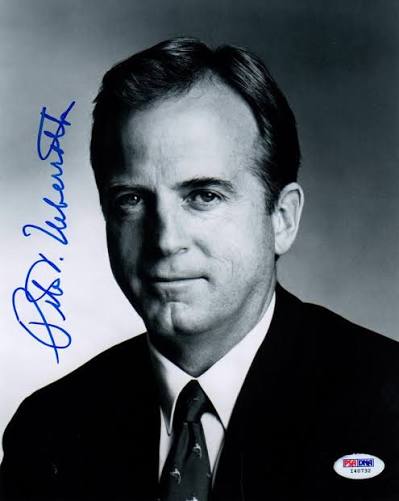
Peter Ueberroth was not a sports executive. He was a travel industry entrepreneur who had built a successful business before accepting the role of president of the Los Angeles Olympic Organizing Committee (LAOOC). What he lacked in Olympic experience, he made up for in business discipline.
Ueberroth approached the Games like a startup. He negotiated the largest television rights deal in Olympic history — $225 million from ABC — before a single athlete had qualified. He signed exclusive sponsorship agreements with major corporations, including Coca-Cola, McDonald’s, and Anheuser-Busch, creating the model for what would become the TOP sponsorship program. He charged companies millions for the right to call themselves “Official Sponsors” — a concept that barely existed before 1984.
He also cut costs ruthlessly. Existing venues would be used instead of building new ones. No Olympic Village was constructed — athletes were housed in dormitories at the University of Southern California and UCLA. The opening and closing ceremonies would be produced by a private company, not a government committee.
Time magazine named Ueberroth its Man of the Year in 1984, a testament to the scale of his achievement.
The Soviet Boycott: A Blessing in Disguise
The Soviet Union announced a boycott of the 1984 Los Angeles Games in May 1984, citing security concerns and accusing the United States of anti-Soviet sentiment. It was a direct retaliation for the US-led boycott of the 1980 Moscow Olympics. In total, 14 Eastern Bloc countries withdrew.
The boycott could have crippled the Games. Instead, it had an unexpected effect: it reduced costs. Fewer nations meant fewer athletes to house, fewer venues to operate, fewer security demands. Meanwhile, the television contracts and sponsorship deals were already signed.
Ueberroth later acknowledged that the boycott, while politically damaging, may have helped the bottom line. Without the Soviet bloc, the Games became leaner, cheaper, and — paradoxically — more profitable.
The Sponsorship Revolution
Before LA84, Olympic sponsorship was a chaotic patchwork of small deals. Local committees sold rights piecemeal. There was no unified global program.
Ueberroth changed that. He created a tiered sponsorship system: a small number of “Official Sponsors” paid millions for exclusive rights to use the Olympic rings in their advertising. In return, they received global marketing access and category exclusivity. Coca-Cola paid approximately $15 million. McDonald’s ran a “When the US Wins, You Win” promotion. Anheuser-Busch paid for the right to be the official beer.
The sponsorship revenue was transformative. It funded the Games without taxpayer money and established the business model that the IOC still uses today. The TOP (The Olympic Partners) program, launched in 1985, was a direct descendant of Ueberroth’s sponsorship architecture.
The Torch Relay: SOLD by the Kilometer
For the first time in Olympic history, the torch relay was privatized. AT&T (and later, individuals) could “purchase” a kilometer of the relay for $3,000. The money went to local youth sports organizations. The runner — often a community member, a teacher, a local hero — carried the flame through their hometown.
The program was controversial. Critics argued that the flame should not be a commercial product. But it raised millions of dollars and allowed tens of thousands of Americans to participate in the Olympic experience. The relay became a populist phenomenon, crossing 33 states and covering over 15,000 kilometers.
The practice of monetizing the torch relay has since been used by other host nations — and has become a standard part of the Olympic fundraising playbook.
The Games: Jetpacks, Carl Lewis, and Firsts
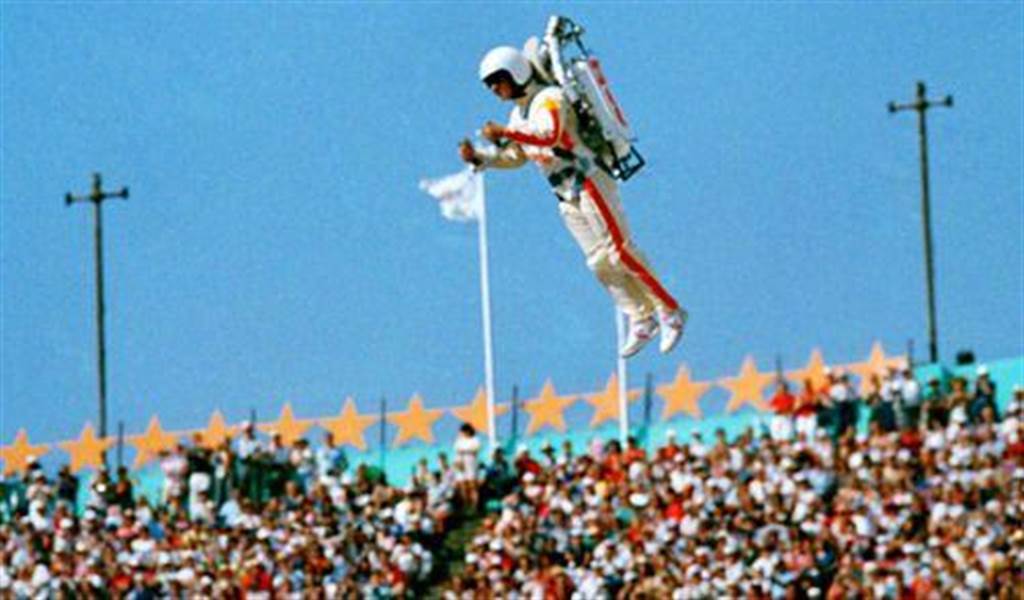
The 1984 Los Angeles opening ceremony was a milestone in Olympic entertainment. It featured a jetpack — a rocket-powered backpack that allowed a performer to fly into the stadium, land on the field, and wave to the crowd. The image became one of the defining moments of the Games.
The athletic performances were equally memorable. Carl Lewis won four gold medals — 100 meters, 200 meters, long jump, and 4×100 meter relay — equaling Jesse Owens’s 1936 feat. Joan Benoit won the first women’s Olympic marathon in history. Mary Decker and Zola Budd collided in a dramatic 3,000-meter race that became one of the most replayed moments in Olympic television history.
More than 33,000 volunteers staffed the 1984 Games, establishing the volunteer model that all modern Olympics now rely on.
The Legacy: $225 Million That Changed Everything
When the closing ceremony ended and the final accounting was done, the 1984 Los Angeles Olympics had generated a surplus of $225 million. The money was distributed: 40% — roughly $93 million — went to fund youth sports programs across Southern California through the Amateur Athletic Foundation (later renamed the LA84 Foundation), while the remaining 60% went to the US Olympic Committee and national governing bodies.
More broadly, LA 1984 permanently changed how the Olympics are hosted and funded:
– Corporate sponsorship: The tiered sponsorship model became the standard for all future Games.
– TV rights: Ueberroth’s aggressive negotiation of TV rights transformed broadcasting into the primary revenue source for the IOC.
– Existing venues: LA proved that using existing infrastructure was cheaper and effective. The 1984 Games used the LA Memorial Coliseum (1923), the Rose Bowl (1922), and the Forum (1967). Only three new facilities were built — a swimming pool, a cycling velodrome, and a shooting range — all designed for post-Games community use.
– Volunteer workforce: More than 33,000 volunteers staffed the 1984 Games, establishing the volunteer model that all modern Olympics now rely on.
– Privatization: The LA Games proved that the Olympics could be run without government funding.
The 1984 Los Angeles Olympics saved the Olympic movement. Before LA, the Games were a financial burden that only governments could afford. After LA, they became a business opportunity that corporations wanted to join. The jetpack, the torch relay, Carl Lewis’s four golds — these were the spectacle. But the real story was the $225 million surplus that proved the Olympics could pay for themselves.
References
1. Ueberroth, Peter. Made in America: His Own Story. William Morrow, 1985.
2. Los Angeles Olympic Organizing Committee. Official Report of the Games of the XXIII Olympiad, Los Angeles, 1984. LAOOC, 1985.
3. Billings, Andrew C. The Olympic Games: A Critical Approach. Routledge, 2019.
4. LA84 Foundation. “History and Impact of the 1984 Los Angeles Olympic Games.” la84.org.
5. Time Magazine. “Peter Ueberroth: Man of the Year 1984.” Time Inc., January 7, 1985.