
The .5 Billion Olympic Stadium That Took 30 Years to Pay Off

The 1976 Montreal Olympics left the city with a .5 billion debt that took 30 years to repay — the most financially disastrous Games in modern history. Cost overruns, corruption, and a famously dysfunctional stadium nicknamed “The Big Owe” turned a celebration of sport into a cautionary tale for every host city that followed.
Montreal’s Olympic Gamble
When Montreal was awarded the 1976 Summer Olympics in 1970, the city’s flamboyant mayor, Jean Drapeau, made a promise that would haunt the city for three decades. “The Olympics can no more lose money,” he declared, “than a man can have a baby.”
It was one of the most famously wrong predictions in sports history.
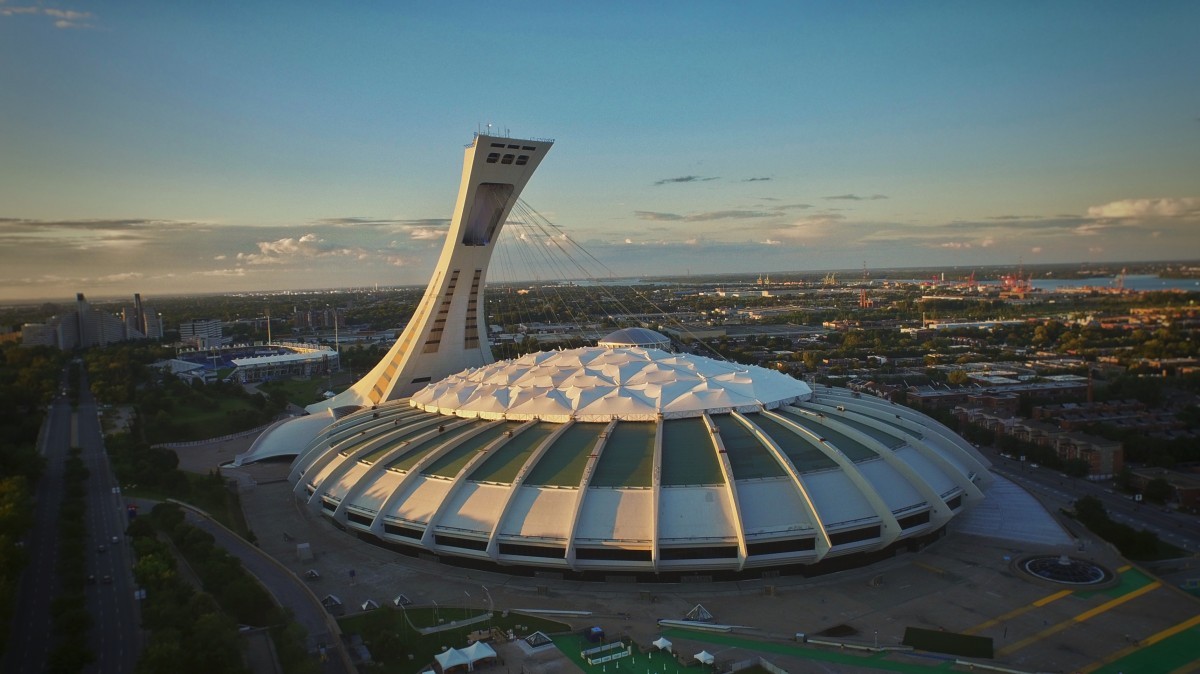
Montreal’s bid had been ambitious from the start. The centerpiece was an iconic Olympic Stadium with a retractable roof — the first of its kind in the world — designed by French architect Roger Taillibert. The budget was estimated at C million. By the time the Games began, that number had multiplied fivefold.
The Big Owe: A Stadium Disaster
Construction began in 1973 but was immediately plagued by problems. A labor strike by ironworkers in 1974 shut the site down for months. When work resumed, coordination between the hundreds of subcontractors was chaotic. The tower, designed to lean 45 degrees, proved far more complex to build than anticipated. By 1976 — with the opening ceremony just weeks away — the tower was incomplete, and the retractable roof was never installed.
Montrealers quickly gave the unfinished stadium a biting nickname: “The Big Owe” — a pun on its oval shape (“Big O”) and the crushing debt it represented. The roof that was supposed to open and close on demand was not fully operational until 1987, more than a decade late. Even then, it malfunctioned repeatedly. In 1991, a 55-ton section of the roof tore during repairs. In 1998, ice fell through the roof during heavy weather, forcing the cancellation of Rolling Stones concerts. The roof was eventually deemed unusable and replaced with a fixed roof in 1998 — at an additional cost of millions.
Altogether, the Olympic Stadium and its surrounding facilities consumed an estimated C.4 billion of the Games’ total C.6 billion price tag — roughly four times the original budget for the entire Olympics.
The Cost Spiral
Montreal’s cost overruns were driven by a combination of ambition, mismanagement, and bad luck. The international oil crisis of 1973 sent construction material prices soaring. Labor disputes added millions. The complex engineering of the stadium’s leaning tower required expensive consultants and repeated design changes.
The total cost of the 1976 Montreal Olympics is estimated at C.6 billion — approximately C billion in 2026 dollars when adjusted for inflation. At the time, it was the most expensive Olympics in history by a wide margin. Per capita, it remains one of the most costly sporting events ever staged.
For comparison, the entire 1972 Munich Olympics cost the equivalent of C million. The 1984 Los Angeles Olympics — held just eight years later — cost million and turned a million profit. Montreal’s experience scared cities away from hosting the Games. When the IOC opened bidding for 1984, only Los Angeles and Tehran submitted bids.
The Games: Comaneci, Jenner, and Juantorena
Despite the financial disaster, the athletic performances of the 1976 Montreal Olympics were extraordinary.
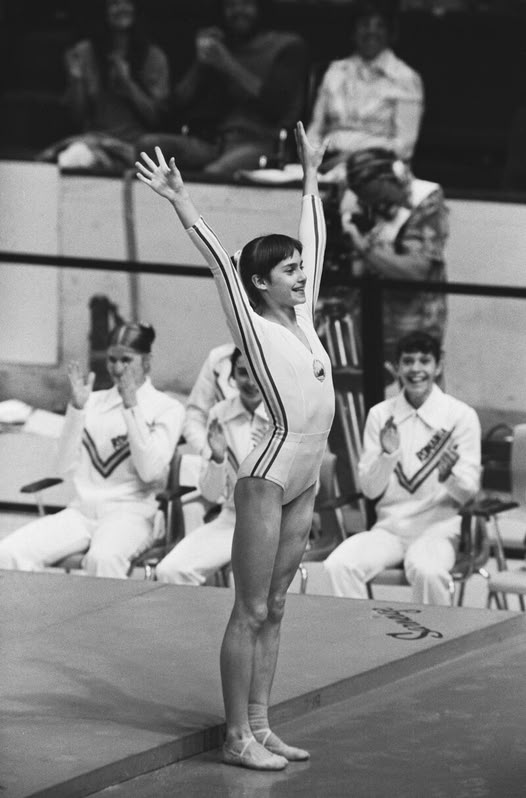
The star was Nadia Comaneci, a 14-year-old gymnast from Romania. On the uneven bars, she scored a perfect 10.0 — the first perfect 10 in Olympic gymnastics history. The scoreboard, not designed to display a 10, showed “1.00.” She went on to score six more perfect 10s and win three gold medals, one silver, and one bronze. Her performances remain among the most iconic moments in Olympic history.
Bruce Jenner won the decathlon with a world record score of 8,618 points. Alberto Juantorena of Cuba became the first man to win both the 400 meters and 800 meters at a single Olympics. The Soviet Union dominated the medal table, winning 125 medals — 49 of them gold.
The Games saw 88 nations attend. However, politics intruded: Taiwan withdrew after Canada refused to recognize the name “Republic of China” due to its recognition of the People’s Republic of China.
Thirty Years of Debt
When the closing ceremony concluded, Montreal was left with a debt of approximately C.6 billion. The Quebec government stepped in to assume the debt, creating a special provincial agency to manage it.
For three decades, the people of Quebec paid for the Games through a dedicated tobacco tax. Interest alone was crippling.
November 2006: the final payment was made. The stadium that had cost so much was, by then, primarily used for baseball and concerts. It had never fully functioned as intended. “The Big Owe” lived up to its name until the very last payment.
Legacy: The Olympics That Almost Killed the Games
The legacy of Montreal 1976 is cautionary. No city wanted to repeat Montreal’s mistake. When the IOC opened bidding for 1984, only one city was willing to take the risk: Los Angeles, which ran the Games as a private, for-profit enterprise and proved that the Olympics could be financially sustainable.
Montreal’s lesson was simple but devastating: if a city builds for the Olympics rather than using what it already has, the price can be measured in decades. The Big Owe still stands — a monument to the cost of Olympic ambition.
References
- Malouf, Albert. Report of the Commission of Inquiry into the Cost of the 1976 Olympic Games. Government of Quebec, 1980.
- Official Report of the 1976 Montreal Olympics. LAOOC Archives.
- CBC Archives. “Montreal’s Olympic Debt: 30 Years of Paying for the Games.” Canadian Broadcasting Corporation, 2006.
- Chappelet, Jean-Loup. The Olympic Games: A Socio-Cultural Analysis. Routledge, 2018.
- The Canadian Encyclopedia. “Montreal Olympics 1976.” Historical Canada.