
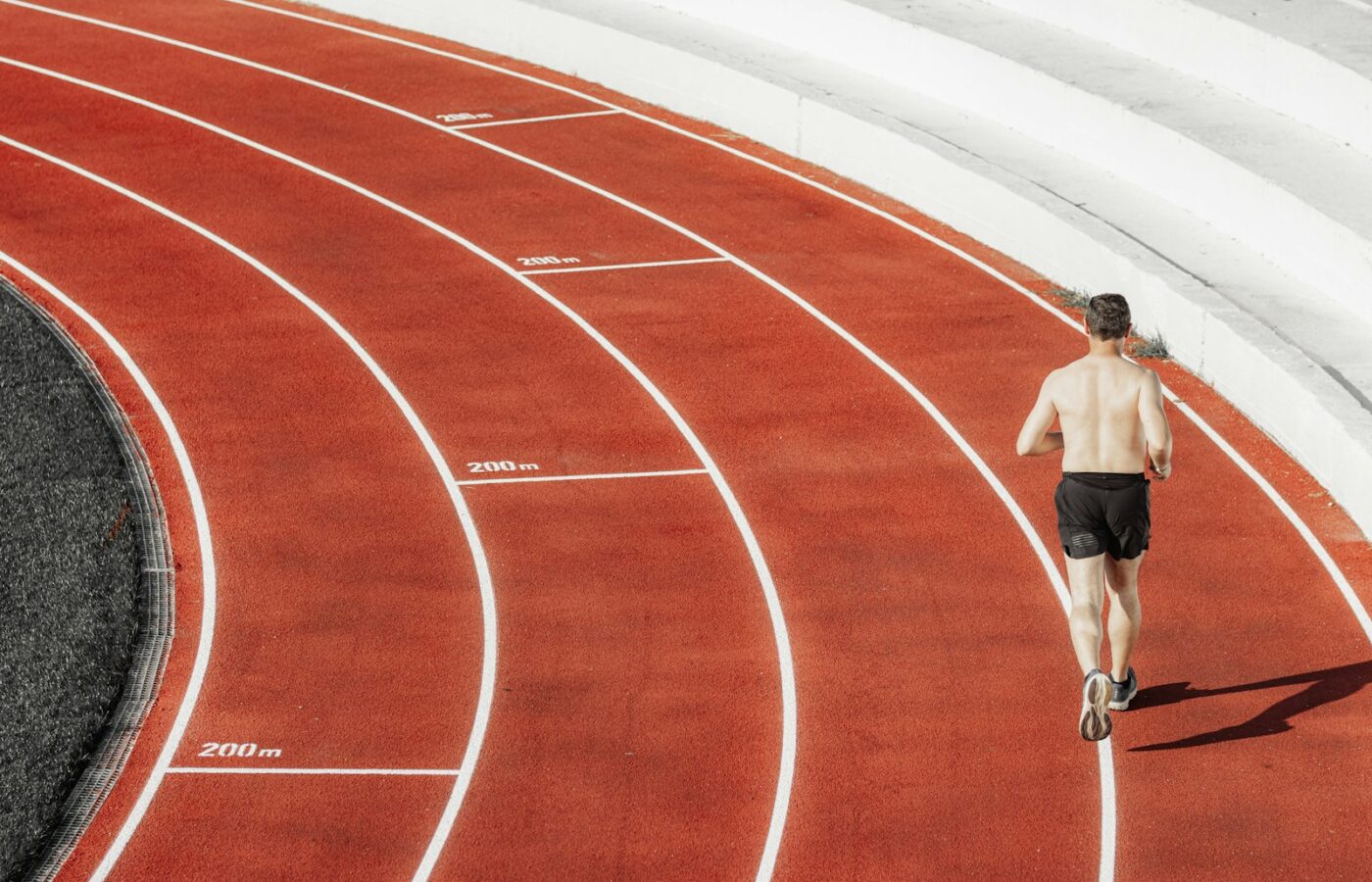
The Race Was Over. She Didn’t Leave the Track.

Marián Álvarez was the only Spanish runner to qualify for the women’s 3000m final at the 1984 Los Angeles Olympics. She finished last. After the race, she sat at the edge of the track for an hour, then walked a barefoot lap alone. Sixteen years later, a small town in Spain named its stadium after her—not for winning, but for the way she finished last.
August 12, 1984. Los Angeles Memorial Coliseum. Women’s 3000m final.
Marián Álvarez stood in lane eight, taking slow, deliberate breaths. She was twenty-two years old, the daughter of a factory worker from a working-class suburb of Madrid, and she was the only Spanish woman to qualify for this final. She had spent six years preparing for this race—the most important ten minutes of her life.
The gun went off.
Halfway through the race, something happened in the lead pack. A collision. A stumble. The details were never entirely clear from the broadcast footage. What is clear is that Álvarez was caught in the chain reaction. She went down hard on the track, her hip and shoulder taking the impact. The fall cost her position and momentum. By the time she was back on her feet, the pack was thirty meters ahead.
In most races, this is where an athlete makes a calculation. The gap is too large. The remaining laps are too few. The pain from the fall is real and growing. No one would question a withdrawal.
Álvarez did not withdraw.
She got up, found her stride, and continued running. Alone. The crowd, initially focused on the leaders, began to notice the lone figure in Spanish red and yellow, running lap after lap with no one around her, her face set in an expression that was neither pain nor determination but something more elemental: refusal.
She finished last. Her time was nearly two minutes slower than the winner’s. The crowd gave her a standing ovation.
After the race, a reporter asked her why she hadn’t stopped. She looked confused by the question, as if it had never occurred to her.
“Because the race wasn’t over,” she said. “I was still on the track.”
She returned to Spain without a medal. No endorsement deals, no sponsorship offers, no parades. She continued running for a few more years, never again reaching an Olympic final. She eventually retired, got a job, and lived a quiet life in a small town outside Madrid.
In that town, there is a municipal sports track. It was named after her in 2018, in a small ceremony that she almost didn’t attend. When asked to speak, she said: “I didn’t do anything special. I just finished the race.”
The name “Marián Álvarez” does not appear on any Olympic medal table. But there are things rarer than medals. One of them is a person who, when the cameras have moved on and the stadium is emptying, stays where she is and does what she came to do, not because anyone is watching, but because the race is not over.
She taught us something about the difference between winning and finishing. Winning is a transaction between the athlete and the scoreboard. Finishing—really finishing, when finishing costs more than quitting—is a transaction between the athlete and herself.
That is not a lesson that expires.