
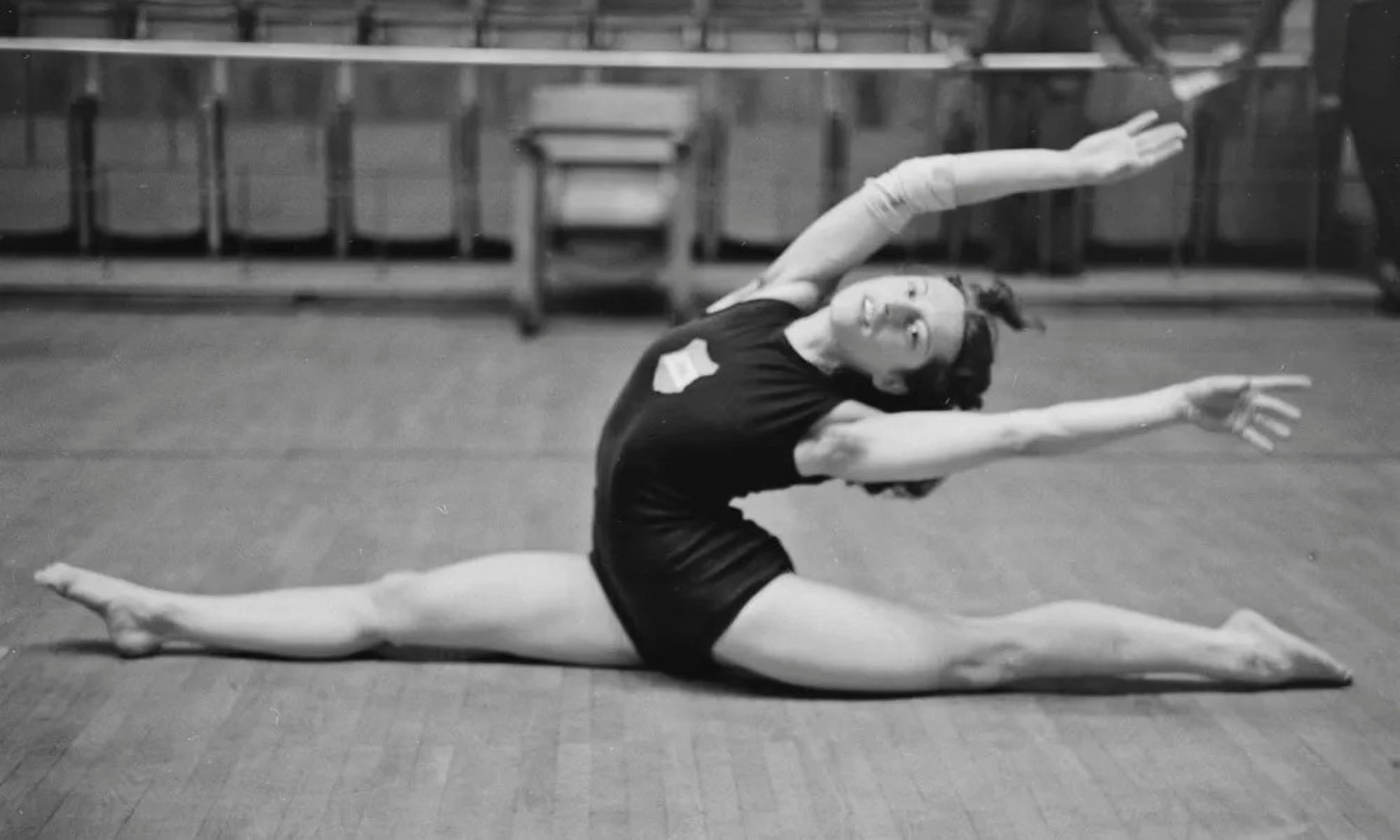
The Gymnast Who Outran History: Ágnes Keleti at 103

The Girl Who Could Not Stop Moving
Ágnes Keleti was born on January 9, 1921, in Budapest, Hungary. She started gymnastics at age four. By 16, she had won her first Hungarian national championship. In 1937, she won a gold medal at the Maccabiah Games. The trajectory seemed clear.
Then the world collapsed.
The War Years
In 1944, Nazi Germany occupied Hungary. Keleti was Jewish. She did not flee — her family needed her. She bought a forged Christian identity document and went to work as a maid in a remote village. Her employer never knew she had been Hungary’s national gymnastics champion. She hid her leotard at the bottom of her luggage and did not open it for three years.
Her father and many relatives were sent to Auschwitz. They never returned.
After the war, Keleti returned to Budapest. She was 27 — ancient by gymnastics standards. She resumed training.
Helsinki 1952: Gold at 31
At the 1952 Helsinki Olympics, at age 31, Keleti won her first Olympic gold medal in the floor exercise. She also took silver in the team competition and bronze in the team portable apparatus. It was proof that her comeback was real.
But the best was yet to come.
Melbourne 1956: Four Golds at 35
In 1956, Keleti traveled to Melbourne for the Olympics. She was 35 — older than most of her teammates by a decade and a half. In gymnastics, that was practically grandmother-age.
She won four gold medals — floor exercise, balance beam, uneven bars, and women’s team portable apparatus — plus two silver medals. She was the most decorated athlete of those Games.
As she stood on the podium, news reached her: Soviet tanks had rolled into Budapest. The Hungarian Revolution was being crushed. Thousands lay dead. Her country was being destroyed.
She did not go home.
Exile and a Century of Life
Keleti stayed in Australia briefly, then moved to Israel. She settled in Netanya, worked as a physical education instructor at Tel Aviv University, and rebuilt her life in a new country. She married, had two children, and never returned to Hungary for more than visits.
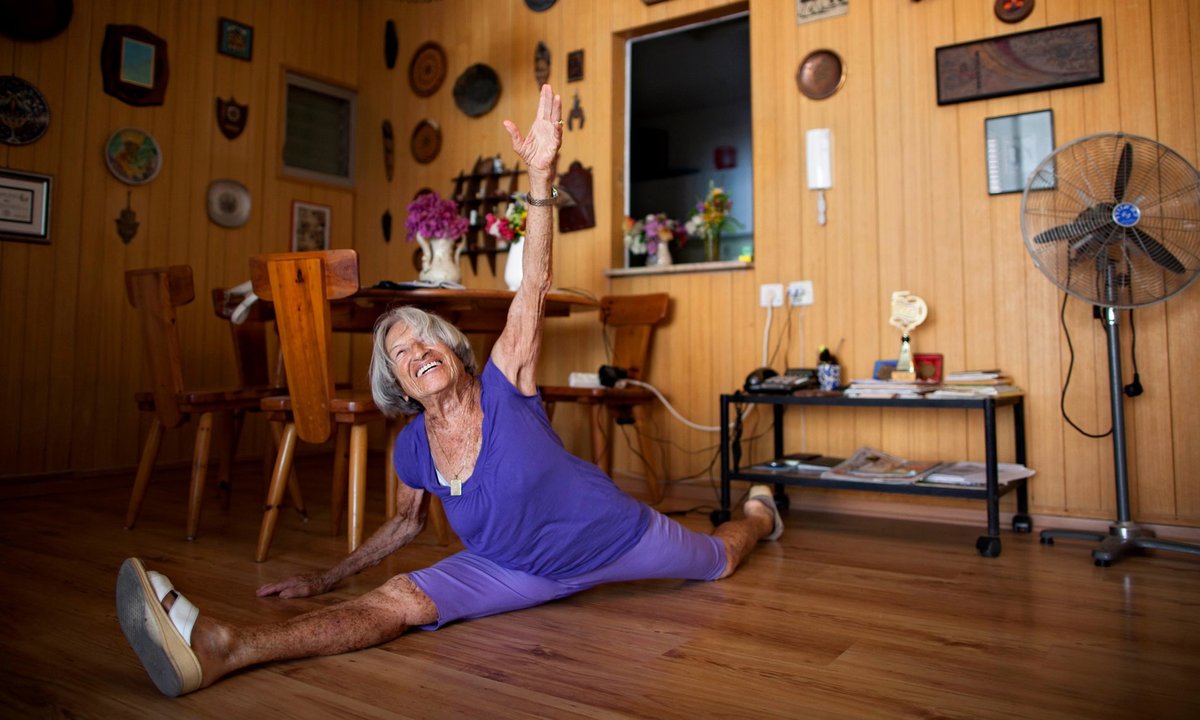
In 2021, she celebrated her 100th birthday. She was, by then, the oldest living Olympic champion in the world. She died on January 2, 2025, at age 103 — just seven days before her 104th birthday.
A Nazi occupation, a forged identity, a father lost to Auschwitz, a career that began at 27 and peaked at 35, four Olympic golds, a defection, a new country, and 103 years. She outran every obstacle history put in her path.
References
- Olympedia — Ágnes Keleti
- International Olympic Committee — Ágnes Keleti profile
- The New York Times — “Ágnes Keleti, Holocaust Survivor and Olympic Champion, Dies at 103” (January 2025)
- Yad Vashem — Testimony of Ágnes Keleti