
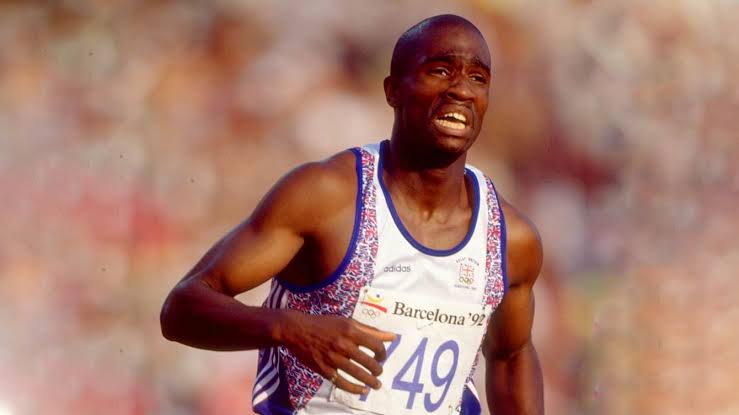
The Race He Could Not Win: Derek Redmond and the Defining Moment of the 1992 Olympics

A Career Built on Grit
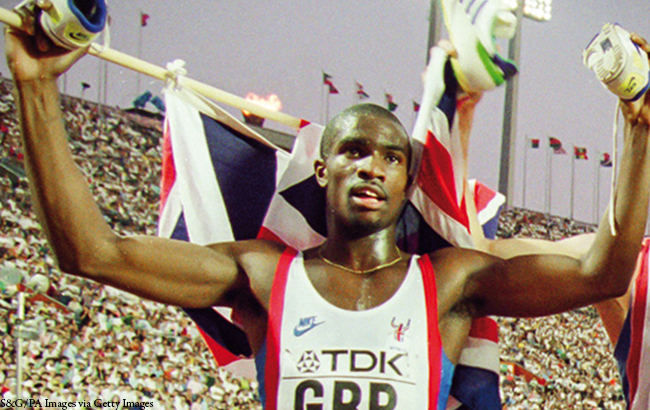
Derek Redmond emerged as one of Britain’s most promising quarter-milers in the 1980s. By 1987, he had clocked 44.50 seconds in the 400m – the fastest ever by a British athlete at the time. He won gold in the 4x400m relay at the 1991 World Championships in Tokyo and silver at the 1987 World Championships.
But his Olympic journey was haunted by injury. At the 1988 Seoul Olympics, he pulled up with a torn Achilles tendon just 80 meters into his quarterfinal. Over the next four years, he underwent five surgeries on the same tendon. Barcelona was his last chance.
The Semifinal That Changed Everything
August 3, 1992. Estadi Olimpic de Montjuic. The men’s 400m semifinal.
Redmond settled into lane five. The gun fired. For approximately the first 175 meters, he ran well – not brilliantly, but competitively. Then, without warning, his right hamstring tore.
He staggered and crashed to the track, clutching his right thigh. The medical team rushed onto the track with a stretcher. Redmond waved them off. He pushed himself upright. On one leg, hopping and grimacing, he began to move forward.
“I wasn’t going to let them carry me off,” he said later. “I’d trained for four years. I’d come too far.”
A Father’s Intervention
From the stands, Jim Redmond watched his son hobble in agony. He vaulted over the barrier, dodged a security guard, and sprinted onto the track.
“I’m here, son,” Jim said, wrapping his arm around Derek’s waist. “We’re going to finish this together.”
The stadium announcer fell silent. Security officials hesitated. Derek Redmond, his face twisted in pain and tears, leaned on his father’s shoulder.
Together, father and son covered the final 100 meters. Derek hopping on his good leg. Jim holding him steady. Their movements synchronized in an awkward, heartbreaking rhythm.
When they crossed the finish line, the crowd of nearly 60,000 rose as one. The ovation was deafening, sustained, unrelenting.
After the Crowd Fell Silent
Derek Redmond never ran competitively again. The Barcelona semifinal was his last race. He retired from athletics later that year.
But the legacy of that afternoon extends beyond the track. Redmond became one of the most sought-after motivational speakers in the world. In 2008, a global advertisement campaign featuring his moment introduced his story to a new generation. In 2012, he carried the Olympic torch for the London Games.
“When people tell me they remember where they were when they saw my race,” Redmond says, “I realize that moment wasn’t just mine. It belonged to everyone who has ever refused to give up.”
The time on the clock that afternoon was never recorded as an official result. It remains, by any measure, one of the greatest finishes in Olympic history.
References
- Olympedia – Derek Redmond
- BBC Sport – “Redmond’s Father Helps Him Finish Race” (1992)
- The Guardian – “The Greatest Olympic Moments: Derek Redmond” (1992)
- Redmond, Derek. Finish Line: Overcoming the Odds, HarperCollins, 2004