
Bob Beamon: The Jump That Broke the World and Defied the 21st Century

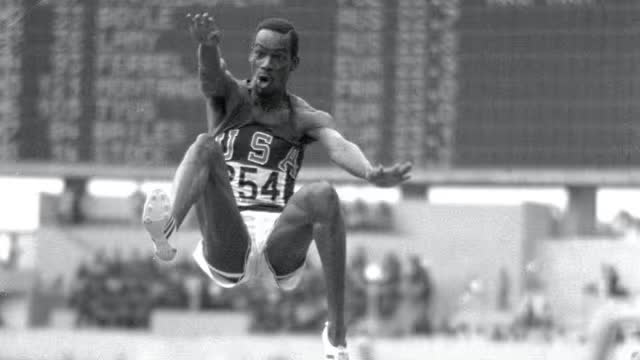
On October 18, 1968, a 22-year-old long jumper from Queens, New York, took off from the board at Mexico City’s Estadio Olímpico Universitario and landed in another dimension. Bob Beamon (full name: Robert Beamon) did not just break the world record — he detonated it. His leap of 8.90 meters (29 ft 2.5 in) obliterated the previous mark by a staggering 55 centimeters (21.75 inches), a margin so absurd that the optical measuring device could not even register it. Officials had to fetch a steel tape measure. The record stood for 23 years and remains one of sport’s most untouchable moments.
Early Life: From the Mean Streets to Reform School
Robert Beamon was born on August 29, 1946, in the hardscrabble neighborhood of Jamaica, Queens. His mother died of tuberculosis when he was just eight months old, leaving his grandmother to raise him on a seamstress’s salary in the South Jamaica housing projects. Money was scarce. Dinner was often a luxury, and the streets offered more trouble than opportunity.
By his early teens, Beamon had already tangled with the law multiple times. He was arrested for petty theft, truancy, and burglary, and at age 15, a judge sent him to the Children’s Village, a reform school in Dobbs Ferry, New York. It was the last place anyone expected a legend to be born. But at Children’s Village, Beamon discovered something that would change his life: a dusty track and a coach who saw potential in a skinny, restless kid with explosive legs.
“The track gave me a reason to run — not away from something, but toward something,” Beamon later recalled. He competed in his first organized track meet at reform school and won the long jump by a wide margin. That victory planted a seed. He began to believe that his legs could carry him out of poverty, out of Queens, and into history.
After reform school, Beamon returned to public high school in Jamaica, where his athletic talent caught the attention of college scouts. He earned a scholarship to the University of Texas at El Paso (UTEP), joining a powerhouse track program. But the transition was rocky. Beamon struggled academically and clashed with coaches who tried to change his technique.
Still, his raw talent was undeniable. In 1967, he took silver in the long jump at the Pan American Games. By 1968, he was the best in the world — though no one yet knew just how far “best” really was.
The Day He Jumped Into the Future
The 1968 Mexico City Olympics were unlike any before them. The high altitude — 2,240 meters (7,350 ft) above sea level — created thinner air, which meant less drag for jumpers and sprinters.
Beamon qualified for the final without much drama. In the qualifying round on October 17, he jumped 8.19 meters (26 ft 10.5 in) with an easy, loping approach. The next day, the final began under a threatening sky. A light drizzle fell.
Beamon’s chief rival was Ralph Boston, the American world-record holder, and Igor Ter-Ovanesyan of the Soviet Union. Both men had shared the world record at 8.35 meters (27 ft 4.75 in).
On his first jump of the final, Beamon stood at the top of the runway. He was nervous. He said a quick prayer — “Lord, help me get this one down the pit.” Then he took off.
His approach was fast, smooth, and perfectly timed. He hit the board at full speed. In the air, Beamon executed a “hitch-kick” technique that carried him farther than anyone had ever gone. He landed with a soft spray of sand. But the instant he hit, he felt something wrong. He had overshot the pit so far that his landing was dangerously close to the hard concrete edge.
Beamon stood up and looked back at the takeoff board. It looked impossibly far away. He was stunned. Ralph Boston, standing nearby, looked at the mark and said, “That’s not a jump — that’s a dream.”
The stadium fell into a strange silence. The official optical measuring device could not find the mark. It was physically incapable of measuring that far. An official had to run to fetch a steel tape measure. When the measurement was announced — 8.90 meters — the crowd erupted. Beamon collapsed to his knees, overwhelmed.
The jump was immediately nicknamed “the jump of the 21st century.”
Altitude, Controversy, and the Black Power Fist
The Mexico City Games were controversial for many reasons. The altitude was a constant point of debate. Purists argued that records set in the thin air should carry an asterisk. Beamon’s jump, in particular, was scrutinized. Researchers estimate that high altitude likely contributed a meaningful advantage — one 1986 study calculated around 31 centimeters when including wind effects — though even subtracting a generous estimate, Beamon’s jump still shattered the record by a wide margin.
But the 1968 Olympics were far more than a physics debate. They were a political battleground. Just two days before Beamon’s jump, American sprinters Tommie Smith and John Carlos had stood on the medal podium during the playing of “The Star-Spangled Banner,” each raising a black-gloved fist in the Black Power salute. Smith and Carlos were immediately suspended by the U.S. Olympic Committee and sent home in disgrace.
Beamon watched it happen. When he won gold in the long jump with his historic leap, he faced a decision. On the podium, as the flag rose, Beamon raised his own fist in the Black Power salute.
“Smith and Carlos did something brave,” Beamon said years later. “I was proud to stand with them, in my own way.”
Legacy: A Record That Outlived an Era
Beamon’s 8.90-meter jump became the most famous mark in track and field history. For 23 years — from 1968 to 1991 — it stood as the longest jump ever made by a human being. Generations of jumpers grew up staring at that number.
Finally, at the 1991 World Championships in Tokyo, American jumper Mike Powell leaped 8.95 meters (29 ft 4.5 in), breaking Beamon’s 23-year-old record. Powell’s jump was extraordinary, but it did not carry the same shock value. Beamon’s record had been broken by 5 centimeters; Beamon had broken the previous record by 55 centimeters.
Beamon’s life after the Olympics was not always easy. He struggled with the weight of that single moment. “How do you top the greatest jump in history?” he asked. “The answer is: you don’t.” He dealt with financial difficulties and personal setbacks. But he never stopped being Bob Beamon — the man who jumped into the future and took 23 years to come back down.
He was inducted into the U.S. Olympic Hall of Fame in 1983 and the National Track and Field Hall of Fame in 1977. Today, the jump is still required viewing for every aspiring long jumper. Coaches show footage of that approach, that takeoff, that flight. They tell the story of a boy from Queens who was told he was nothing, who was sent away to reform school, and who jumped so far that even science had to catch up.
That is the story of Bob Beamon (full name: Robert Beamon): a man who, for one perfect moment, was not bound by gravity, or by poverty, or by history itself.
References
1. Beamon, Bob, with Milana Walter. The Man Who Could Fly: The Bob Beamon Story. 1999.
2. Moore, Kenny. Best Efforts: The Story of Bob Beamon and the 8.90-Meter Jump. Sports Illustrated, 1968.
3. International Olympic Committee. Official Report of the 1968 Mexico City Games.
4. Powell, Mike. Long Jump: Breaking Through the 29-Foot Barrier. Track & Field News, 1992.
5. Wallechinsky, David. The Complete Book of the Olympics. 2004.