
The Flame That Survived Nazis, Protests, and a Pandemic

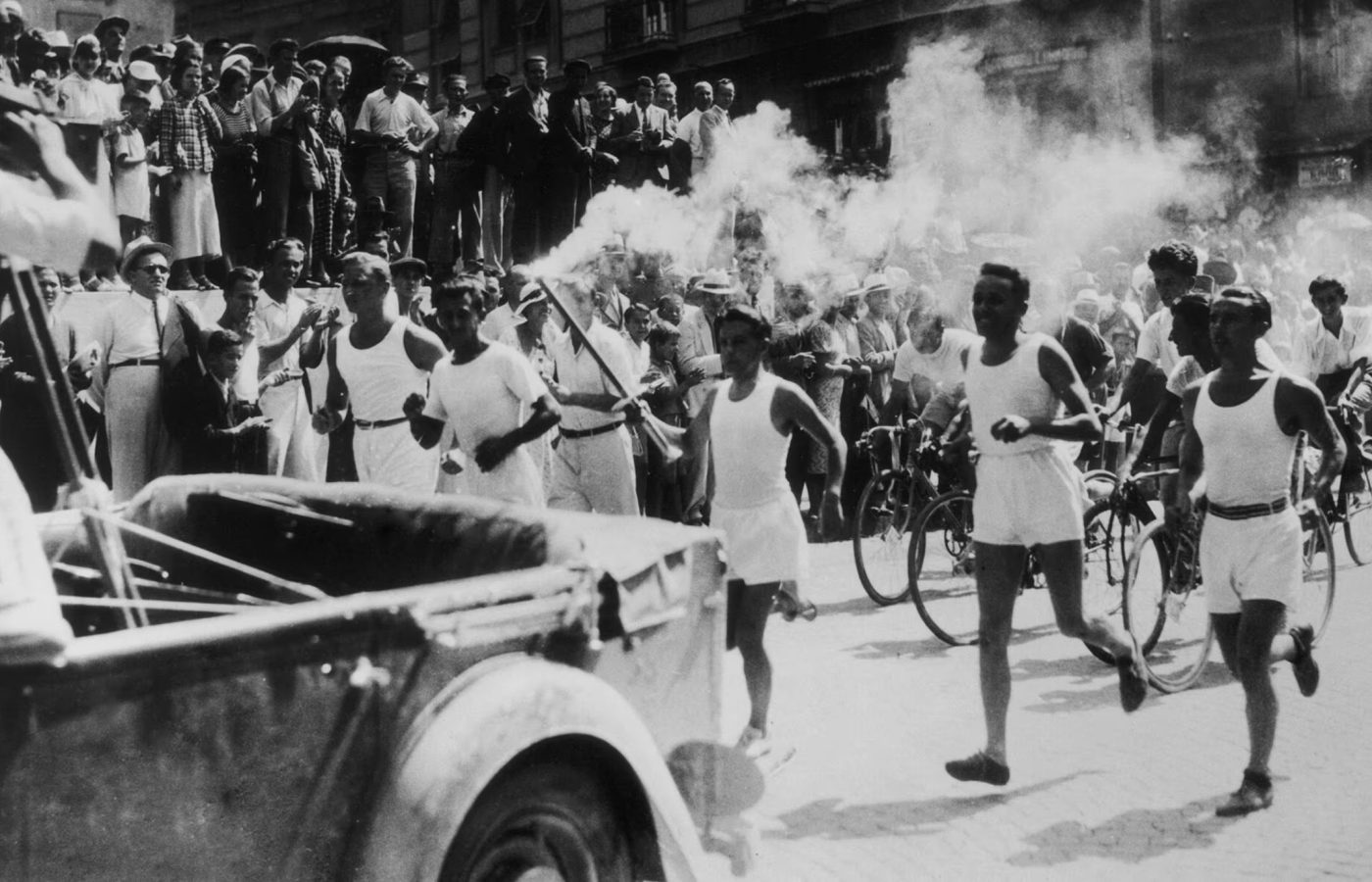
The Olympic torch relay was first introduced at the 1936 Berlin Olympics by the Nazi regime and has since evolved into the world’s most recognized symbol of athletic unity — surviving protests, pandemics, and even underwater journeys along the way. What began as a carefully staged propaganda spectacle has become one of the Games’ most cherished rituals, connecting each host city to the ancient origins of Olympia through a single, unbroken flame.
The Eternal Flame of Ancient Olympia
Long before the Olympic torch relay existed, fire held sacred meaning in ancient Greek tradition. During the original Olympic Games in Olympia (starting in 776 BCE), a flame burned continuously on the altar of the sanctuary of Hestia, the goddess of the hearth. This eternal flame symbolized purity, the pursuit of excellence, and the connection between the mortal and divine worlds.
The ancient Greeks also used torch races — called lampadedromia — as a form of religious ritual and athletic competition. Teams of runners would pass a flaming torch from one to another, racing to keep the flame alive. The winner earned the honor of relighting the altar fire. These races were held in cities such as Athens, Piraeus, and Corinth, and they served as a direct inspiration for the modern torch relay.
However, the connection between the ancient flame and the modern relay was not a continuous tradition. It was deliberately recreated in the 20th century, borrowing the visual language of antiquity to lend legitimacy to a very modern invention.
The Nazi Invention — Berlin 1936
The Olympic torch relay as we know it was not born in ancient Greece. It was conceived in 1934 by Carl Diem, the chief organizer of the 1936 Berlin Olympics, with the full backing of Joseph Goebbels, the Nazi Minister of Propaganda. Their goal was ambitious: create a spectacular prelude to the Games that would project an image of a peaceful, culturally sophisticated Germany to the world — masking the regime’s mounting persecution of Jews and political opponents.
On July 20, 1936, the first Olympic flame was lit by the sun’s rays using a parabolic mirror at the Temple of Hera in Olympia, Greece. A relay of runners carried the torch over 3,075 kilometers through Greece, Bulgaria, Yugoslavia, Hungary, Austria, and Czechoslovakia, arriving at the Berlin Olympic Stadium on August 1. Leni Riefenstahl, the Nazi filmmaker, captured the relay in her propaganda film Olympia, cementing the visual of the solitary runner carrying the flame into the global imagination.
The relay was a masterstroke of political theater. It introduced three elements that remain today: the lighting ceremony in Olympia, the torch itself as a designed object (the 1936 torch was designed by sculptor Walter Lemcke and made by the Krupp steelworks), and the long-distance relay format. Yet its origin is inseparable from the regime that created it — a fact that the Olympic movement has spent decades trying to distance itself from.
Post-War Redemption — Stripping the Nazi Meaning
After World War II, the International Olympic Committee faced a dilemma. The torch relay had been overwhelmingly popular with spectators and athletes alike, but it was indelibly associated with Nazi Germany. Rather than abandon the ritual, the IOC chose to reclaim it — stripping away its political origins and reframing it as a universal symbol of peace, friendship, and the link between ancient and modern Games.
The 1948 London Olympics played a crucial role in this transformation. Held in a war-ravaged city still bearing the scars of the Blitz, the relay was deliberately framed as a message of hope and recovery. The flame traveled through Greece, Italy, Switzerland, France, Luxembourg, Belgium, and finally to England. A Greek soldier named Konstantinos Dimitrelis lit the torch in Olympia, and the relay’s concluding runner, John Mark, entered Wembley Stadium to a standing ovation. The narrative had been rewritten: the flame was no longer a symbol of Nazi power but of human resilience.
Over the following decades, the IOC systematically codified the relay’s rituals. The official Olympic Charter now states that the flame “symbolizes the light of spirit, knowledge, and life.” The relay route increasingly emphasized international cooperation, passing through multiple countries to demonstrate global unity. By the 1960s, the Nazi origins of the tradition had been largely erased from popular memory — though historians continue to document and debate them.
Key Milestones — Underwater, Space, and Controversy
The torch relay has produced some of the most memorable and controversial moments in Olympic history.
1952 Helsinki — The flame traveled by aircraft for the first time, crossing borders in what was then a novel demonstration of international cooperation during the early Cold War.
1968 Mexico City — The relay controversially retraced the route of Christopher Columbus’s first voyage to the Americas. For many, the route celebrated colonial violence against Indigenous peoples. The Tlatelolco massacre, in which government forces killed hundreds of protesting students, occurred just ten days before the opening ceremony. The torch route remains one of the most criticized in Olympic history.
1976 Montreal — The flame was transmitted from Olympia to Ottawa via satellite using a sensor that detected the flame’s heat and converted it into an electronic signal. A laser beam was then used to reignite the torch upon arrival — a sci-fi moment that sparked debate about whether the relay was losing its human touch.
2000 Sydney — In one of the most iconic images in Olympic history, marine biologist Wendy Craig Duncan carried the torch underwater at the Great Barrier Reef. A specially designed flame burned inside a chemical “torch bubble” that kept the fire alive beneath the surface, surrounded by coral and fish. The image broadcast around the world symbolized both human ingenuity and environmental awareness.
2008 Beijing — The torch relay became a stage for global protest. As the flame traveled through London, Paris, San Francisco, and other major cities, it was repeatedly disrupted by demonstrators protesting China’s human rights record, particularly in Tibet. The Olympic flame was extinguished and relit multiple times, and the international route was scaled back. The controversy highlighted how the relay had become a flashpoint for political expression on both sides.
2012 London — The relay featured unexpectedly warm public enthusiasm, with crowds lining streets across the UK in numbers that exceeded organizers’ expectations.
2014 Sochi — The torch traveled to the International Space Station. Cosmonauts took the unlit torch on a spacewalk, making it the first Olympic torch to orbit the Earth.
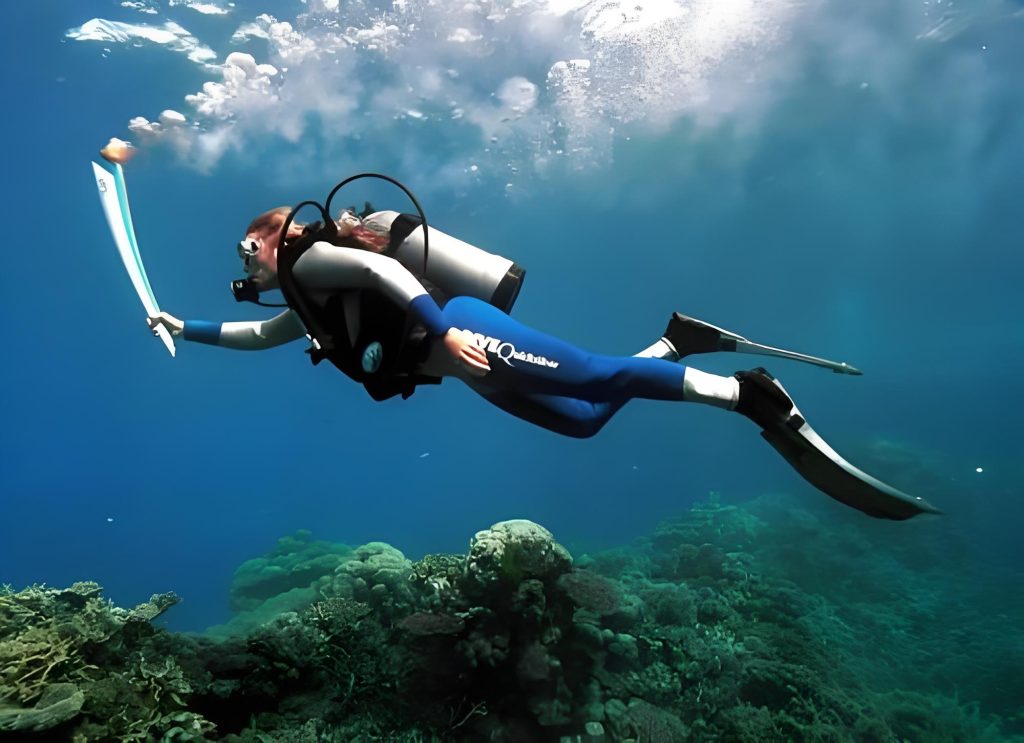
“Sydney 2000 underwater torch relay Wendy Craig Duncan”
The COVID Games — Tokyo 2020
Perhaps no Olympic Games faced greater challenges than Tokyo 2020, postponed to 2021 due to the COVID-19 pandemic. The torch relay was dramatically altered to prioritize public health.
The flame arrived in Japan from Olympia in March 2020, but the relay was immediately suspended as Japan entered a state of emergency. When it resumed in March 2021, it did so with strict protocols: no spectators along the route, runners wearing masks, hand sanitizer stations at every exchange point, and no public gatherings permitted. The flame traveled through all 47 prefectures of Japan, but the streets were virtually empty.
The relay became a quiet, solemn symbol of perseverance. Without cheering crowds or festive celebrations, the torch bearers ran through silent streets, past shuttered businesses, their faces hidden behind masks. For many, this was the most emotionally resonant torch relay in modern history — a testament to the human spirit’s refusal to be extinguished by a global crisis.
The opening ceremony itself took place without spectators in the stadium. Japanese tennis star Naomi Osaka lit the Olympic cauldron on July 23, 2021, capping a relay that had spanned two calendar years, survived a pandemic, and redefined what the Olympic flame could mean in times of global hardship.
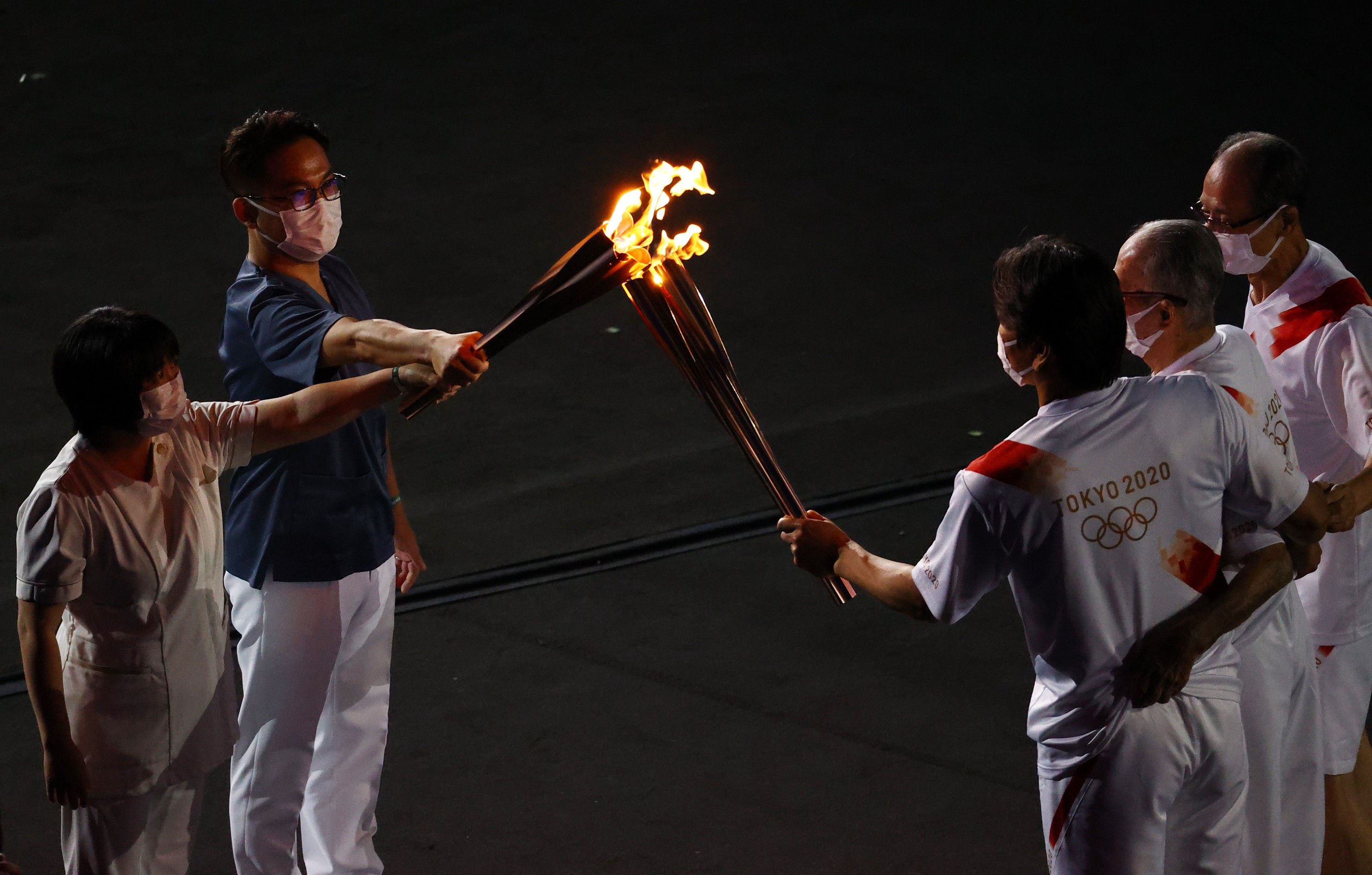
“Tokyo 2020 torch relay empty streets masked runner”
References
1. International Olympic Committee. Olympic Charter (2020 Edition). Lausanne: IOC, 2020.
2. Large, David Clay. Nazi Games: The Olympics of 1936. New York: W.W. Norton & Company, 2007.
3. Bachrach, Susan D. The Nazi Olympics: Berlin 1936. Boston: Little, Brown and Company, 2000.
4. The Olympic Museum. The Olympic Torch Relay: A History of a Tradition. Lausanne: Olympic Studies Centre, 2019.
5. Tokyo Organising Committee of the Olympic and Paralympic Games. Tokyo 2020 Official Report. Tokyo: TOCOG, 2022.