
The Five Rings That Cost Nothing and Mean Everything

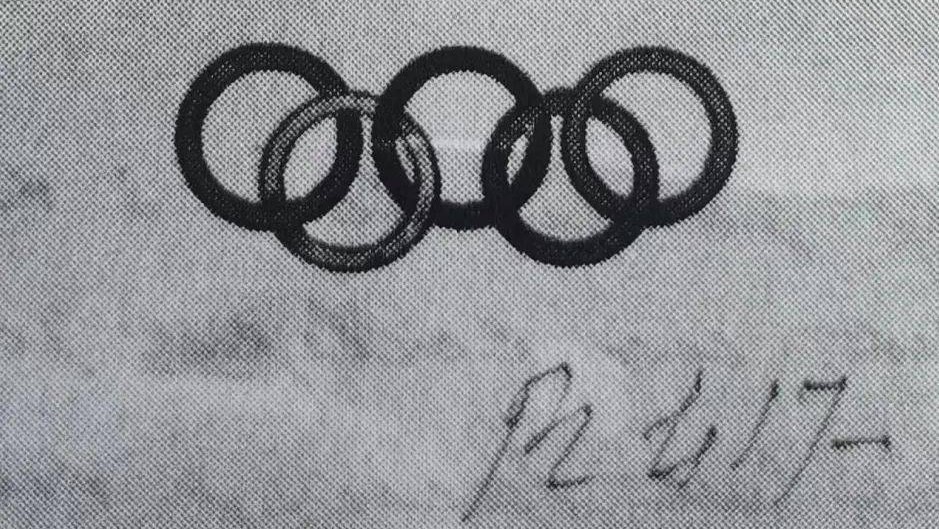
The Olympic rings were hand-drawn by Pierre de Coubertin in 1913 and have since become the most recognized symbol on earth. Five interlocking circles in blue, yellow, black, green, and red — representing the five inhabited continents — they appear on flags, uniforms, and buildings at every Games, yet they cannot be bought or sold.
The Birth of an Idea
In 1913, Pierre de Coubertin sat down with a piece of paper and drew a simple sketch that would change the visual language of global sport forever. The founder of the modern Olympic movement had been searching for a unifying emblem — something that could represent the new international spirit of the Games he had revived in 1896. He wanted a symbol that needed no translation, no explanation of nationality, no allegiance to any single flag.
What he produced was deceptively simple: five interlocking rings. The original sketch, preserved today at the Olympic Museum in Lausanne, Switzerland, shows a hand-drawn design of surprising modesty — a few pencil strokes on paper that would become, within a century, the most instantly recognizable symbol in human history.
Coubertin himself described the rings with characteristic precision and ambition: “The six colors — including the white background — combined in this way reproduce the colors of every country without exception.” He was right. Every national flag in the world contains at least one of the six colors present in the Olympic flag.
The sketch was first presented to the public at the 1914 Olympic Congress in Paris, held to commemorate the 20th anniversary of the modern Olympic movement. Delegates from across the world saw the design and adopted it on the spot. The rings were not debated, not revised, not reworked — they were simply accepted.
The Design and Its Meaning
The five rings represent the five inhabited continents: Africa, the Americas, Asia, Europe, and Oceania. Coubertin was careful to note that the Americas were counted as a single continent in this scheme, acknowledging the unified landmass of North and South America.
The colors of the rings — blue, yellow, black, green, and red — were not chosen to represent specific continents. This is one of the most persistent misconceptions about the rings. The colors were chosen for a practical and symbolic reason: every national flag in existence in 1913 contained at least one of these five colors, plus white. The six colors of the Olympic flag (the five rings plus the white background) covered the entire palette of global heraldry.
The interlocking arrangement was equally deliberate. Coubertin said the rings were “interlaced” to represent the union of the five continents and the meeting of athletes from around the world at the Olympic Games. The rings overlap in a precise pattern: the blue ring is at the top-left, yellow interlocks with blue at the bottom-left, black sits in the center, green at the bottom-right, and red at the top-right. This specific arrangement is protected and cannot be altered.
From top-left, the rings read: blue, yellow, black, green, red. This ordering is standardized in all official Olympic materials. The rings are always displayed in this arrangement with three rings at the top and two at the bottom.
First Flight: Antwerp 1920
The Olympic flag was designed in 1913 and adopted in 1914, but it did not fly at an Olympic Games until 1920. The delay was caused by the First World War. The 1916 Berlin Games were canceled, and the flag that Coubertin had designed for peace was kept in storage while Europe burned.
When the Games finally resumed in Antwerp, Belgium, in 1920, the Olympic flag was raised for the first time in an Olympic stadium. It was a deeply symbolic moment — the five rings flying over a continent that had just endured four years of catastrophic war. The Antwerp Games served as a visual promise that the international community could still gather under shared symbols.
The original flag used in Antwerp had a special detail: it was made from silk and measured three by two meters. After the Games, the flag disappeared. It was not seen for over seven decades. Then, in 1997, a former American athlete named Hal Haig Prieste — who had participated in the 1920 Games as a diver — revealed that he had taken the flag as a souvenir. At a ceremony during the 2000 Sydney Olympics, Prieste, then 103 years old, personally returned the flag to the IOC.
Today, the flag is preserved at the Olympic Museum in Lausanne, alongside Coubertin’s original sketch. Together, the pencil drawing and the silk flag tell the story of an idea that survived war, neglect, and a seventy-year disappearance to become immortal.
The Most Protected Trademark in the World
The Olympic rings are not merely a symbol — they are one of the most aggressively protected trademarks in commercial history. The International Olympic Committee enforces ownership of the rings with a legal apparatus that spans every country on earth and covers dozens of categories of goods and services.
The Rings Protection Act, passed by the United States Congress in 1998, grants the IOC the right to seek criminal penalties for unauthorized commercial use of the Olympic rings on US soil. The rings are protected under the Nairobi Treaty of 1981, an international agreement that obligates signatory nations to refuse or cancel trademark registration of any mark that contains the Olympic symbol.
The result is extraordinary: a simple geometric design of five circles is more legally protected than most corporate logos. The IOC does not license the rings for general commercial use. Companies that wish to associate with the Olympics must enter into sponsorship agreements with the IOC and pay substantial fees for the privilege. The rings cannot be used in advertising, on merchandise, or in any commercial context without explicit IOC permission.
This legal shield has preserved the rings as a non-commercial symbol of the Olympic movement. Unlike corporate logos that are bought and sold, the rings maintain their status as a symbol of human achievement rather than a brand to be monetized. The IOC generates billions of dollars in sponsorship revenue, but the symbol itself remains officially non-commercial — it is loaned to sponsors, never sold.
Legacy and Evolution
The Olympic rings have appeared on every medal, every uniform, every ticket, and every official document of the Games since 1920. They have been printed on flags carried by athletes at every Olympic opening ceremony. They have been displayed on the podiums where gold, silver, and bronze are awarded. They have been carved into the ice of skating rinks, painted onto the floors of basketball courts, and projected onto the sides of stadiums.
The rings have been to space. In 1988, the Olympic flag was flown aboard the Space Shuttle to commemorate the Seoul Games. In 2000, the flag was carried to the International Space Station and was unfurled in orbit. The rings have been planted on Mount Everest by Olympic torch relay teams. They have been woven into the fabric of human exploration.
In the 2010s, the IOC introduced updated digital renderings of the rings for modern media use. The basic design — five interlaced circles — has never changed, but the way the rings are rendered has evolved with technology. Today, the rings exist as vector files, as 3D models, as animated sequences, and as generative art.
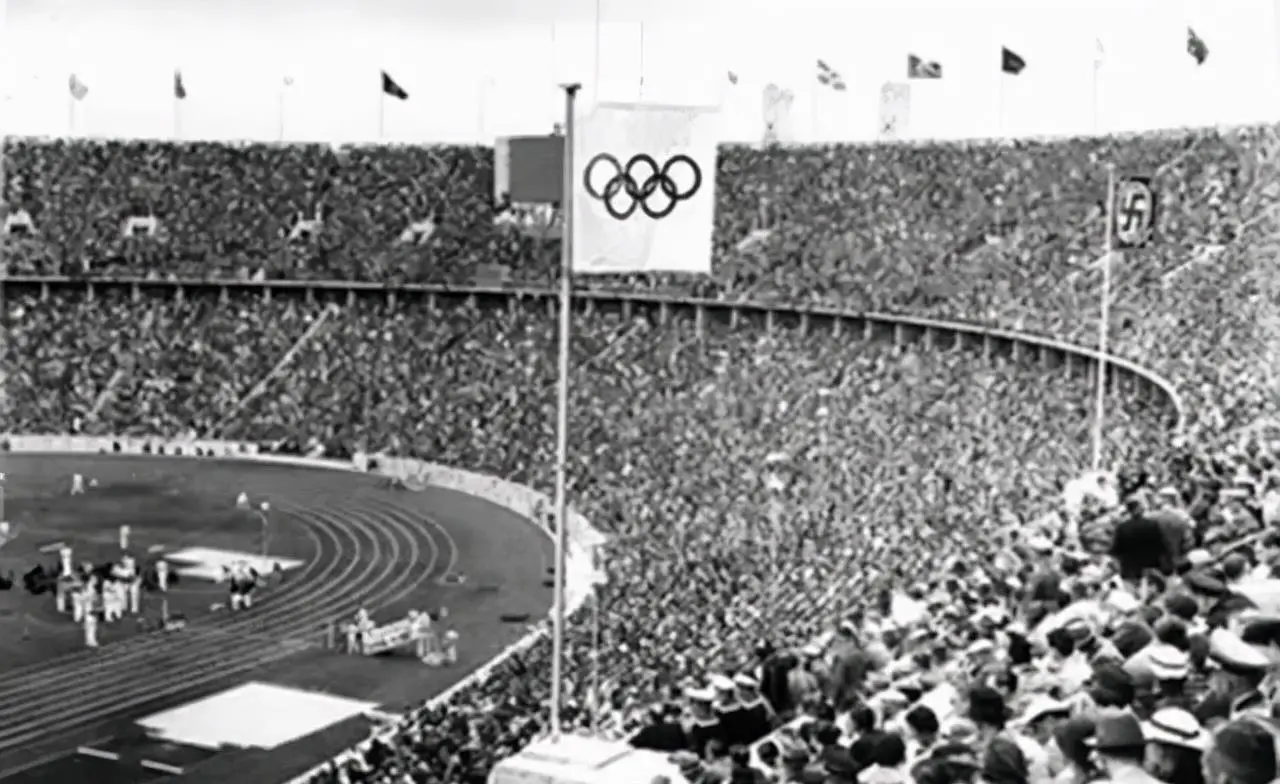
Perhaps the greatest tribute to Coubertin’s design is its endurance. The rings have flown over Berlin in 1936, under a regime that rejected internationalism. They have flown over Moscow in 1980, boycotted by dozens of nations. They have flown over Seoul, Sydney, Athens, Beijing, London, Rio, and Tokyo — each time representing the same idea: that from every corner of the world, athletes can gather under a single flag and compete in peace.
No symbol in human history has achieved this range of recognition. The five rings, drawn by hand in 1913 by a French aristocrat with a vision of global unity, have become the most recognized symbol on the planet. And they remain, at their core, exactly what Coubertin intended: a promise that when the world competes, it does so together.
References
1. IOC Official Website. “The Olympic Rings.” International Olympic Committee.
2. Olympic Museum Lausanne. “Pierre de Coubertin and the Creation of the Olympic Symbol.” Olympic Studies Centre, 2023.
3. Lennartz, Karl. “The Story of the Olympic Rings.” Journal of Olympic History, vol. 10, no. 3, 2002, pp. 34-40.
4. U.S. Congress. “Olympic and Amateur Sports Act (The Ted Stevens Olympic and Amateur Sports Act).” 36 U.S.C. Section 220501, 1998.
5. Nairobi Treaty on the Protection of the Olympic Symbol. World Intellectual Property Organization, adopted September 26, 1981.