Her Medals Were Won by Someone Else

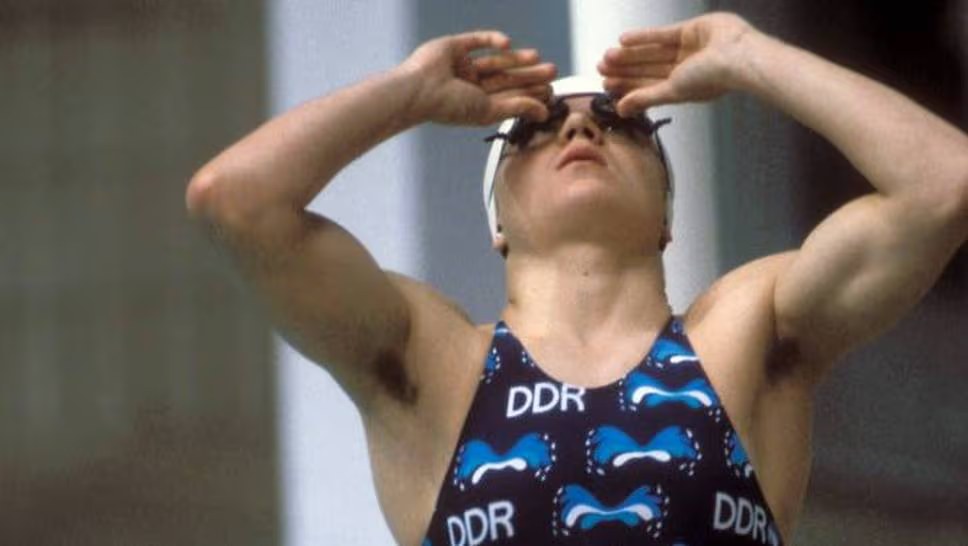
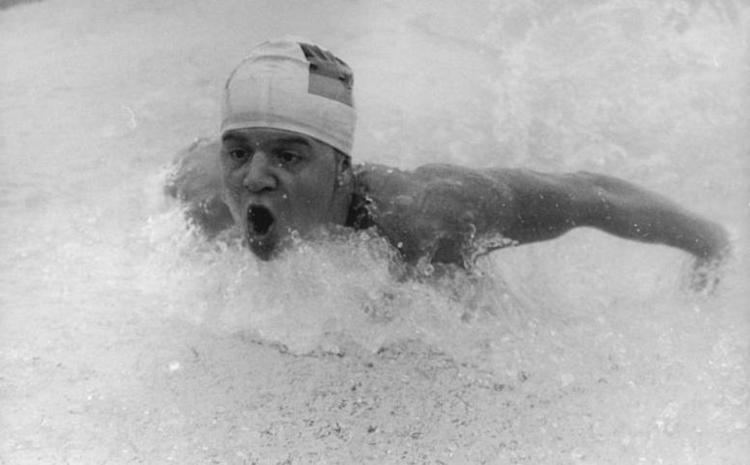
Petra Schneider, East German swimmer, gold medalist in the 400-meter individual medley at the 1980 Moscow Olympics. She was seventeen. After German reunification in 1990, Stasi files were opened. She discovered her entire career had been built on a lie—starting at age eleven, her coaches had systematically administered anabolic steroids. In 1994, she went public. She said: “My medals were won by someone else.”_
July 1980, Moscow. The Olympic women’s 400-meter individual medley final. A seventeen-year-old East German girl touched the wall in world-record time. Gold. Anthem. Flag. Petra Schneider stood on the podium, the medal gleaming against her chest in the Moscow sun. She did not know what that medal had cost.
Fourteen years later, Germany was unified. Stasi files were being opened in waves. Schneider obtained her own file. In it she read: starting at age eleven, her coaching team had administered anabolic steroids—drugs that make muscles grow without effort. The file recorded every dose, every timeline, every physical response. The coaches had told her they were vitamins. She believed them. She was just a child who wanted to swim faster.
In 1994, Schneider testified before the German Bundestag. She made public her complete medical records, her doping timeline, and the permanent damage to her body—liver dysfunction, hormonal disorders, reproductive system damage, severe chronic pain. She became the first Olympic gold medalist to expose the East German doping machine in this level of detail. She did not claim to be an innocent victim. What she said was: “I never knew what I was taking. But I swam every meter. My injuries are real.”
Then someone asked her to return the gold medal. She said: no.
This is the most complicated part of the story, the hardest to digest. She did not give the medal back. She said: those medals are not a reward for doping—they are compensation for the permanent damage done to my body. I swam tens of thousands of hours in the pool. My knees, my shoulders, my liver—those injuries are not fake. The medals are the only compensation I have.
That answer made a lot of people uncomfortable. But it is more honest than any moral posture. Schneider packaged herself neither as a pure victim nor as an anti-doping crusader. She was just a person—a child who, from the age of eleven, had been robbed of informed consent and used as a tool of national glory—who, as an adult, took back what belonged to her in a way that made people uneasy.
The gold medal is still in her house. She does not hang it on the wall. She says she opens the drawer sometimes to look at it—not with pride, but with an emotion too complex for words. She never competed in another swimming race. She coaches young swimmers in a small German town, teaching them how to stroke, how to breathe, how to feel free in the water. She tells her students: swimming is not about being seen. Swimming is for yourself.