She Won Olympic Gold Across Six Games. Her Opponents Were Half Her Age.

Birgit Fischer, German kayaker, the most decorated female paddler in Olympic history. Across twenty-four years and six Olympic Games, from 1980 to 2004, she won eight gold medals. At the 2004 Athens Games she was forty-two years old. She won gold again. Her opponents were half her age._
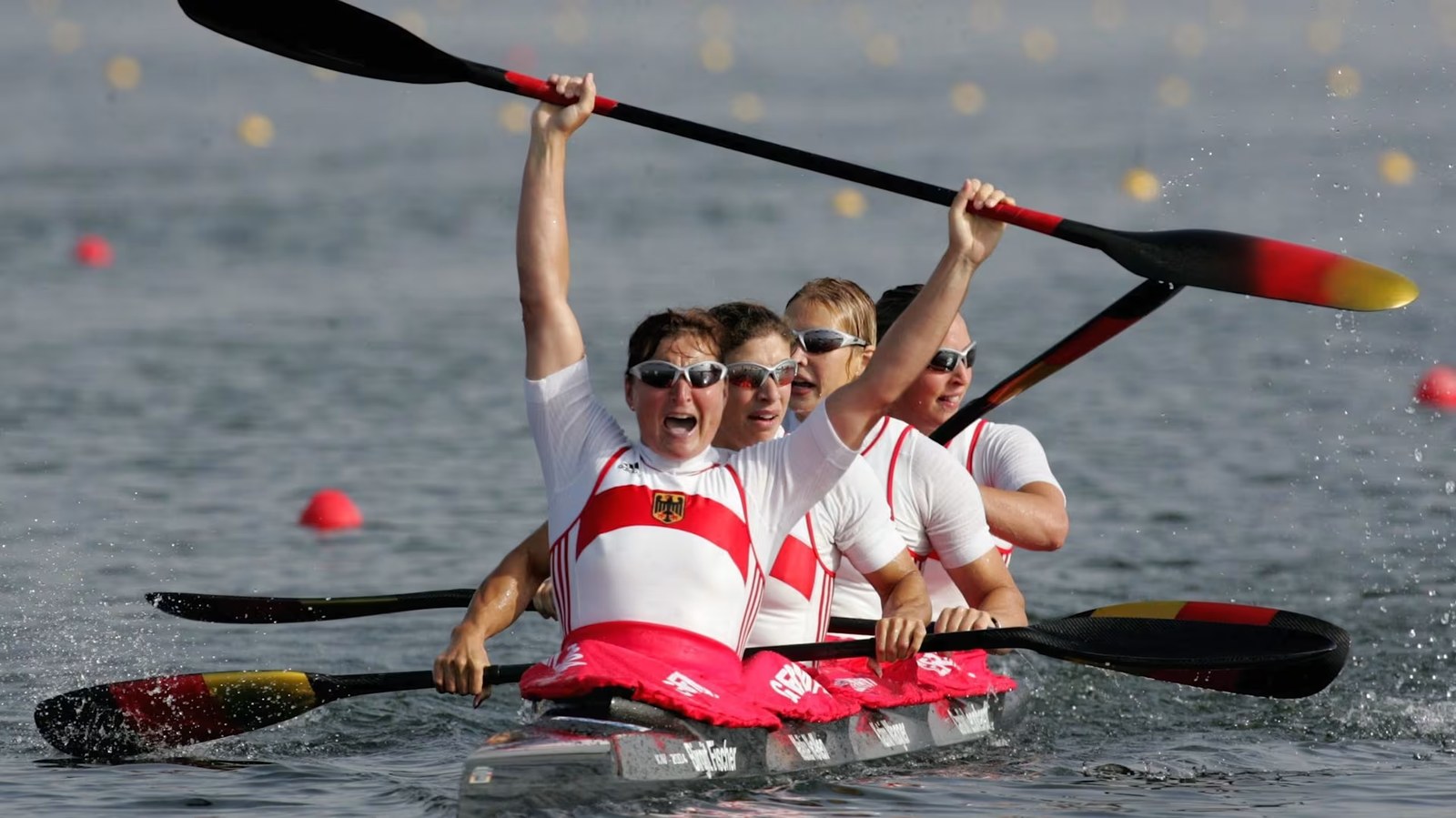
August 2004, Athens. The women’s K-4 500-meter final.
Four women sat in the German boat. In the third seat was a forty-two-year-old. All three of her teammates had been born after she won her first Olympic gold medal. In 1980, when she first stood on an Olympic podium in Moscow, those teammates did not yet exist. Now they shared a boat. The gun fired. The sound of kayaks slicing through water lasted less than a minute and a half. Germany crossed the line first. Birgit Fischer had her eighth Olympic gold medal.
She was forty-two. In a sport demanding explosive power and relentless endurance, that age made almost no physiological sense. But her hands were still on the paddle. She was still winning.
Fischer was born in 1962 in Brandenburg, East Germany. Her first Olympic gold came in Moscow in 1980—eighteen years old, the women’s K-1 500 meters. Her last Olympic gold came in Athens in 2004—forty-two years old, the women’s K-4 500 meters. Twenty-four years between them. Most athletes’ careers trace an arc—rise, peak, decline, retirement. Fischer’s was a wave. She retired three times. She came back three times. Every time she returned she was older. Every time she won.
Moscow 1980: she wore the East German uniform and won gold on Soviet waters. Seoul 1988: she wore the East German uniform for the last time—East Germany’s final Olympics. Two years later, Germany reunified. The country Fischer had represented ceased to exist. She kept paddling. Barcelona 1992: she wore the unified German colors and won gold. Sydney 2000: thirty-eight years old, gold. Athens 2004: forty-two years old, gold. Her opponents cycled from those born in the 1960s to those born in the 1970s to those born in the 1980s. Fischer raced every generation and beat them all.
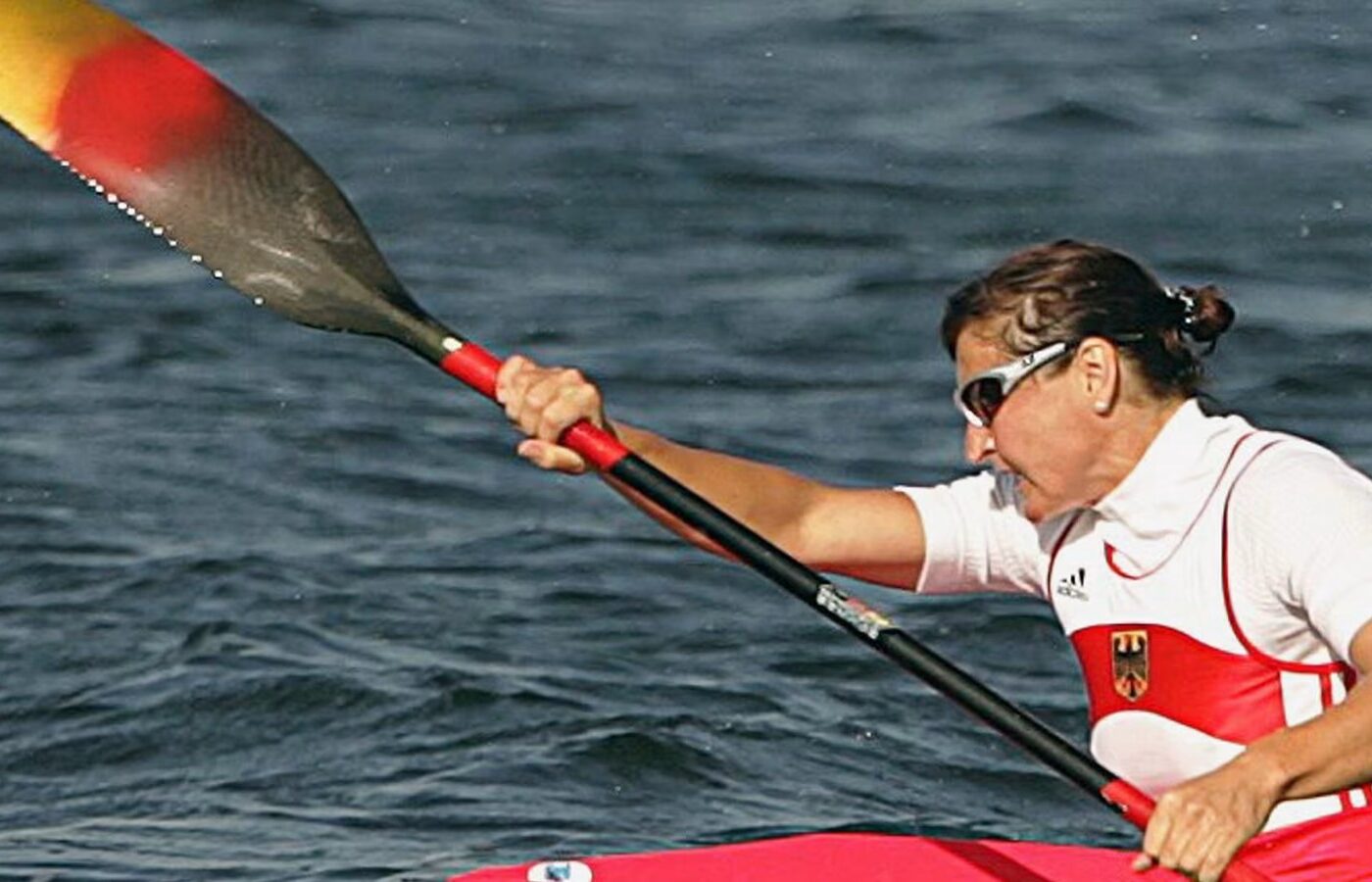
When she paddled, her face held a particular expression—not pain, not excitement. A deep calm. The look of someone doing the most familiar thing in her life. Every stroke she took on the water was the same stroke she had practiced on the lakes of East Germany at eighteen. Time had changed many things about her—her nationality, her teammates, the flag above her head—but the grip on the paddle had not changed.
The Athens gold in 2004 was her last. After that she retired—for real this time. She settled by a lake in Brandenburg, paddling occasionally, not for competition, just to paddle. In an interview she said: I didn’t come back to win. I came back because I love paddling.
One woman, six Olympics, twenty-four years, eight gold medals. Her opponents went from her contemporaries to athletes twenty years younger. She retired, returned, retired again, returned again—each comeback like the first. She never seemed to have been convinced by the words: you should stop now.