
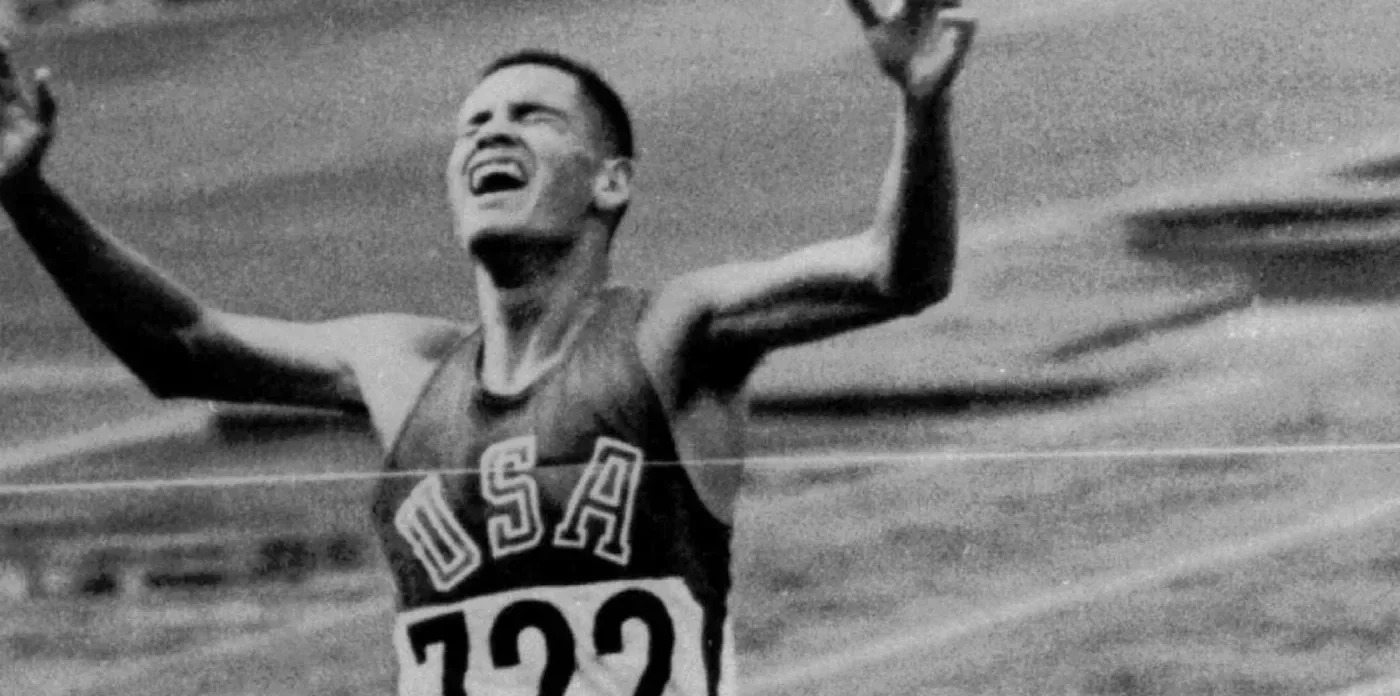
Before the Final Lap, No One Was Watching Him — Billy Mills

The Boy from Pine Ridge
William Mervin Mills was born on June 30, 1938, on the Pine Ridge Indian Reservation in South Dakota. He was Oglala Lakota Sioux. Mills was the youngest of seven children. His mother died when he was seven. His father raised the children alone for five more years. When Mills was twelve, his father died. Billy was orphaned.
He and his siblings were scattered among relatives. Mills moved between homes, sleeping on couches, working odd jobs, eating when food was available. On the Pine Ridge Reservation, unemployment was endemic, and life expectancy for Native men was decades shorter than the national average.
His father had left him with something. Before he died, he told Billy: “Son, you have the power of the thunder and the lightning within you. Use it.” Mills did not fully understand what that meant at the time. He would not understand it until ten years later, in Tokyo.
Running to Survive
Mills attended a government-run boarding school where Native children were often punished for speaking their own language. He ran to escape. He ran because it was the only place where being Lakota did not matter — only the time on the clock.
He attended Haskell Institute in Kansas, then the University of Kansas. He was a good runner, not a great one. In 1959, he joined the United States Marine Corps. The Marines gave him structure. The Marines also gave him the endurance training that would, five years later, shock the world.
Tokyo, October 14, 1964
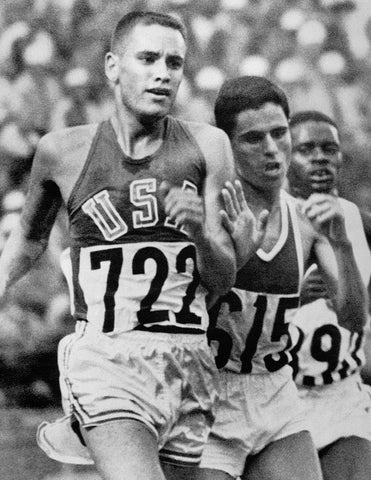
The men’s 10,000-meter final brought together the best distance runners on earth. Ron Clarke of Australia, world record holder. Mohammed Gammoudi of Tunisia, Olympic silver medalist. Pyotr Bolotnikov of the Soviet Union, former world record holder. Billy Mills was a complete unknown. American journalists had not bothered to look up his name.
The race began. Clarke took the lead, pushing the pace as he always did, planning to break the field in the second half. Mills stayed in the middle of the pack. At 8,000 meters, most of the field began to fade. At 9,000 meters, the lead group had shrunk to three: Clarke, Gammoudi, and Mills.
The last lap. Mills was still in third place. On the back straight, he began to accelerate — not a sprint, but a sustained 400-meter surge that defied physiology. He passed Gammoudi. He passed Clarke. The final curve. Mills kept surging down the straight. He crossed the line first in 28:24.4 — an Olympic record, nearly 50 seconds faster than his previous personal best.
An American journalist on the sidelines scrambled for his name and shouted: “Who is this guy?”
A Quiet Aftermath
Mills did not collapse, did not cry, did not throw his arms overhead. He simply kept running a few more strides, then stopped, bent over, and put his hands on his knees — like a runner at the end of any training day.
His victory received muted coverage in the mainstream American press. But on Native American reservations across the country, it was seismic. A Lakota man had beaten the world. For a people who had been told for generations that they were not good enough, Billy Mills was proof that the opposite was true.
The Second Act
Mills retired from competitive running in the late 1960s. He worked in the insurance industry and became a speaker and advocate for Native American causes. In 1986, he co-founded Running Strong for American Indian Youth, a nonprofit organization dedicated to improving the lives of Native American youth through education, health, and cultural programs.
In 2012, he was awarded the Presidential Citizens Medal by President Barack Obama — the second-highest civilian honor in the United States. He has returned to Tokyo several times, each time visiting the Olympic stadium. A journalist once asked him: “Do you still remember the last lap of that race?” Mills said: “I remember every meter.”
Legacy
Billy Mills remains the only American to win Olympic gold in the 10,000 meters. More than half a century later, no one has done it since. But his legacy is larger than a single race. He carried the history of his people onto the track and proved that the final lap belongs to no one until it belongs to you.
References
- Olympedia — Billy Mills
- World Athletics — Billy Mills profile
- Mills, Billy. *Wokini: A Lakota Journey to Happiness and Self-Understanding*
- Olympic Channel — “Billy Mills: The Lone American Gold Medalist in the 10,000m”
- United States Marine Corps Sports Hall of Fame