
The Man Who Outran East Germany — But Not the Stasi

The Crown Jewel of a Rigged Dynasty
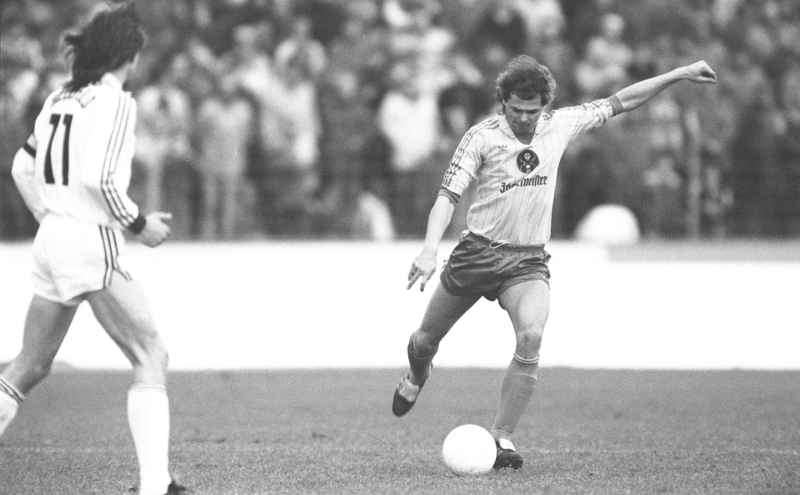
Lutz Eigendorf was born on July 16, 1956, in Brandenburg an der Havel, East Germany. He rose through the youth ranks of the local club before joining Berliner FC Dynamo, the premier club in East German football. BFC Dynamo was not an ordinary club. It was owned by the Stasi — Erich Mielke’s personal project. Between 1979 and 1988, BFC Dynamo won ten consecutive league titles, many under circumstances that opponents considered suspicious. Referees were pressured. Decisions went the Stasi’s way.
Eigendorf was the team’s creative engine. A midfielder with technical skill and vision, he represented the best of East German football. But he also saw the system from the inside. He saw how the club operated. He saw how the Stasi controlled everything. He decided he wanted out.
The Escape: March 1979
On March 20, 1979, BFC Dynamo traveled to Gießen, West Germany, for a friendly match. Eigendorf saw his chance. The next day, March 21, he did not return to the team bus. He had made contact with West German authorities and defected.
The Stasi response was immediate. They opened an operation codenamed “Verräter” — Traitor. Eigendorf’s wife was interrogated. A Stasi agent, codenamed “Lothario,” was sent to romance her and monitor her movements. Eigendorf’s name was placed on every border checkpoint.
In the West, Eigendorf signed with Kickers Offenbach, then moved to Eintracht Braunschweig. He played well but never reached the heights of his potential. The psychological toll of defection — leaving his family, his country, his entire life — weighed on him. He received threatening phone calls. The Stasi had not forgotten him.
The Crash: March 5, 1983
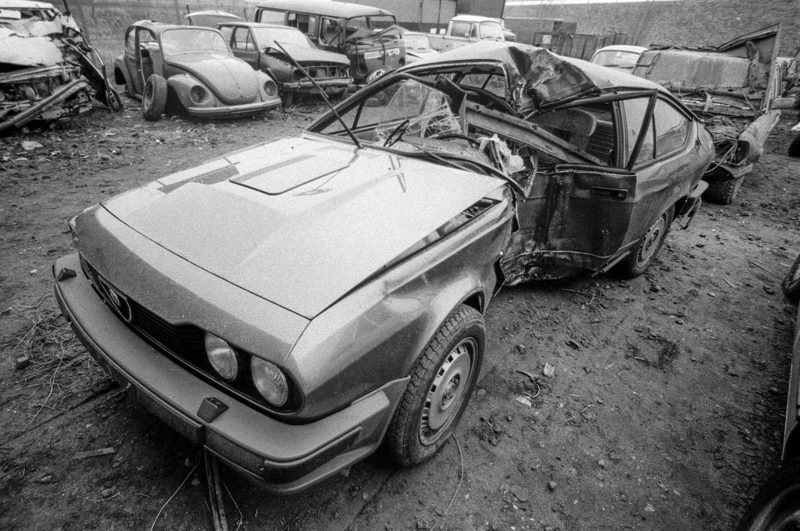
On the evening of March 5, 1983, Eigendorf was driving his car on a road between the Braunschweig suburbs of Querum and Bienrode — a city road, not an Autobahn. The road was wet from rain. It curved to the left.
Eigendorf’s car left the road and struck a tree. Witnesses reported no skid marks. His blood alcohol level was 0.22% — above the legal limit. He was taken to the hospital with severe head injuries. He never regained consciousness. On March 7, 1983, Lutz Eigendorf died. He was 26 years old.
The official investigation ruled the crash an accident: high speed, wet road, alcohol. Case closed.
The Stasi Files That Vanished
After the Berlin Wall fell in 1989, the Stasi archives were opened. Investigators found Eigendorf’s file. It revealed that the Stasi had classified him as a “Feindobjekt” — enemy object. The “Zersetzung” (decomposition) strategy had been approved against him. He had been under psychological warfare designed to destabilize him.
Threatening phone calls in the weeks before his death were documented. One of the Stasi officers assigned to his case later admitted that the agency had considered “special measures” against defectors. But no direct evidence linking the Stasi to the crash was ever found.
A new investigation was opened in 2000. It reviewed the crash site, the vehicle, and the Stasi files. It found nothing conclusive. The question remains open.
Legacy
Lutz Eigendorf was capped 6 times for East Germany. He played 61 matches in the West German Bundesliga and scored 9 goals. He never won a major trophy. His name is not in any hall of fame.
But his story endures because it captures something larger than football. He was a man caught between two systems, who risked everything for freedom and died under circumstances that no one has fully explained. Whether the crash was an accident, the Stasi’s final operation, or something in between — we may never know. But the question has outlived the regime that made it necessary.
References
- Wikipedia DE — Lutz Eigendorf
- BStU (Federal Commissioner for Stasi Records) — Declassified Files
- Der Spiegel — “The Stasi and the Mysterious Death of Lutz Eigendorf”
- ZDF Documentary — *Tod eines Fußballers* (2000)
- Eintracht Braunschweig Official Archives