
The Man Who Lit the Flame at the Olympics Nobody Came To

—
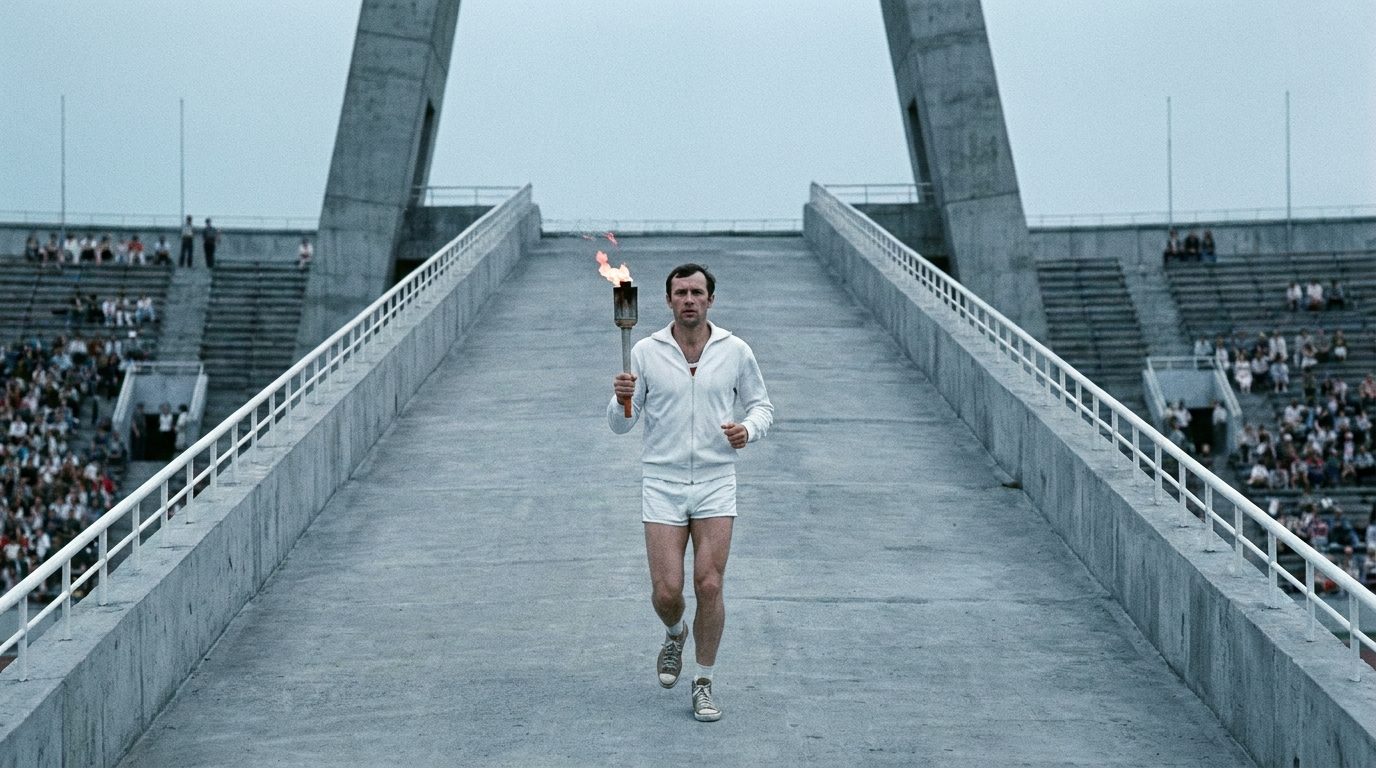
July 19, 1980. Lenin Central Stadium, Moscow. The opening ceremony of the 22nd Summer Olympiad.
A lean man in a white tracksuit ran up an enormous ramp. The crowd below him was not roaring—at least, not the whole world. The United States was not there. Japan was not there. West Germany was not there. More than sixty nations had boycotted the Games over the Soviet invasion of Afghanistan. In the parade of nations, some flag-bearers carried the Olympic flag instead of their national colors—their governments had forbidden them to participate. But he kept running. He reached the top of the ramp, stopped, raised the torch above his head, and lit the cauldron.
Sergei Belov was the first basketball player in Olympic history to light the flame. Before him, that honor had belonged to gymnasts, track athletes—figures deemed more “Olympic.” Belov was not just a basketball player. He was the symbol of Soviet basketball.
The 1972 Munich Olympic men’s basketball final. Soviet Union versus the United States. The last second. The controversy around that game has long since buried every other detail—but one detail should not be buried: in that final, Sergei Belov scored more points than anyone else on the floor. Not any American, not any player from the greatest basketball nation of that era. A Soviet man from Siberia. He moved like an engine that could not be turned off—cutting, catching, jumping, releasing. His shooting form was considered the textbook standard of his generation. Basketball coaches across Europe printed his hand position in instructional manuals. He was the first Soviet player inducted into the Naismith Memorial Basketball Hall of Fame.
Then came 1980. A month before the Moscow opening ceremony, Belov was called into an office. Someone told him: you have been chosen to light the cauldron.
In Olympic tradition, the person who lights the flame is usually the most symbolic figure in that nation’s sporting history. Tokyo 1964: Yoshinori Sakai, born on the day the atomic bomb fell on Hiroshima. Atlanta 1996: Muhammad Ali, the trembling hand lifting the torch. What was Belov’s weight? Not his titles. It was the face he gave to a nation being isolated by the world.
As he ran up that ramp, people across the globe watched him on their televisions. Some refused to watch. Some watched but turned the sound off. That Olympiad is remembered in history as the Boycotted Games. Belov’s flame burned for sixteen days over the Boycotted Games. The fire did not shrink because half the countries were absent. Neither did he.
After the Games, Belov went on living inside basketball—coaching, managing, writing, becoming the living archive of Russian basketball. He died in 2013 at the age of sixty-nine. At his memorial service, among those who came to pay their respects were members of the 1972 United States team—the same men who, forty years on, still refused to acknowledge the result of that final. They came to say goodbye to Belov.
A man lit a flame at an Olympics the world had abandoned. This is not a story about victory. It is not a story about boycott. It is about a man who, on a summer afternoon, ran up a ramp and completed a gesture. The gesture came with no medal, but its weight was no less than any gold.
**Tags:** #SergeiBelov #SovietBasketball #MoscowOlympics #OlympicFlame #ColdWarSports
**Sources:** 1972 and 1980 Olympic Games official records; FIBA Hall of Fame archives; Soviet sports history scholarship, English translations.