
When the Cold War Hijacked the Olympics: The Boycotts That Split the World

The Olympic boycotts of 1980 and 1984 were the most politically charged moments in modern Games history. In 1980, 65 nations stayed away from Moscow to protest the Soviet invasion of Afghanistan; four years later, the Soviet Union retaliated, keeping 14 Eastern Bloc countries out of Los Angeles ? and the Olympic spirit paid the price. These twin boycotts reduced two consecutive Games to geopolitical theatres, raising a question that still haunts the Olympic movement: can sports ever truly be separated from politics?
The Cold War Cauldron: How Afghanistan Lit the Fuse
To understand the Olympic boycotts, one must first understand the state of the world in the late 1970s. The Cold War was in its third decade. The United States and the Soviet Union had never fired directly at each other, but they fought through proxies ? in Vietnam, in Angola, in Afghanistan. The Olympic Games had become an extension of this rivalry, a soft-power battleground where each superpower measured its prestige in medal counts.
The immediate trigger came on December 24, 1979, when Soviet troops rolled into Afghanistan to prop up a collapsing communist regime. The invasion shocked the West. President Jimmy Carter called it “the most serious threat to peace since the Second World War” and set about constructing a global response. The Olympics, scheduled for Moscow in July 1980, became his primary lever.
Carter gave the Soviet Union a deadline: withdraw from Afghanistan within one month, or face an Olympic boycott. The Kremlin did not blink. On March 21, 1980, Carter announced that the United States would not send a team to Moscow. Then he began a furious campaign of diplomatic arm-twisting to persuade allies to do the same.
The boycott was always a political gamble. Carter hoped it would isolate the Soviet Union economically and morally. Critics argued it punished athletes, not politicians ? and that it set a dangerous precedent for using the Games as a political weapon.
1980 Moscow: When More Than 60 Nations Said No
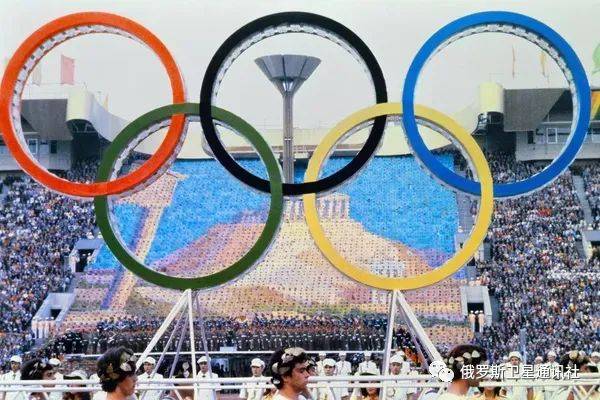
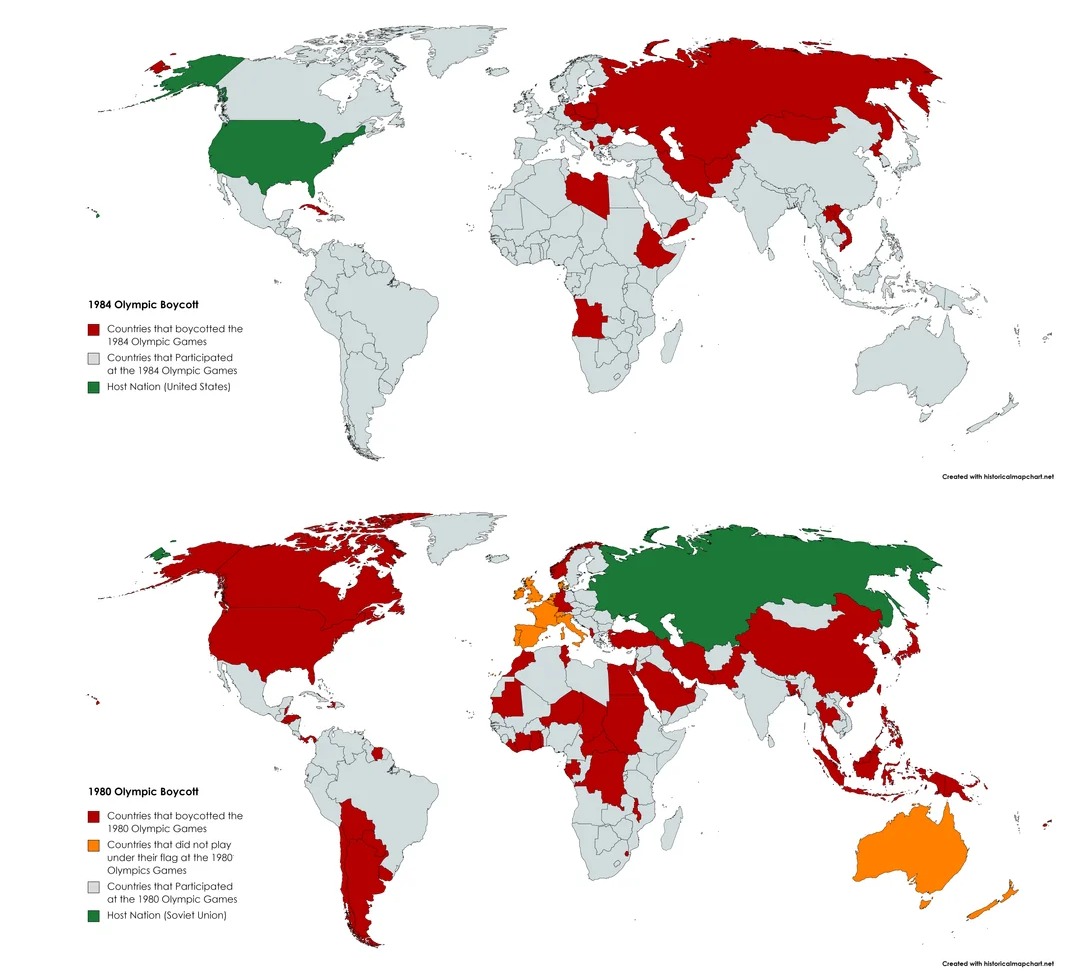
The Moscow Games opened on July 19, 1980, under a cloud of absence. Of the 80 countries that ultimately participated, many sent drastically reduced delegations. Several nations ? including Great Britain, France, Australia, and Italy ? competed but marched under the Olympic flag rather than their national flags, and the Olympic anthem replaced their national anthems at medal ceremonies. This was a compromise: they attended, but they made their protest visible.
The scale of the boycott was unprecedented in Olympic history. Among the notable absentees:
- United States: The leader of the boycott, absent from a Summer Olympics for the first time since 1896.
- West Germany: A key NATO ally, solidly behind Carter’s decision.
- Japan: Asia’s sporting powerhouse, stayed home.
- Canada: A firm supporter of the boycott.
- China: Competing in its first Summer Olympics since 1932 ? but chose to boycott Moscow and wait for Los Angeles in 1984.
In total, approximately 65 nations stayed away ? either fully boycotting or participating under protest conditions. It was the largest boycott in Olympic history by raw numbers.
The Games that did take place felt hollow. Television audiences were down. The opening ceremony at Lenin Central Stadium had visible empty sections. Western journalists on the ground described an atmosphere more state-sponsored than celebratory. The Soviet Union had spent four years and billions of rubles preparing for the Games ? building venues, renovating the city, projecting an image of socialist modernity. Much of that investment was met with empty seats and muted international coverage.
The Games That Went Ahead: Soviet Dominance Without Rivals
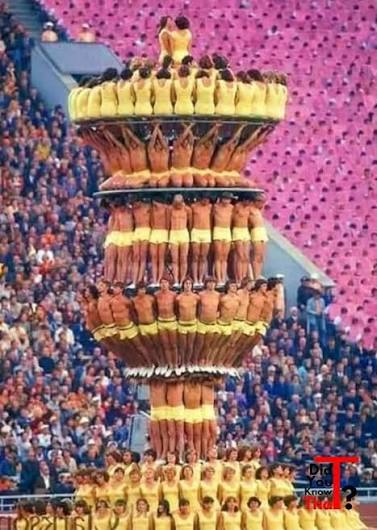
Despite the boycott, 80 countries did compete in Moscow ? a number the Soviet press trumpeted as proof that the “anti-Olympic campaign” had failed. Athletes from 36 of those nations won medals. The Soviet Union itself won 195 medals in total, including a staggering 80 gold ? the highest single-nation gold medal count in Summer Olympic history.
But the record comes with an asterisk. The Soviet team dominated events where absent Western athletes would have been their strongest competitors: swimming, track and field, basketball, and boxing were all affected. American swimmers alone had won 25 of 26 possible gold medals in Montreal 1976; without them, the Soviet team and East Germany swept the pool.
For the athletes who did compete, the experience was bittersweet. Gymnast Alexander Dityatin won eight medals (three gold), a record for a single Games. Track star Miruts Yifter of Ethiopia won gold in both the 5,000m and 10,000m. But for many competitors ? especially from Western nations that did attend ? the Moscow Games were an awkward compromise between sporting ambition and political conscience.
1984 Los Angeles: The Soviet Revenge
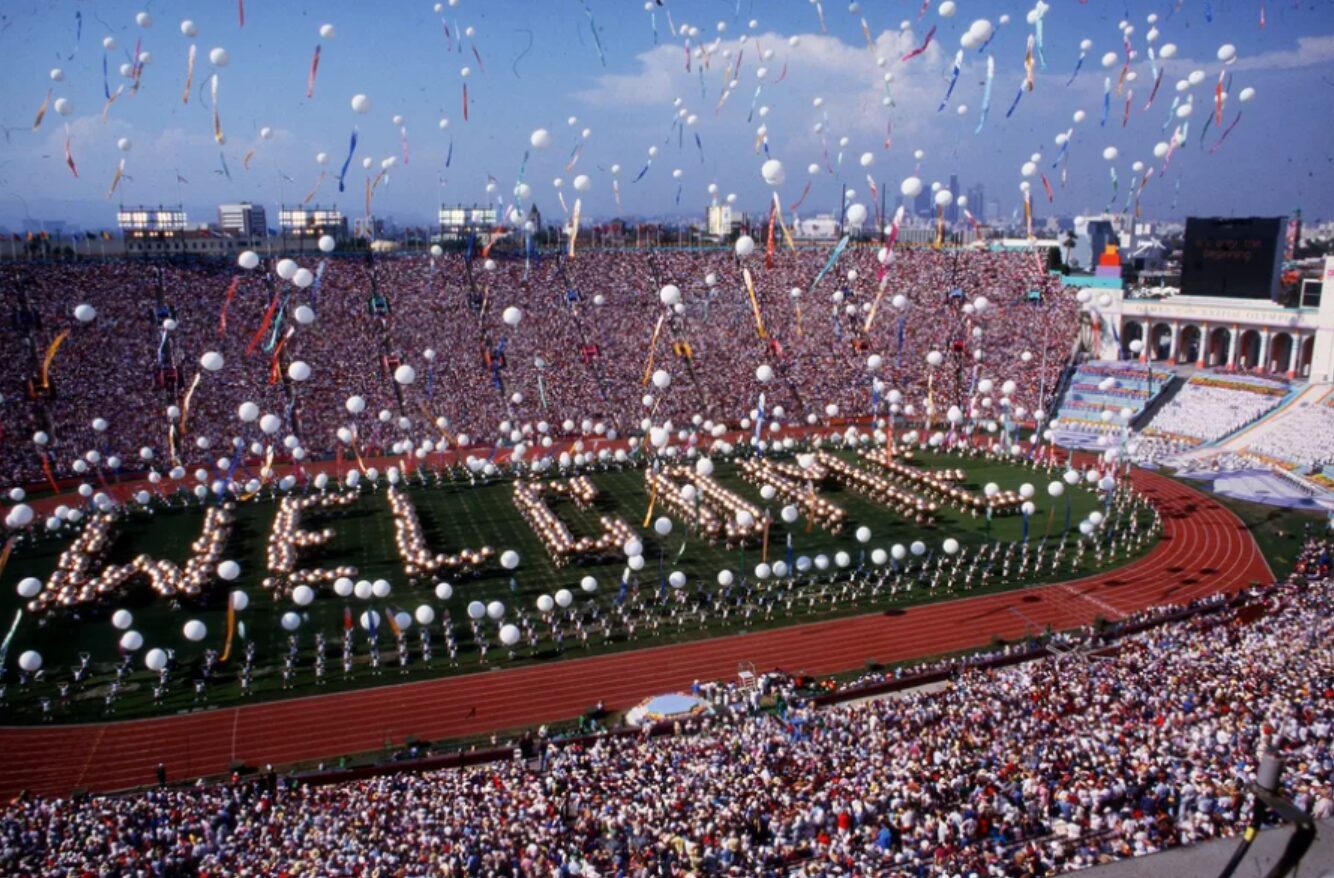
The Soviet Union had not forgotten the humiliation of 1980. As the 1984 Los Angeles Olympics approached, the Kremlin began to lay the groundwork for retaliation. The official reason cited was security concerns ? the Soviet government claimed that “chauvinistic sentiments and an anti-Soviet hysteria” were being whipped up in the United States. But the real motive was political revenge.
On May 8, 1984, the Soviet Olympic Committee announced that it would not participate in the Los Angeles Games. The Soviet Union was soon joined by 13 other Eastern Bloc countries ? including East Germany, Cuba, Czechoslovakia, Poland, Bulgaria, and Hungary ? in a coordinated boycott that mirrored, in spirit if not in scale, the 1980 action.
The absence of the Eastern Bloc was devastating for many sports. The Soviet Union had won 195 medals in Moscow; East Germany, 126. Their departure transformed Los Angeles into a one-sided competition. The United States won 174 medals (83 gold) ? the second-highest single-nation gold medal count ever, behind only the Soviet Union’s 1980 mark.
But the competition was again incomplete. The world’s best weightlifters, wrestlers, and gymnasts from the Eastern Bloc stayed home. In certain sports ? men’s gymnastics, wrestling, weightlifting ? the competitions were effectively half-empty. The Olympic ideal of the world’s best athletes competing against each other had been compromised for a second consecutive Games.
Seoul 1988: A Return to Unity
After two consecutive boycotts, the Olympic world held its breath for Seoul 1988. Would the pattern continue? Would North Korea or the Soviet Union stay away?
North Korea, demanding co-host status, did boycott the Seoul Games ? and was joined by Cuba, Ethiopia, and Nicaragua. But this was a much smaller boycott, involving only a handful of nations. The critical development was this: the Soviet Union participated. Under the reforming leadership of Mikhail Gorbachev, whose policies of glasnost (openness) and perestroika (restructuring) were reshaping Soviet foreign policy, Moscow made the decision to return to the Olympic fold.
Seoul 1988 was the first Summer Olympics since Montreal 1976 to feature both the United States and the Soviet Union. It was, finally, a complete Games. The competition was electric ? Ben Johnson’s 100m sprint, Florence Griffith Joyner’s world records, the “Dream Team” precursor in basketball. The Soviet Union and East Germany sent their full teams, and the medal table reflected genuine global competition: the USSR won 55 golds, East Germany 37, and the United States 36.
Seoul also marked a turning point in Olympic politics. The International Olympic Committee, under the presidency of Juan Antonio Samaranch (elected in 1980), had worked tirelessly behind the scenes to prevent another boycott. Samaranch negotiated directly with governments, offered concessions, and rebuilt trust that had been shattered by the 1980 and 1984 disputes. The Seoul experience proved that the Olympics could still function as a unifying global event ? but it also showed how fragile that unity could be.
Legacy: Can the Olympics Ever Escape Politics?
The boycotts of 1980 and 1984 fundamentally changed the Olympic movement. They raised uncomfortable questions that the IOC is still grappling with today.
Should politics interfere with sports? The obvious answer is no ? the Olympic Charter explicitly prohibits discrimination on political grounds. But the reality is more complex. The Olympic Games are the world’s largest peacetime gathering of nations; it would be naive to expect them to exist in a political vacuum. Governments pay for stadiums, grant visas, enforce security, and make decisions about whether their athletes travel at all.
Should the Olympics be used as a political tool? This is the harder question. Carter argued that the Moscow boycott sent a moral signal about Soviet aggression. The Soviet Union argued the same about Los Angeles. But in both cases, the primary victims were athletes ? many of whom trained their entire lives for a chance at Olympic glory that never came. American swimmer Tracy Caulkins, who would have been a favorite in Moscow, never got her shot. Soviet gymnast Olga Bicherova, then at her peak, never competed in Los Angeles.
The boycotts also distorted the historical record. Medal tables from 1980 and 1984 are incomplete ? they tell us who won in a reduced field, not who the best in the world truly was. Every discussion of “most gold medals by a nation” comes with a footnote about the boycotts.
After the Cold War ended, the boycott threat receded but never disappeared. The IOC’s response has been to make boycotts harder ? binding host cities and National Olympic Committees through contracts, and threatening sanctions against governments that interfere. But political tensions still flare: in 2016 and 2020, debates about Russia’s state-sponsored doping program led some to call for a boycott of the Rio and Tokyo Games.
Perhaps the most honest answer is that the Olympics will never be truly separate from politics ? but the goal should be to keep political interference proportional. A protest at an opening ceremony is one thing. A government preventing its athletes from competing is another entirely. The 1980 and 1984 boycotts remain the most extreme examples of what happens when that line is crossed.
As we look toward future Games ? with debates about human rights, climate change, and geopolitical conflicts continuing to swirl ? the lesson of 1980 and 1984 is clear: the Olympic flame is fragile, and it takes constant vigilance to keep it burning for everyone.
References
- Guttmann, A. (2002). The Olympics: A History of the Modern Games (2nd ed.). University of Illinois Press.
- Findling, J. E., & Pelle, K. D. (Eds.). (1996). Historical Dictionary of the Modern Olympic Movement. Greenwood Press.
- Sarantakes, N. E. (2010). Dropping the Torch: Jimmy Carter, the Olympic Boycott, and the Cold War. Cambridge University Press.
- Hulme, D. (1990). The Political Olympics: Moscow, Afghanistan, and the 1980 U.S. Boycott. Praeger Publishers.
- International Olympic Committee. (1981). Official Report of the Games of the XXII Olympiad, Moscow 1980 (Vols. 1?3). Moscow: Fizkultura i Sport Publishers.