
The Boxer Who Checked His Gloves and Never Fought Again

Kevin Allen, Welsh amateur boxer, bronze medalist at the 1982 Commonwealth Games. After his quarter-final win, he walked into the changing room and found his gloves had been switched. For forty years, he told no one.
There are many ways to leave a sport. You can announce your retirement at a press conference, eyes wet, thanking your coaches and your family. You can fade out over a few seasons, your name sliding down the rankings until someone else takes your slot. You can go out on a win, arms raised, a perfect ending manufactured for the cameras.
Kevin Allen did none of these things. He walked into a changing room in Brisbane in 1982, picked up his gloves, and realized they were not his. Then he walked away from boxing forever. He was twenty-two years old and had just won a Commonwealth Games bronze medal. He never explained why he quit. Not to his teammates. Not to the press. Not to anyone.
For forty years, his silence held.
Allen was born in Newport, South Wales, in 1959—a steel town, a rugby town, the kind of place where boys learned to use their hands before they learned to use their words. He started boxing at fifteen, not because anyone told him to, but because the local gym was three streets from his house and smelled of sweat and leather and something like purpose. He was never the fastest or the hardest hitter, but coaches noticed something else: his defensive instincts. One trainer said it was like he had an extra eye at the back of his head.
By 1982, he had fought his way onto the Welsh national team. The Commonwealth Games in Brisbane that year was the pinnacle of his career—or should have been. Competing in the middleweight division, he won his quarter-final on a split decision against an Australian opponent, guaranteeing himself at least a bronze medal. He lost in the semi-finals, but the podium was his. For a kid from Newport, that meant something. It meant his name in the local paper. It meant free pints at the pub for the rest of his life. It meant he had been somebody, even if only for a season.
Then he returned to the changing room.
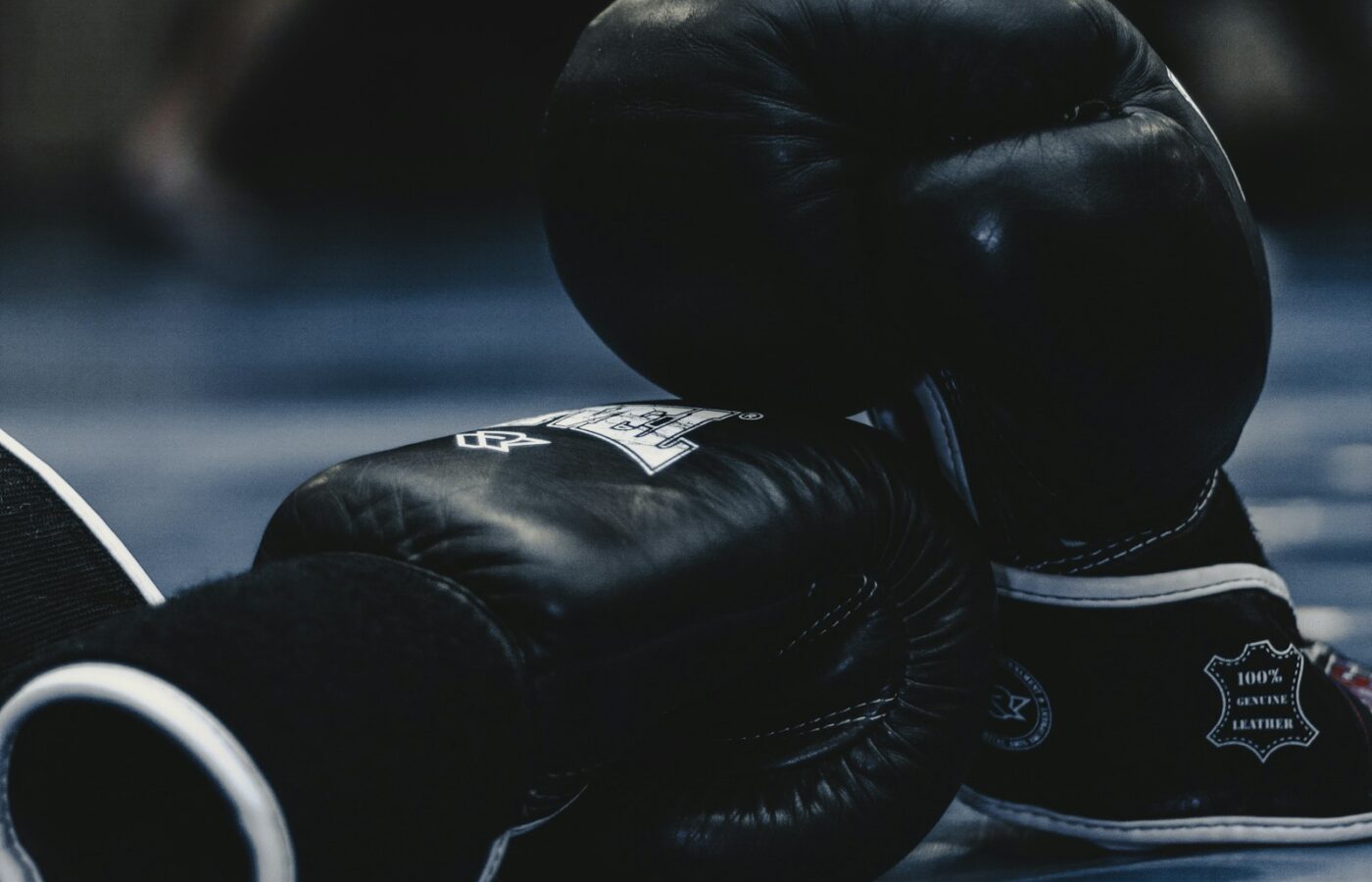
The gloves sitting on the bench were the same model and color as his, but Allen knew immediately: they were not his. He had custom-fitted gloves, broken in over hours of training. He tied his own wraps, always with the same knot, a particular pattern he had developed over years. The knot on these gloves was different. The wear on the padding was in the wrong places. Someone had switched them.
Here is what he did: nothing. He did not report it to an official. He did not confront his opponent’s camp. He did not call a press conference or write a letter to the British Amateur Boxing Association. He got dressed, left the stadium, and never fought competitively again.
Not a single person at the time knew why.
—
The story might have ended there—one more anonymous boxer who disappeared from the record books—if not for a BBC Wales reporter who tracked Allen down in 2022. He was sixty-three years old, running a small printing business in a Welsh town. His hair had gone white. He still had a boxer’s knuckles, the joints thickened from years of impact. In a documentary segment that lasted barely twenty-five minutes, he spoke about Brisbane for the first time.
“The gloves weren’t mine,” he said. His voice was even, unhurried, the way someone speaks when they have had four decades to rehearse a sentence. “I tied a specific knot on my wraps. The knot on those gloves wasn’t my knot.”
The reporter asked the obvious question: why didn’t you say anything?
Allen paused. “What could you say? You have no proof. If you speak up, people think you’re a sore loser making excuses. But I wasn’t making excuses—I’d won the quarter-final. I just… knew.”
That word—*knew*—carried more weight than any accusation. He did not name who switched the gloves. He did not speculate about motives. He did not point fingers at opponents, coaches, or officials. He simply said: those gloves were not mine, I did not know what had happened, and I decided I was done.
—
What makes this story worth telling, forty years later, is not the gloves. It is the silence that followed them.
Boxing has never lacked for loud protests. Fighters complain about judging, about draws, about the canvas being too soft or the lights too bright. The instinct to defend oneself—to insist that the outcome was unfair, that someone else is to blame—is not a character flaw in sport. It is practically a tradition. Allen did something far more difficult. He understood that he could not prove what he knew. He understood that an accusation without evidence would consume him more than it would change anything. So he made a choice that no one applauded, that no one even noticed at the time: he opted out.
Not heroically. Not as a moral crusader. He simply could not continue walking a path he no longer trusted.
Imagine the four decades that followed. Every time boxing came on the television. Every time someone at the pub said, “Didn’t you used to fight?” Every time he walked past a gym and caught that smell of sweat and leather. He ran a printing business instead. He filled his life with the scent of ink and paper rather than canvas and resin. He never coached. He never wrote a memoir. He never posted cryptic hints on social media about “what really happened back then.” He vanished completely, until a journalist with a camera and a small crew knocked on his door.
—
The bronze medal from Brisbane is still in his house. He never hung it on the wall. It sits in a box, in the attic. He told the BBC he takes it out occasionally, not often.
“I’m still proud of every fight I won,” he said, near the end of the documentary. “But I never missed boxing. What I miss is the young man who believed everything was fair.”
That line is not an accusation. It is something quieter and rarer: an epitaph for a version of yourself that you outlived.
In sports writing, we are trained to chase the story of the person who fought back—who overcame the bad decision, the cheating opponent, the corrupt system. We celebrate the whistleblower, the protest, the comeback. Kevin Allen is none of these things. He is a man who, at twenty-two, looked at a pair of gloves that were not his and made a private calculation: I cannot prove this, and I will not let it consume me.
He did not win a gold medal. He did not expose a scandal. He did not change the sport. What he did was harder to explain and easier to forget: he walked away, and he stayed gone, and when he finally told the truth forty years later, he told it without anger, as if it were simply a fact that had been waiting for the right listener.
The gloves are long gone now. The changing room in Brisbane has probably been renovated or demolished. But somewhere in a small printing shop in Wales, a man with white hair and boxer’s knuckles still remembers the knot that wasn’t his.
—
**Tags:** #KevinAllen #Boxing #CommonwealthGames #Wales #Brisbane1982 #SportsAndSilence
**Sources:** BBC Wales documentary (2022), Kevin Allen’s first-person account; 1982 Commonwealth Games boxing official results; British Amateur Boxing Association archives. All direct quotations are from Allen’s interview in the BBC documentary.