The First Time He Ran a Marathon, He Chatted with the Leader

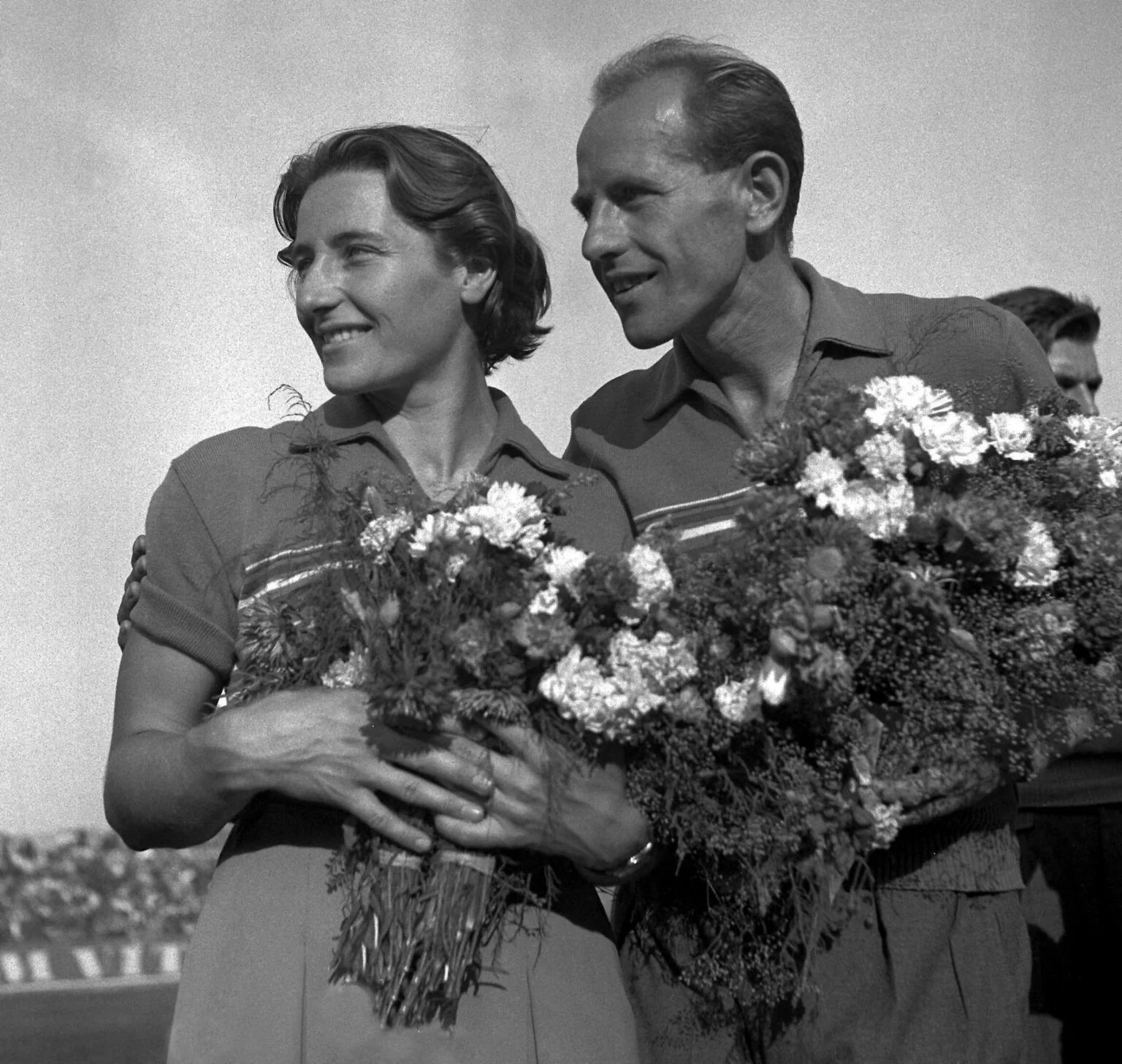
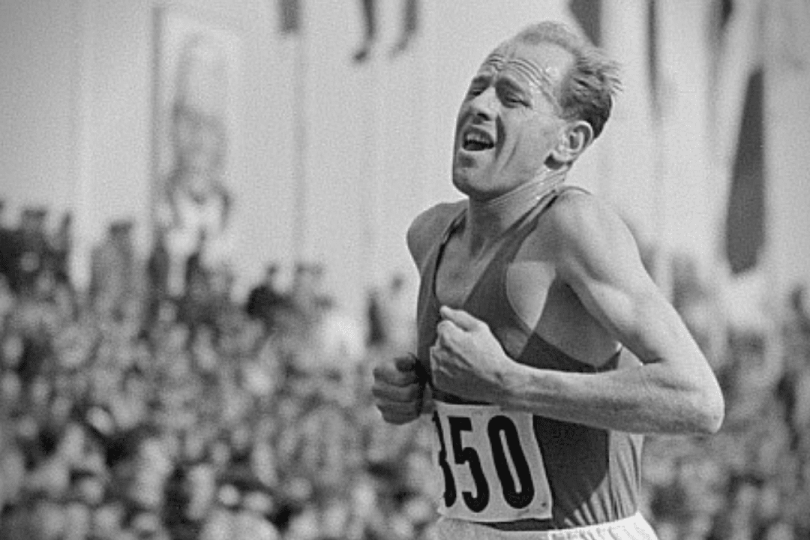
Emil Z?topek, Czech distance runner known as the “Human Locomotive.” At the 1952 Helsinki Olympics, he won gold in the 5000 meters, 10000 meters, and marathon?the only triple crown in Olympic track history. It was the first marathon of his life._
July 27, 1952. Helsinki. The Olympic marathon gun sounded.
A Czech runner settled in beside Jim Peters of Great Britain. Peters was the world record holder. The entire world expected him to win. The man beside him was not a stranger?Peters knew this was Z?topek, the Czech who had already taken gold in the 5000 and 10000 meters in Helsinki. But a marathon is not a track. Forty-two kilometers of road, every footfall landing at a different angle. Z?topek had never run a marathon before.
A few kilometers in, Z?topek spoke. He asked Peters: “Is this pace right?” Peters later said he thought the Czech was joking. A man running his first marathon, asking the world record holder whether the pace was correct. He ran on. Z?topek was still beside him. It was not a joke. At the halfway mark, Z?topek accelerated. He dropped Peters. He dropped everyone. He crossed the line first. Olympic marathon gold?the first marathon of his life.
Afterward, a reporter asked: you have already won the 5000 and 10000. Why run the marathon? He said: “I thought I’d give it a try.”
That line was later printed on the covers of his biographies. But if you know how he trained, you know “give it a try” was not casual. Z?topek ran through the Czech forests in heavy army boots. In winter he wore a gas mask to simulate high-altitude oxygen deprivation. He would sprint four hundred meters, rest briefly, sprint again?a hundred times, two hundred times. His own record was over a hundred 400-meter repeats, each close to race pace. This training method is today called interval training, and Z?topek is widely considered its pioneer. But in the 1950s, people simply watched him run?face contorted, looking like every step caused him agony?and gave him a nickname: the Human Locomotive.
People thought he was suffering. He was not suffering. He was negotiating with pain. He could open his mouth on the marathon course and ask about the pace not because he was coasting?because at the very edge of human endurance, he had kept a sliver of reserve. That sliver, only he knew about.
In 1968, Z?topek did something that altered another person’s life entirely. The Soviet Union invaded Czechoslovakia. Z?topek publicly opposed the invasion. He signed the Two Thousand Words manifesto. He was dismissed from the army, assigned to work as a garbage collector, banned from all public events, erased from sports history?his name removed from textbooks. He worked in the garbage yards for six years. Later he was allowed to do clerical work, then field surveys. He never left Czechoslovakia. He died in 2000. The state gave him a funeral.
The man who asked “Is this pace right?” at the 1952 Helsinki Olympics spent six years hauling trash. Both things were the same man.