
The Man Who Spent Three Weeks at Sea to Represent China

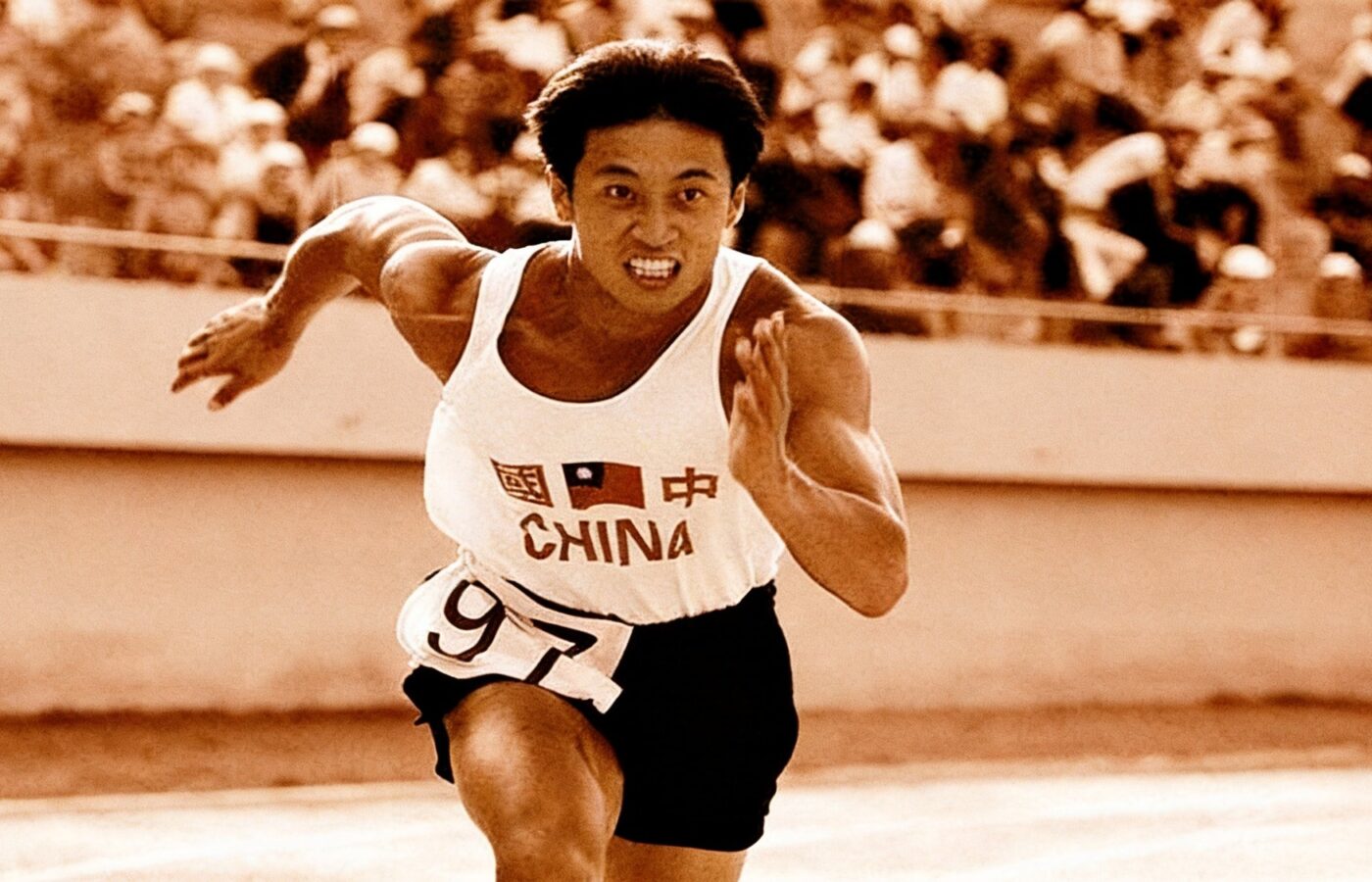
Liu Changchun, Chinese sprinter, born in 1909 in Dalian. In 1932, he was the sole athlete representing China at the Los Angeles Olympics. The Japanese puppet state of Manchukuo tried to claim him as their competitor. He refused. Funded by a Chinese general, he boarded a ship to America. After three weeks at sea, he stood at the Olympic start line. It was the first time China appeared at the Olympics.
July 8, 1932. Shanghai harbor. The SS President Wilson was docked at the pier.
A twenty-two-year-old man walked up the gangway carrying a worn leather suitcase. No one saw him off—no delegation, no coach, no translator, no team doctor, not even a proper national flag. He was the only passenger on that ship representing China. His destination: Los Angeles, where the Tenth Olympiad was under way.
Two months earlier, the Japanese-backed puppet state of Manchukuo had been declared in Changchun. The Japanese wanted the puppet regime to look like a real country. For that, they needed an athlete at the Olympics. They found Liu Changchun. At the time, he was the fastest sprinter in China. In Japanese newspapers, his name had already been printed under the Manchukuo banner. Liu saw it. He published a statement in the Tianjin Dagong Bao. The statement was simple: I am Chinese. I do not represent Manchukuo.
Then he began figuring out how to get to Los Angeles—as a Chinese man.
General Zhang Xueliang gave him eight thousand silver dollars. He bought a ticket. Shanghai to Los Angeles: nearly ten thousand kilometers. The steamship took three weeks to cross the Pacific. He was seasick. Most of the time, he lay in his cabin. But every day, whenever the waves eased even slightly, he climbed to the deck and ran—sprinting back and forth along a corridor less than fifty meters long. That was his only training for three weeks.
July 30, 1932. The Los Angeles Memorial Coliseum. The opening ceremony of the Tenth Olympiad. National delegations filed into the stadium. China entered sixth. One man. Liu Changchun raised the flag of the Republic of China and walked the length of the stadium alone. People in the stands stood and applauded—not because China was powerful, but because this man had actually come.
Two days later. The 100-meter heats. He had not trained properly in three weeks. His reaction time was slow. He finished fifth in his heat and did not advance. In the following days, he ran the 200 meters and was eliminated again. His Olympic Games lasted only a few days. But the moment he stood at that start line—that was China’s first second in Olympic history.
Liu Changchun’s Olympic results were ordinary. No—ordinary is too generous. He failed to advance past the heats in any event. He won no medal. He had no money to return home and was stranded in the United States for a time, relying on donations from local Chinese communities to buy a return ticket.
Back in China, he taught physical education at a university. His later decades held no glorious championship moments, no floods of media coverage. He was an ordinary sports teacher. He died in 1983 at the age of seventy-four. That same year, Liu Xiang was born—the man who would later win China an Olympic gold in the 110-meter hurdles came into the world the same year Liu Changchun left it.
Liu Changchun brought home no medal in 1932. He brought home something else. He made the word “China” appear at the Olympics. Not Manchukuo. Not the Japanese occupation zone. China. One man, one ship, three weeks of ocean. The moment he stood at the start line, he had already finished the most important race of his life.