
The Barefoot Steeplechase: Etenesh Diro’s Unforgettable 2,800 Meters

The Runner from Jeldu
Etenesh Diro Neda grew up in Jeldu, a district in Ethiopia’s Oromia region. She began running as a child on dirt roads, through the same highlands that forged generations of Ethiopian distance runners. She specialized in the steeplechase, an event that demands both endurance and agility.
By 2015, she had competed at the African Games in Brazzaville and continued to improve. When she qualified for the 2016 Rio Olympics, it was her first Olympic Games. She arrived as Ethiopia’s representative in an event where the country had high hopes.
The Moment Her Shoe Came Off
August 13, 2016. Rio’s Olympic Stadium. The starting gun fired for the second heat of the women’s 3000m steeplechase. Twenty runners surged forward. Etenesh Diro, then 25, settled into the pack.
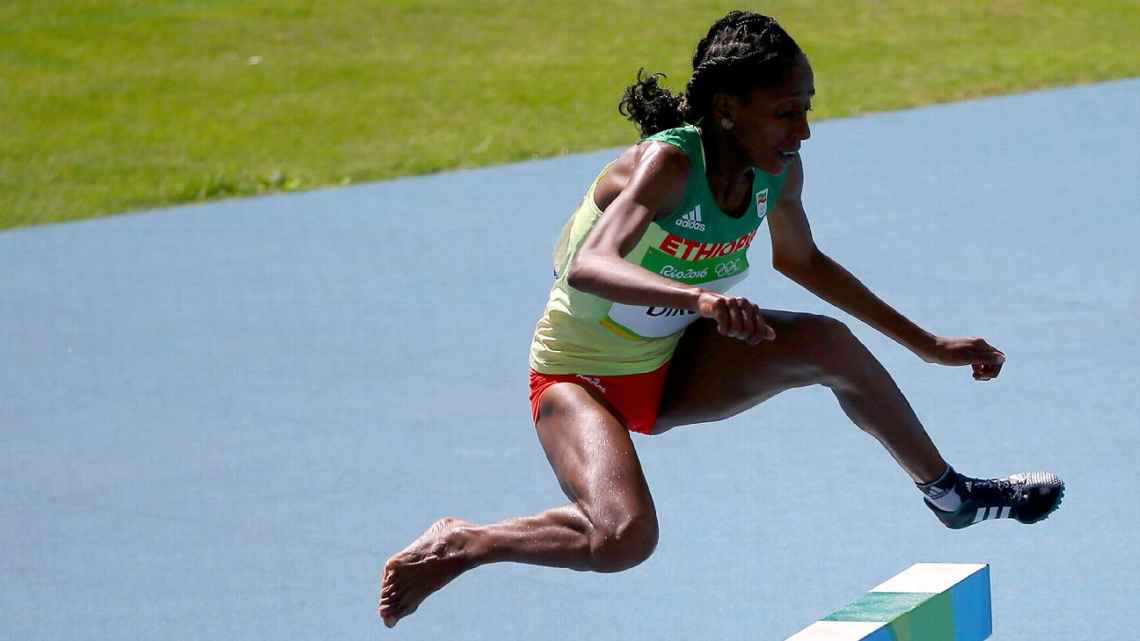
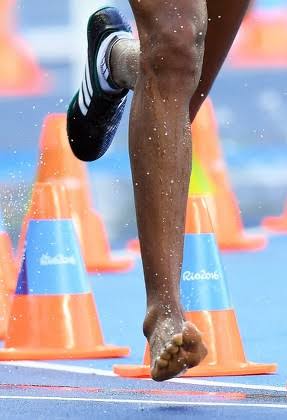
Two hundred meters in, a tangle of legs. Another runner’s spike caught the heel of her right shoe and yanked it clean off. The shoe skidded across the track behind her. She stumbled for half a stride, looked down, and kept running.
The 3000m steeplechase is one of the most punishing events in track — 28 fixed barriers and 7 water jumps, each requiring precise foot placement and explosive power. Running it on a good day demands everything an athlete has. Running it with one bare foot — across rigid barriers, into a water pit, on a hot track surface — is something else entirely.
Television replays showed her right foot landing on barrier tops, bare skin meeting hard plastic. In the water jumps, she splashed through with one shoe filling while her right foot gripped the wet surface unprotected. Lap after lap, she did not slow down. On the final lap, she passed three runners and finished 7th in 9:34.70.
Under normal rules, she was out — only the top three in each heat plus the six fastest losers advanced.
The Judges’ Decision
Within minutes, her coach and the Ethiopian federation filed a protest. The evidence was clear on replay: another runner had stepped on her heel and pulled off her shoe, a mishap that forced her to run an Olympic steeplechase heat with no protection on her right foot.
The Jury of Appeal reviewed the footage and made an unusual decision. Citing Rule 163.2b of the IAAF competition rules — which allows advancement when an athlete is “seriously affected” by an opponent’s action — they advanced Etenesh Diro to the final.
Two days later, on August 15, she toed the starting line for the final. Her foot had been taped and bandaged. She finished 15th in 9:38.77 — a result that, given what she had run through three days earlier, was its own kind of victory.
“I Did Not Want to Stop”
When journalists asked Etenesh why she did not stop, her answer was simple. As she told reporters afterward, she did not want to stop — she simply had no intention of quitting.
That sentiment became the headline that traveled farther than any medal story from those Games. Etenesh Diro had not run for glory at that moment. She had run because stopping was not in her nature.
Her legacy today is not measured in medals. It is measured in a single image: a young Ethiopian woman, one foot bare, one shoe gone, charging over a barrier with her eyes fixed on the finish line. The image of an athlete who, when everything went wrong, chose to keep going.
References
- Olympedia — Etenesh Diro profile
- “Etenesh Diro advances to Olympic steeplechase final after losing shoe,” BBC Sport, August 13, 2016
- “Rio 2016: Ethiopia’s Etenesh Diro runs 2,800m without shoe,” The Guardian, August 13, 2016
- Rio 2016 Official Report — Athletics, Women’s 3000m Steeplechase
- World Athletics — Etenesh Diro profile