
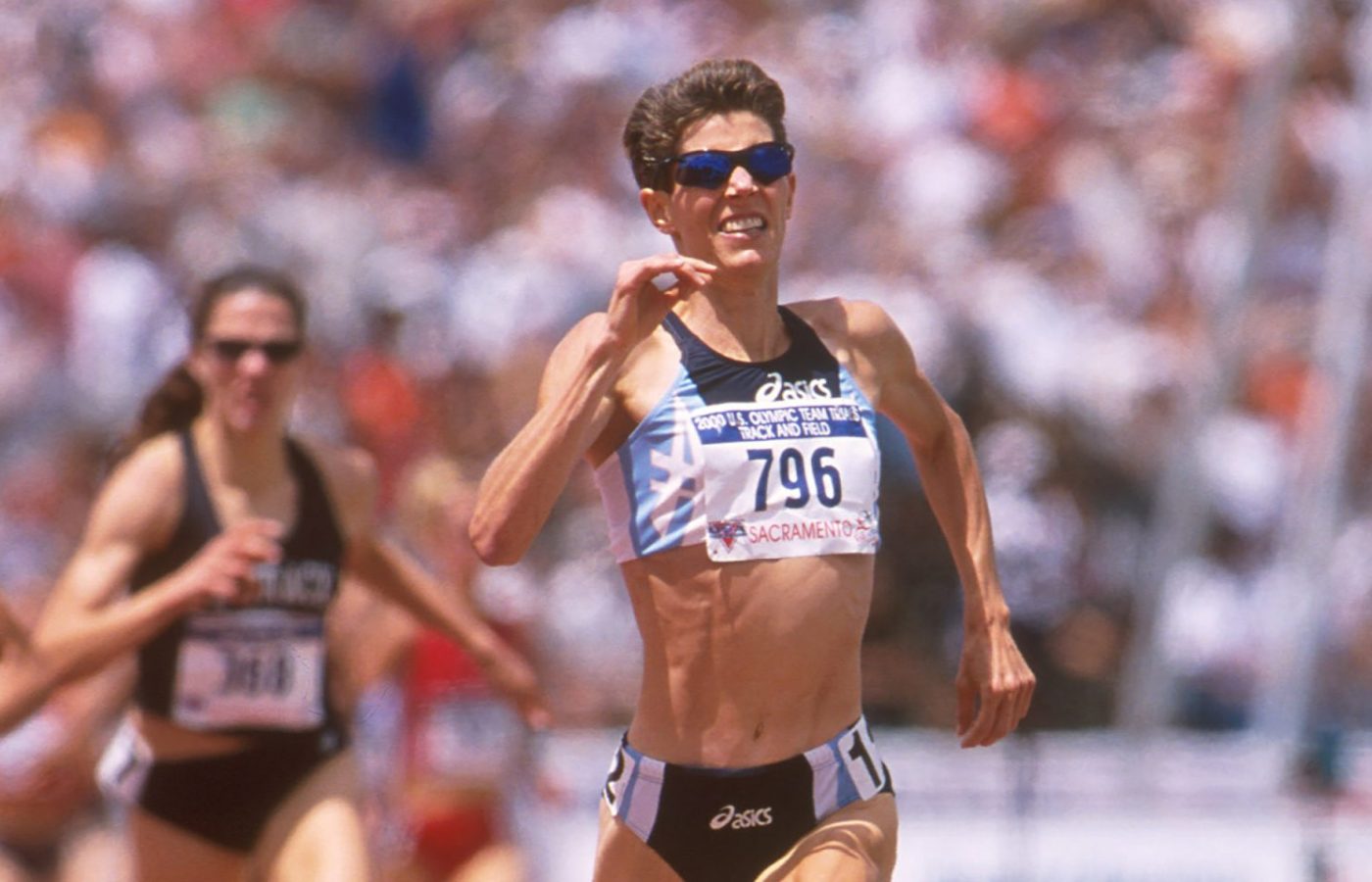
The Only American to Compete in Both the Olympics and Paralympics — Marla Runyan’s Story
The World in Fragments
Marla Runyan was born on January 4, 1969, in Santa Maria, California. At age three, doctors diagnosed her with Stargardt disease — a form of juvenile macular degeneration that destroys the central retina. By age nine, she had 20/300 vision: she could see a hand waving at arm’s length but could not read a book, recognize a face across the room, or see a blackboard from the front row. Her world existed in fragments — peripheral shapes, blurs of color, shadows in motion.
She learned to read Braille. She navigated school by memorizing hallways and counting steps. She played tag at recess and ran faster than most children, even when she could barely make out their silhouettes.
In high school, a physical education teacher noticed her speed. She could not see the lanes or the finish line clearly. She ran by following the blur of the person ahead, counting her strides, trusting her body when her eyes could not help. Her first race was a revelation. “I felt the wind,” she said later. “I felt my legs moving. And for the first time, my blindness didn’t matter.”
From Barcelona to Barcelona’s Opposite
At San Diego State University, Runyan ran for the Aztecs and competed in the heptathlon. But the path to elite competition was not straightforward. At the 1992 Barcelona Paralympics, she won four gold medals — 100 meters, 200 meters, 400 meters, and long jump. In the 400m, she ran 58.72 seconds, a Paralympic record.
But Runyan had a larger dream. She wanted to stand on the same starting line as the world’s best sighted runners. She trained with a guide runner in practice but raced alone — memorizing every curve, every marker, every stride count until it became automatic. On race day, she did not look for the finish line. She knew exactly how many strides it would take to get there.
Sydney 2000: The First Legally Blind Olympian
At the 2000 US Olympic Trials, Runyan finished third in the women’s 1500 meters in 4:06.47, earning her spot in Sydney. She became the first legally blind track and field athlete in Olympic history.
In the 1500-meter final, she lined up against twelve women. She could not see the faces in the stands or the expressions of her competitors. But she could hear 112,000 spectators. She could feel the vibration of the track beneath her spikes. She finished eighth in 4:10.01. No medal. But she had changed what the world believed was possible.
After the race, she told reporters: “I don’t think of myself as a blind runner. I think of myself as a runner who happens to be blind.”
Beyond the Oval
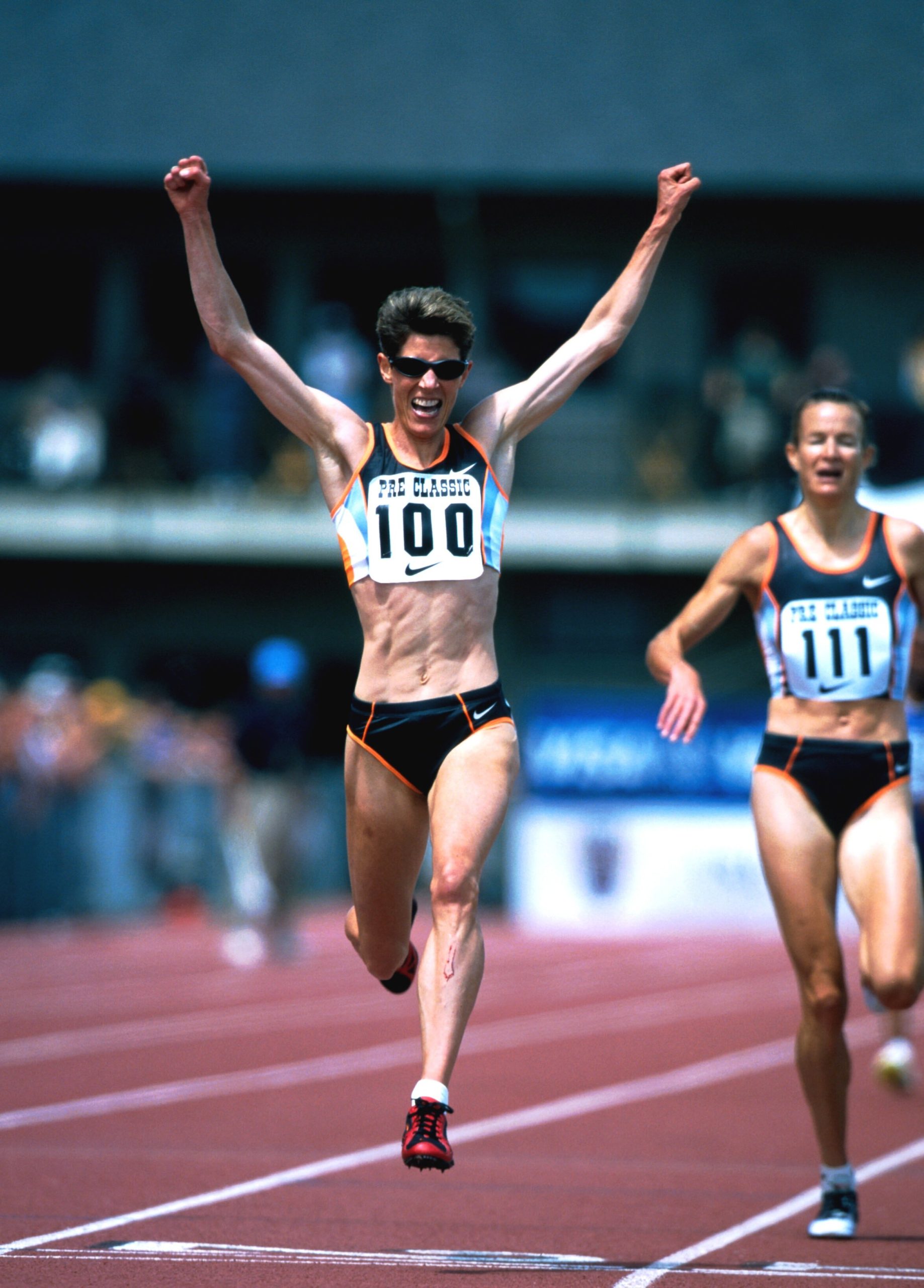
Runyan moved up in distance. From 2001 to 2003, she won three consecutive US national championships in the 5000 meters. She qualified for the 2004 Athens Olympics in the same event. On the roads, she became the top American finisher at both the 2002 New York City Marathon and the 2003 Boston Marathon — memorizing every turn of courses she could not fully see.
In 2012, at age 43, she competed in the London Paralympics in para-cycling. She became the only American athlete ever to compete in both the Olympic Games and the Paralympic Games — across three different disciplines: track, marathon, and cycling.
What She Proved
Marla Runyan never asked the world to lower its standards for her. She asked only for the chance to meet them. She defined herself by her speed, her endurance, and her discipline — not by what her eyes could or could not do.
Her legacy opened the door for a generation of athletes with disabilities to dream beyond the Paralympics. She proved that the Olympic and Paralympic movements are not separate worlds — they are two expressions of the same human drive to push beyond limits.
“Sometimes the finish line is just the finish line,” she said years later. “And other times, it’s the line between who you were and who you decided to become.”
References
- World Athletics — Marla Runyan profile
- International Paralympic Committee — Barcelona 1992 results database
- US Olympic & Paralympic Committee — Marla Runyan profile
- The New York Times — “A Blind Runner Makes History at the Sydney Olympics” (2000)
- National Women’s History Museum — Marla Runyan biography