
Is This Pace Right? The Day Emil Zátopek Chatted Through His First Marathon and Won

“Is This Pace Right?”
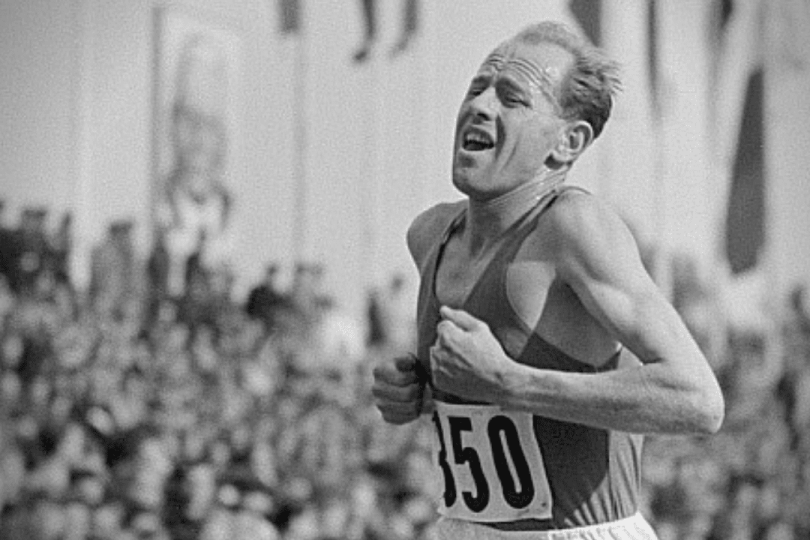
On July 27, 1952, Emil Zátopek stood at the starting line of the Olympic marathon. He had never run one in his life. Not once. Not even a practice run.
Next to him stood Jim Peters of Great Britain, the world record holder, a man who had spent years perfecting the distance. A few kilometers in, Zátopek pulled up beside Peters and asked, in broken English: “Is this pace right?”
Peters later said he thought the Czech was joking. He was not. He was genuinely curious. And he was comfortable enough to have a conversation.
At the halfway mark, Zátopek accelerated. He dropped Peters. He dropped everyone. He crossed the line first in 2:23:03.2 — Olympic gold. His first marathon.
Afterward, a reporter asked: “You have already won the 5,000 and 10,000. Why run the marathon?” Zátopek replied: “I thought I’d give it a try.”
How You Train to Chat Through a Marathon
Zátopek did not win by accident. He won because he trained differently than anyone else. In the forests behind his home, he ran repeated short bursts at maximum effort — 60 x 400 meters, each at near-sprint pace, with brief recovery jogs between. He trained in army boots, in the dark, sometimes carrying his wife Dana on his back for resistance. He ran in place in his living room until neighbors complained. Today this is called interval training. Zátopek invented it.
Between 1949 and 1954, he set 18 world records at distances from 5,000 to 30,000 meters. In Helsinki, he won the 10,000m on July 20, lapping so many runners that officials lost count. On July 24, he won the 5,000m with a surge that looked like suffering but was something else entirely — a calculation.
People thought his contorted face meant he was in pain. He was not suffering. He was negotiating with pain. On the marathon course, he could open his mouth and ask about the pace precisely because he had kept a sliver of reserve. That sliver, only he knew about.
The Fall
In 1968, when Soviet tanks rolled into Czechoslovakia to crush the Prague Spring, Zátopek did something that cost him everything. He publicly opposed the invasion. He signed the Two Thousand Words manifesto. He spoke out in defense of Czechoslovak sovereignty.
The regime stripped him of his military rank and expelled him from the army. He was assigned to haul garbage bins through the streets of Prague. The greatest distance runner in history — the only man to win the 5,000m, 10,000m, and marathon at a single Olympics — became a garbage collector. His name was removed from sports encyclopedias. For nearly two decades, the Human Locomotive was erased.
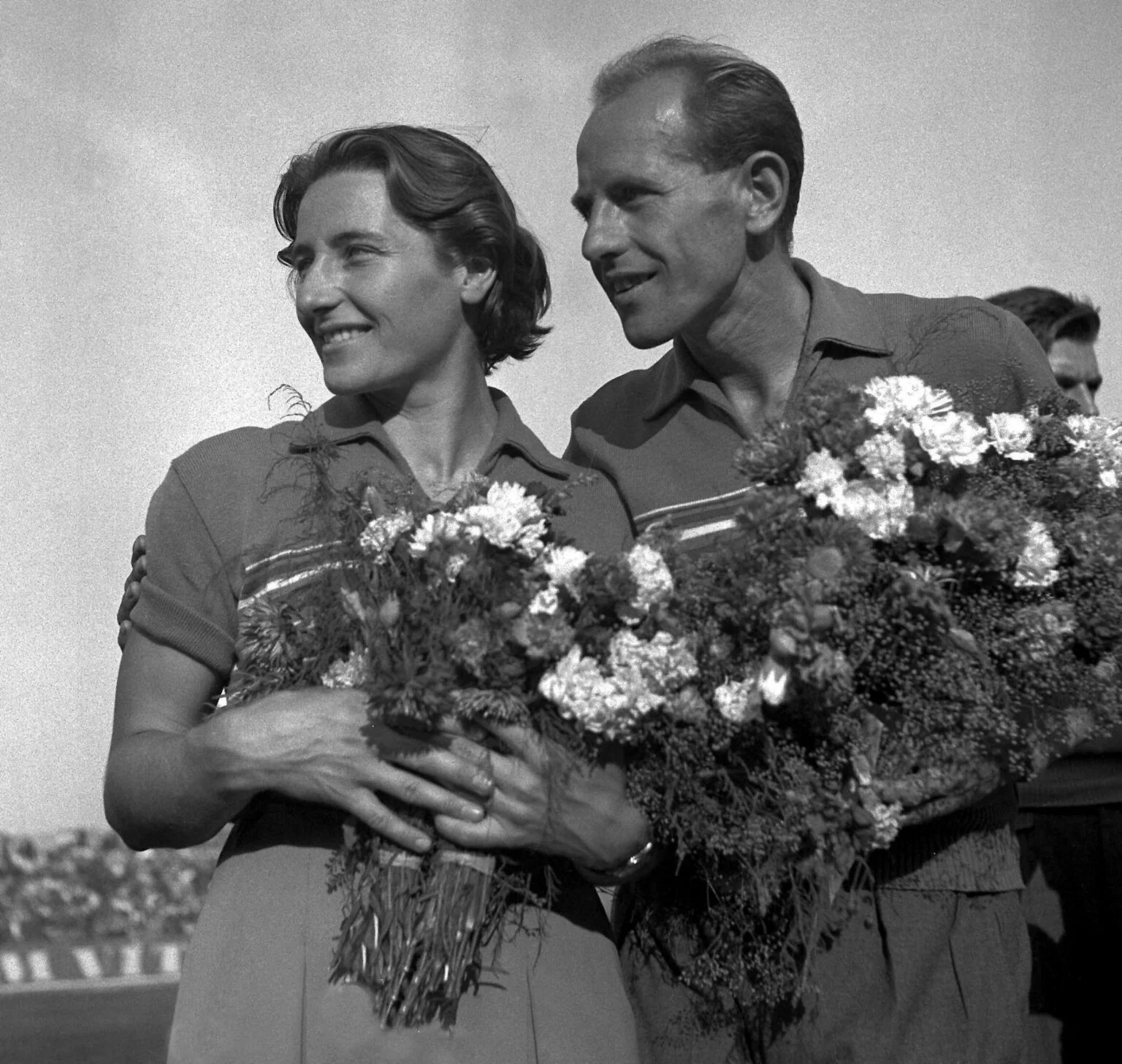
Dana Zátopková, his wife of 52 years and fellow Olympic gold medalist (javelin, Helsinki 1952), later said: “It was difficult to be the wife of Emil Zátopek. Because he was not just a runner. He was a phenomenon.”
On the day he won the 5,000m in Helsinki, Dana walked onto the same field and won gold in the javelin. The crowd erupted. That evening, they celebrated together — the only married couple to win individual golds at the same Olympic Games.
Carried Home
After the Velvet Revolution of 1989, President Václav Havel — himself a former political prisoner — personally rehabilitated Zátopek. He was awarded the Olympic Order by the IOC. The nation that had erased him finally remembered.
Zátopek died on November 21, 2000, at the age of 78. The state gave him a funeral. Thousands lined the streets of Prague. The man who had been reduced to hauling trash was carried home by a nation that had finally remembered who he was.
References
- Olympedia — Emil Zátopek
- Encyclopaedia Britannica — Emil Zátopek
- Askwith, Richard. *Today We Die a Little: The Rise and Fall of Emil Zátopek*, 2016
- Olympics.com — Emil Zátopek profile