The Sprinter Who Got a Standing Ovation for Finishing Last

The Girl Who Ran Through Bullets
Mogadishu in the 1990s was one of the most dangerous places on earth. The Somali Civil War had shredded the country into fragments controlled by warlords, clan militias, and Islamist insurgents. Into this chaos, Samia Yusuf Omar was born on March 25, 1991 — the same year the central government collapsed.
Growing up, Samia did not have playgrounds or school tracks. She had bombed-out streets, collapsed buildings, and the constant crack of gunfire. Yet she ran. She ran to fetch water. She ran to escape danger. She ran because running was the only thing that made her feel free.
Her mother, Dahabo Ali, had been a national-level runner in her youth. She recognized the raw talent in her daughter. “You run like the wind,” she told her. But her father died when Samia was young, leaving Dahabo to raise six children alone. The family survived on meager earnings, and Samia’s dream of becoming an Olympian seemed laughably impossible.
In Somalia, the sporting infrastructure had been obliterated. There were no proper tracks, no qualified coaches, no funding. The Somali Olympic Committee operated out of a single room. When Samia ran, she dodged not only potholes and rubble but also stray bullets. Militants from Al-Shabaab, the extremist group that viewed women’s sports as haram (forbidden), threatened female athletes openly.
“Every time I went out to train, I feared for my life,” Samia recalled in a rare interview. “But I also feared not chasing my dream.”
Training in the Shadow of Death
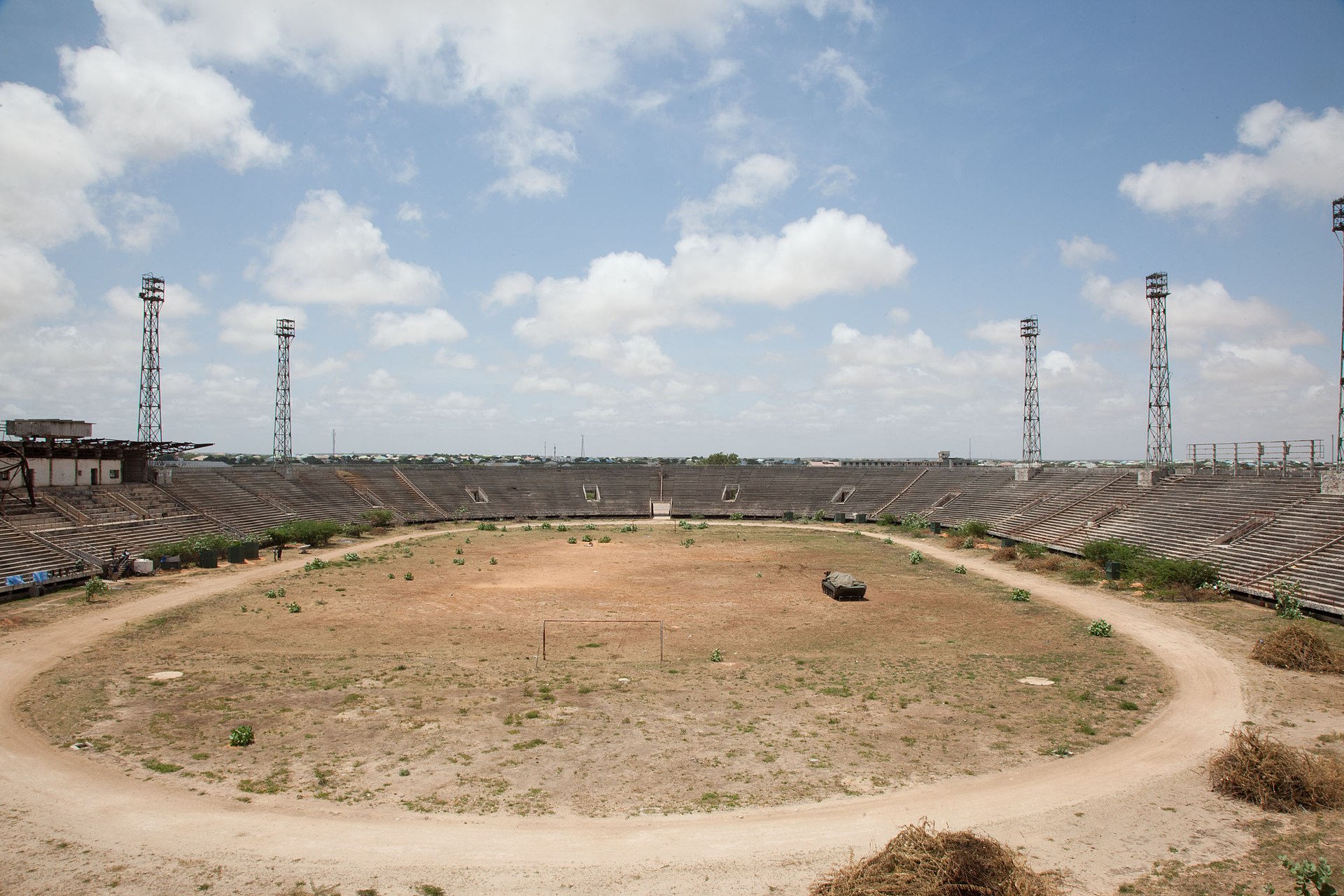
By her mid-teens, Samia was training with the few other female athletes who dared to run in Mogadishu. They gathered at dawn, when the fighting was relatively quiet, and ran on a dirt track near the stadium — a stadium that had been shelled so many times it looked like a skeleton.
There was no equipment. No coaching. No safety. Samia ran in worn-out shoes, on roads littered with shrapnel, past buildings with bullet holes. Militants harassed her. Neighbors warned her mother to stop her. But Samia kept running.
In 2007, she was selected to represent Somalia at the All-Africa Games in Algiers. It was her first trip outside the country. She did not win a medal, but she gained something more valuable: proof that she could compete on an international stage.
Beijing 2008: Last Place, Standing Ovation
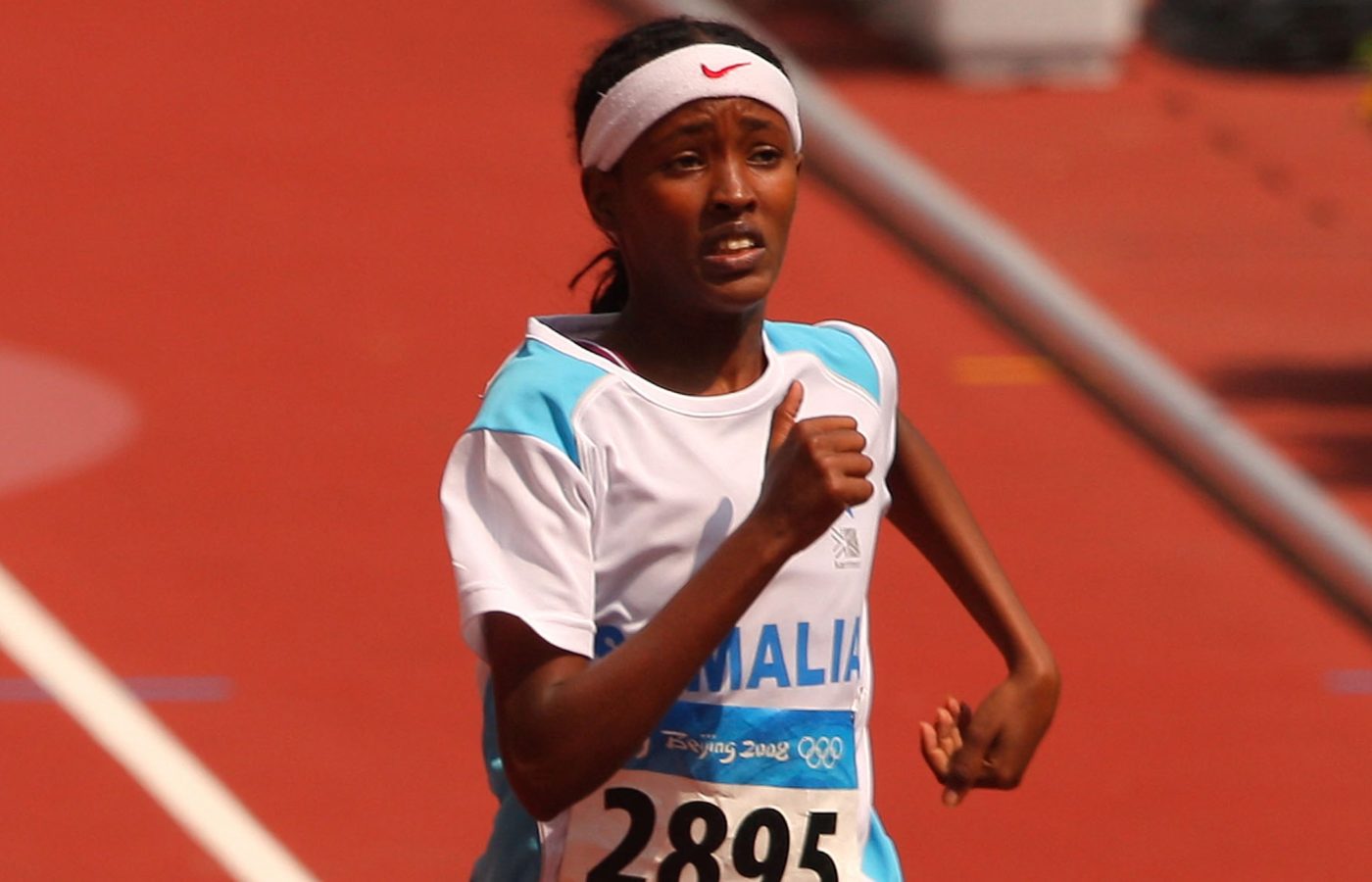
The 2008 Beijing Olympics were Samia’s first and only Olympic Games. She arrived in China with no coach, no agent, no entourage. She wore a second-hand T-shirt and borrowed running shoes that did not fit properly. While other athletes warmed up with professional staff, Samia stood alone, stretching on the side of the track.
Her event was the women’s 200 meters. She was drawn in Heat 7, alongside runners from Jamaica, the United States, and Brazil — athletes who trained in state-of-the-art facilities with sponsors and fame. Samia had trained on streets where snipers sometimes shot at her.
The gun fired. The other runners sprinted ahead. Samia ran with every ounce of strength she had, but her body was not built for this surface, these shoes, this level of competition. She crossed the finish line in 32.16 seconds — the slowest time of any sprinter in the entire Olympics, male or female.
But the crowd did not laugh. They stood. All 91,000 spectators in the Bird’s Nest rose to their feet and applauded. They had not seen a gold medalist. They had seen something rarer: a girl who refused to stop.
Samia did not understand at first. She thought they were clapping for someone else. When she realized the ovation was for her, she wept.
Life After Beijing
After the Olympics, Samia returned to Mogadishu, hoping that her participation would inspire change. In some ways, it did. She became a symbol of resilience. But the dangers did not disappear. Al-Shabaab’s control tightened. Female athletes became targets. Several of Samia’s fellow runners were attacked. One was killed.
In 2010, Samia’s mother fled the country. Samia stayed behind, continuing to train in increasingly impossible conditions. She knew that if she stayed in Somalia, her dream of running at the 2012 London Olympics would never become reality.
She made a desperate decision: she would try to reach Europe, find a coach, and train properly. It was the same journey thousands of African migrants had attempted before her — across the Gulf of Aden, through Sudan and Libya, and then across the Mediterranean Sea.
The Mediterranean Crossing
In early 2012, Samia began the journey. She traveled through Ethiopia and Sudan, then into Libya, a country in chaos after the fall of Gaddafi. Like countless refugees before her, she paid smugglers for a place on an overcrowded boat bound for Italy.
On April 2, 2012, somewhere in the Mediterranean, the boat capsized. Samia Yusuf Omar, 21 years old, drowned. Her body was never recovered.
The news reached the world slowly. A Somali official confirmed her death weeks later. The Olympic community mourned. The girl who had received a standing ovation in Beijing was gone.
Legacy: The Refugee Olympian
Samia Yusuf Omar’s story did not end in the sea. It spread.
Italian journalist Giuseppe Catozzella wrote a novelized biography titled Non dirmi che hai paura (published in English as Don’t Tell Me You’re Afraid), which became an international bestseller. German graphic novelist Reinhard Kleist also told her story in An Olympic Dream. Her story has been translated into multiple languages, reaching millions.
In 2016, the International Olympic Committee recognized her legacy during the first ever Refugee Olympic Team’s participation in the Rio Games. Samia had been a refugee before the term had official recognition. She was a refugee Olympian before the category existed.
Samia Yusuf Omar ran 200 meters in 32.16 seconds — the slowest time in the Olympic Games. But she ran through a war zone to get there. She ran in shoes that did not fit. She ran knowing that she might be killed for the simple act of being a female athlete. And when she crossed that finish line, 91,000 people stood up and cheered — not for her speed, but for her courage.