
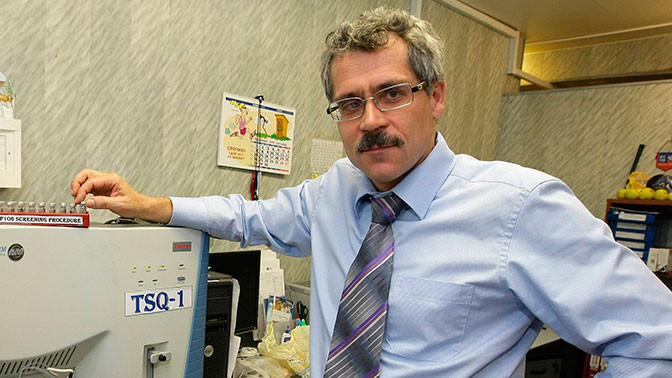
The Hole in the Wall: How Russia Cheated the Olympics and Nearly Got Away With It
The Russian state-sponsored doping scandal is the largest and most sophisticated cheating operation in Olympic history. Orchestrated by government officials and exposed by a single whistleblower, the scheme involved swapping dirty urine samples through a literal hole in the wall at the Sochi laboratory.
The Sochi Laboratory and the Hole in the Wall
The 2014 Sochi Winter Olympics were supposed to be Vladimir Putin’s crowning achievement — a showcase of modern Russia to the world. The $50 billion price tag made them the most expensive Olympics in history. The opening ceremony was spectacular. The Russian athletes performed brilliantly, topping the medal table with 33 medals, including 13 golds.
But the performance was not what it seemed.
Years later, investigators revealed that the Sochi Olympics were the site of the most elaborate state-sponsored doping operation ever conceived. At the heart of the scheme was the Sochi anti-doping laboratory, run by the Russian Anti-Doping Agency (RUSADA). During the Games, a secret night shift operated behind locked doors. Samples from Russian athletes that tested positive for banned substances were secretly swapped with clean samples that had been collected months earlier and stored for exactly this purpose.
The method was shockingly simple. A small hole had been cut in the wall between two rooms in the laboratory. Through this hole, technicians passed the dirty samples out and the clean samples in. The entire operation was coordinated by the Russian Ministry of Sport, with direct involvement from the Federal Security Service (FSB).
For years, Russia denied everything. But the hole in the wall could not be unseen.
The Whistleblower: Grigory Rodchenkov
The man who exposed the scheme was Grigory Rodchenkov, the former director of the Moscow anti-doping laboratory. Rodchenkov had been a central figure in Russian sports science for years. He knew exactly how the system worked because he had helped build it.
After the Sochi Games, Rodchenkov’s conscience caught up with him — or, as he later described it, he realized that the FSB was closing in on him and he needed to escape. In 2016, he fled to the United States, where he provided the World Anti-Doping Agency (WADA) with detailed evidence of the state-run doping program.
In 2020, Rodchenkov published his memoir, The Rodchenkov Affair, and was the subject of the Netflix documentary Icarus, which won the Academy Award for Best Documentary Feature in 2018. His testimony remains the single most damning evidence of state-sponsored cheating in sports.
Rodchenkov’s revelations set off a chain reaction that would shake the Olympic movement to its foundations.
The McLaren Report: Confirmation of a Conspiracy
In July 2016, Canadian law professor Richard McLaren published his independent investigation into Russian doping. The McLaren Report was devastating. It confirmed that Russia had operated a state-sponsored doping program across more than 30 summer and winter Olympic sports, affecting over 1,000 Russian athletes.
The report detailed how the FSB had infiltrated the Moscow laboratory, how positive tests were systematically covered up, and how the Ministry of Sport had directed the entire operation. It found evidence of sample swapping dating back to at least 2011 — three years before Sochi.
The IOC responded by opening disciplinary proceedings against Russian athletes and officials. But the response was widely criticized as too slow and too lenient. Many felt that the Olympic movement was protecting Russia rather than punishing it.
The Bans, Appeals, and Competing as ROC
The legal battle that followed was as complex as it was contentious. WADA formally suspended RUSADA in 2015 following the first round of doping allegations. But the real showdown came in December 2019, when WADA banned Russia from all major international sporting events for four years — including the 2020 Tokyo Olympics, the 2022 Beijing Winter Olympics, and the 2022 FIFA World Cup in Qatar.
Russia appealed to the Court of Arbitration for Sport (CAS). In December 2020, CAS partially overturned the ban, reducing it to two years. The compromise allowed Russian athletes who could prove they were clean to compete — but not under the Russian flag or anthem.
At the Tokyo 2020 Olympics, Russian athletes marched under the banner of the “Russian Olympic Committee” (ROC). The Russian flag was replaced by the ROC emblem. When Russian athletes won gold, the Olympic anthem played instead of the Russian national anthem. The same arrangement applied at the Beijing 2022 Winter Olympics.
For Russian athletes, the experience was humiliating. For the Olympic movement, it was an uneasy compromise — a punishment that punished individual athletes more than the state that had cheated.
The Toll: Medals Stripped and Trust Lost
As of 2026, 46 Olympic medals have been stripped from Russian athletes as a direct result of the doping scandal — the highest number of any country in Olympic history. Dozens of Russian athletes have been banned from competition. The 2014 Sochi cross-country skiing team was decimated by disqualifications. Biathlon results from multiple Olympics have been rewritten.
But the real damage is harder to quantify. The scandal fundamentally undermined trust in the Olympic system. Every medal won by a Russian athlete between 2011 and 2015 is now viewed with suspicion. The cleanup continues — as recently as 2025, additional Russian athletes were stripped of medals from the 2012 London and 2014 Sochi Games.
The scandal also exposed weaknesses in WADA’s structure. The agency was criticized for being too close to the sports organizations it was supposed to police. Reforms have been implemented, but many believe the damage to WADA’s credibility is permanent.
Legacy: The Olympics That Couldn’t Look Away
The Russian doping scandal did something that no previous doping case had achieved: it forced the Olympic movement to confront the possibility that cheating was not the work of a few bad athletes, but of an entire state.
Before Russia, doping scandals were treated as individual failures — a cyclist here, a sprinter there. Russia proved that a nation could game the system at the highest level, with the full resources of its government, for years, without being caught.
The hole in the wall at the Sochi laboratory became a symbol of the entire affair — a crude, almost absurd method that revealed a vast and sophisticated conspiracy. It showed that when a country decides to cheat, the Olympics — for all their ideals and ceremonies — are remarkably vulnerable.
The question that remains unanswered is whether the reforms implemented since 2016 are enough to prevent the next Russia. The Olympic movement is built on trust. The Russian scandal proved that trust can be broken. The challenge now is proving it can be rebuilt.
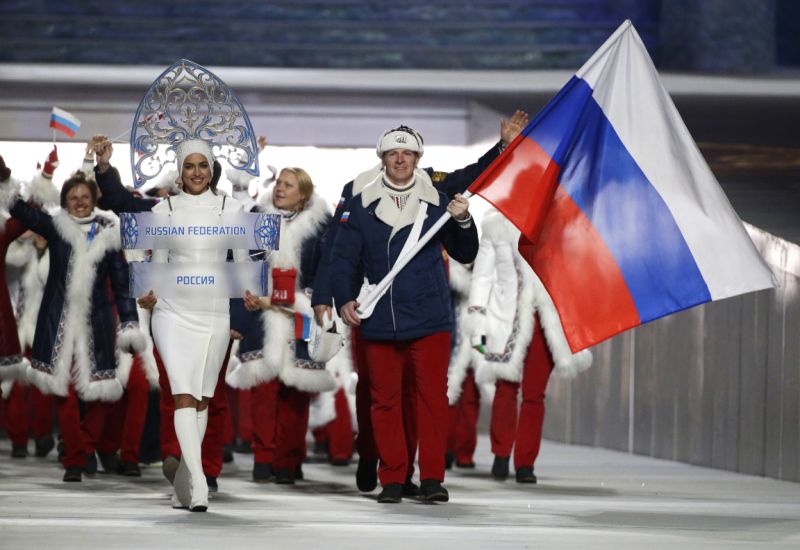
Russian athletes competing as neutrals under the Olympic flag at the PyeongChang 2018 Winter Olympics
References
- McLaren, Richard. The McLaren Independent Investigation Report — Part I and II. World Anti-Doping Agency, 2016.
- World Anti-Doping Agency. WADA Executive Committee Imposes Four-Year Ban on Russia. WADA Press Release, December 2019.
- Rodchenkov, G. (2020). The Rodchenkov Affair: How I Brought Down Russia’s Secret Doping Empire. W.W. Norton & Company.
- International Olympic Committee. IOC Disciplinary Commission Decisions on Russian Athletes. IOC, 2017–2025.
- Court of Arbitration for Sport. CAS Decision on RUSADA vs WADA. CAS, December 2020.