
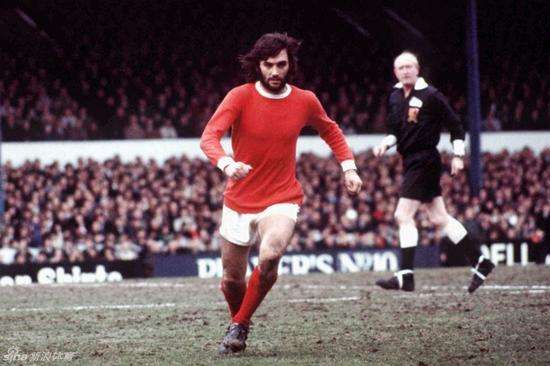
The Fifth Beatle: How George Best’s Genius Lit Up Football — and Why Alcohol Snuffed It Out
George Best (May 22, 1946 — November 25, 2005) was a Northern Irish footballer widely regarded as one of the most naturally gifted players in history. His dazzling dribbling and flair made him the first football superstar of the modern celebrity era — but his career was tragically cut short by alcoholism.
The Belfast Boy
George Best was born on May 22, 1946, in Belfast, Northern Ireland, into a working-class family. His father, a shipyard worker, and his mother, a hospital worker, noticed his obsession with football early. He would spend hours dribbling a tennis ball through the narrow streets of the Cregagh estate, developing the close control that would later mesmerize the football world.
At age 15, Best was discovered by Manchester United scout Bob Bishop, who sent a now-famous telegram to manager Matt Busby: “I think I’ve found you a genius.” Best was initially homesick and returned to Belfast after just two days at United. But Busby and chief scout Joe Armstrong persuaded his parents to let him try again. This time, he stayed.
He made his first-team debut at age 17, wearing the number 7 shirt that would become synonymous with his name. The game was against West Bromwich Albion in September 1963. He scored his first goal. The crowd knew immediately that they were watching something special.
The Rise: A Genius at Old Trafford
By the mid-1960s, George Best was the most exciting player in English football. His dribbling was unlike anything seen before — he seemed to have the ball tied to his boots by an invisible string. He could change direction at full speed, stop instantly, and accelerate past defenders as if they were standing still. His balance was extraordinary, low to the ground, with a center of gravity that made him almost impossible to knock off the ball.
He formed the core of Matt Busby’s new Manchester United, alongside Bobby Charlton and Denis Law — the “Holy Trinity” of United’s greatest era. Best’s 1964-65 season was a breakout: he scored 14 goals in 50 appearances, leading United to the First Division title.
But it was Europe where Best truly announced himself to the world. In a 1966 European Cup quarterfinal against Benfica, Best scored two goals in a 5-1 demolition of the Portuguese champions. The Portuguese newspapers called him “o quinto Beatle” — the fifth Beatle. The nickname stuck.
1968: European Cup and Ballon d’Or
The defining moment of George Best’s career came on May 29, 1968, at Wembley Stadium. Manchester United faced Benfica in the European Cup final — the trophy that Matt Busby had been chasing since the Munich air disaster of 1958.
With the game tied at 1-1 after 90 minutes, it went to extra time. In the 92nd minute, Best received the ball on the left, feinted past two defenders, and slid the ball past the Benfica goalkeeper at his near post. It was the goal that broke the deadlock. United went on to win 4-1, becoming the first English club to lift the European Cup — a decade after the Munich air disaster that had nearly destroyed the club.
Later that year, Best was awarded the Ballon d’Or as the best footballer in Europe. He was just 22 years old. Pele called him the greatest player in the world. The future seemed limitless.
The Fifth Beatle: Fame and Fall
But the same qualities that made Best brilliant on the pitch made him vulnerable off it. He was young, handsome, and suddenly the most famous athlete in Britain. He opened a nightclub. He dated Miss Worlds. He was photographed everywhere — sipping champagne, surrounded by beautiful women, living the life that the tabloids could not get enough of.
The pressure of being “the fifth Beatle” was relentless. Best himself later admitted that he could not handle the fame. “When I was 18, all I wanted was to play for Manchester United. After that, I didn’t know what to do with myself,” he once said, encapsulating his own tragedy in a single sentence.
Alcohol became his escape. At first, it was social drinking. Then it became a crutch. Then it became a disease. He would miss training sessions. He would go on drinking binges for days. Matt Busby tried to protect him, but by 1972 — at just 26 years old — Best’s career at Manchester United was effectively over.
He played only 11 seasons at the top level, a tragically short career for a player of his talent. He spent the rest of his football life drifting through lower-league clubs in England, Scotland, the United States, and Australia, never recapturing the brilliance of his youth.
The Final Years
Best’s battle with alcoholism defined the second half of his life. He was hospitalized multiple times. He underwent a liver transplant in 2002, paid for by the British National Health Service, which sparked a public debate about whether alcoholics should be eligible for transplants.
Despite the transplant, Best could not stop drinking. In November 2005, he was admitted to a London hospital with a lung infection and multiple organ failure. On November 25, he died at age 59.
His death made headlines around the world. The funeral in Belfast was attended by thousands. At Manchester United’s Old Trafford stadium, fans left more than 100,000 floral tributes.
Legacy: What Could Have Been
George Best’s legacy is a bittersweet one. On pure talent alone, he is consistently ranked among the greatest footballers of all time. Pele included him in the FIFA 100 list of the world’s greatest living players in 2004. Diego Maradona, himself no stranger to self-destruction, called Best “the player I most admired.”
But the question “what if” will always hang over his name. What if he had stayed disciplined? What if he had played in the modern era with better support systems? What if he had not been destroyed by fame?
Best himself answered that question with characteristic honesty: “I was born with a great gift, and sometimes with that comes a destructive streak.” He also delivered the most famous epitaph in sports: “I spent a lot of money on booze, birds and fast cars — the rest I just squandered.”
George Best burned brighter and shorter than any footballer before or since. He was a genius who could not save himself — but for those who saw him play, the memory of that brilliance will never fade.
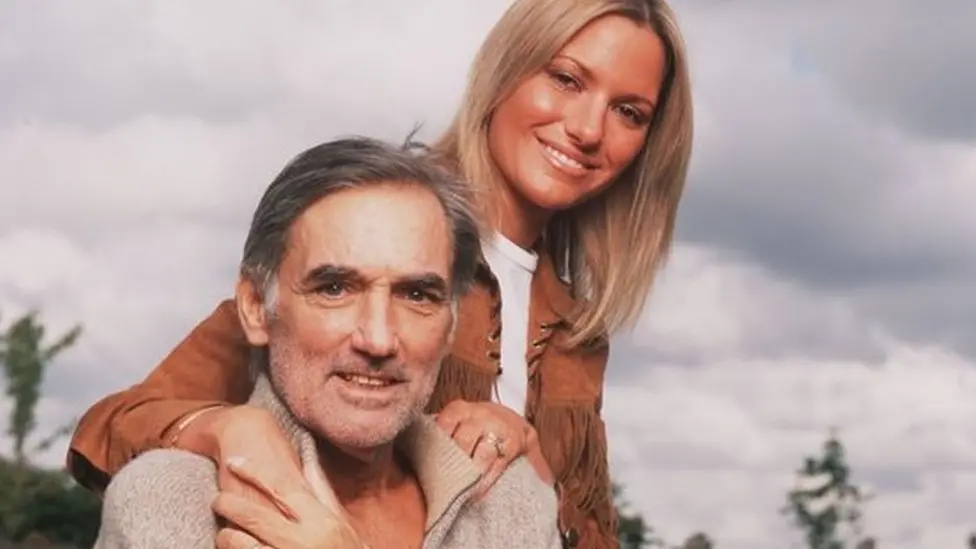
George Best with his second wife Alex after undergoing a liver transplant in 2002
References
- Hamilton, Duncan. Immortal: The Official Biography of George Best. Century, 2014.
- Best, George, and Ross Benson. Bestie: A Life in Football. Sidgwick & Jackson, 1990.
- Manchester United FC. Official History: George Best. Manchester United Archives.
- FIFA. George Best — The FIFA 100 Profile. 2004.
- The Guardian. “George Best: A Life Cut Short.” November 26, 2005.