
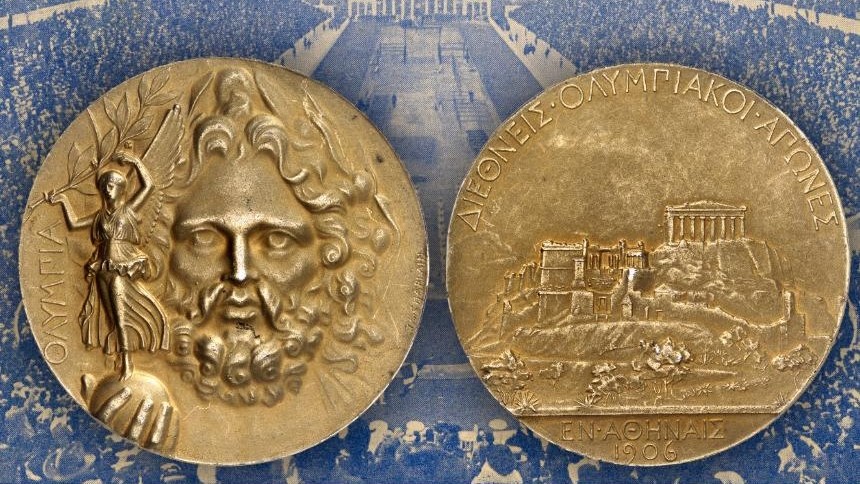
From Zeus to Jade: How Olympic Medal Design Has Evolved Over 130 Years

The Olympic medal has evolved from a simple silver disc awarded in Athens 1896 to a sophisticated work of art incorporating jade, recycled electronics, and sustainable materials. Each host city stamps its identity onto the most coveted prize in sports — with some designs becoming iconic and others quickly forgotten.
The First Olympic Medals: 1896 Athens
The first modern Olympic Games in Athens awarded silver medals to winners — not gold. The concept of a gold medal for first place did not yet exist. First place received silver, second place received copper, and third place received nothing at all.
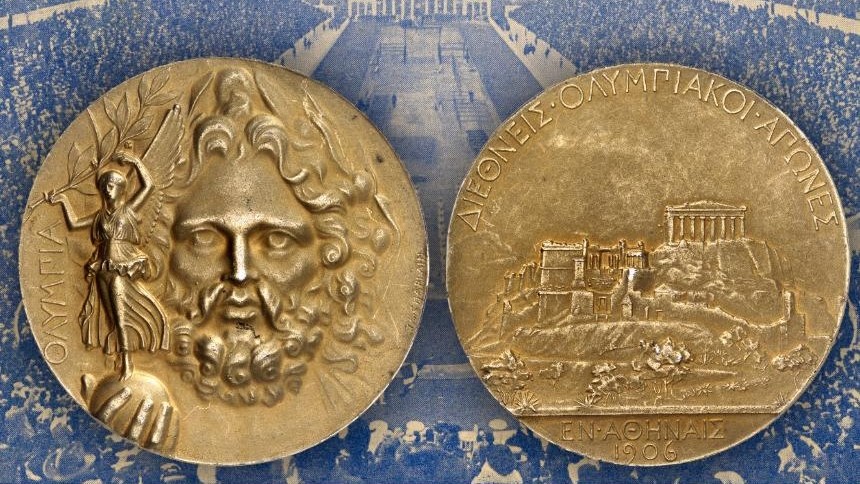
The 1896 Athens silver Olympic medal featuring Zeus and Nike
Designed by French sculptor Jules-Clément Chaplain, the obverse featured Zeus, the king of the Greek gods, holding a globe upon which the goddess Nike (victory) stands. The reverse showed the Acropolis of Athens. It was crafted by the Paris Mint, carried a diameter of 48mm, and weighed roughly 47 grams. Despite being “only” silver, these medals established the iconographic language — mythological figures, classical motifs — that would dominate Olympic medal design for decades.
Experimentation: 1900 to 1924
The early decades of the modern Olympics were a period of creative experimentation. No two Games looked the same.
1900 Paris produced the most unusual medal in Olympic history: a rectangular bronze plaque rather than a circular disc. Designed by Frédéric Vernon, it showed a winged Nike on the obverse and a victorious athlete on a podium on the reverse. No standard shape had been established yet.
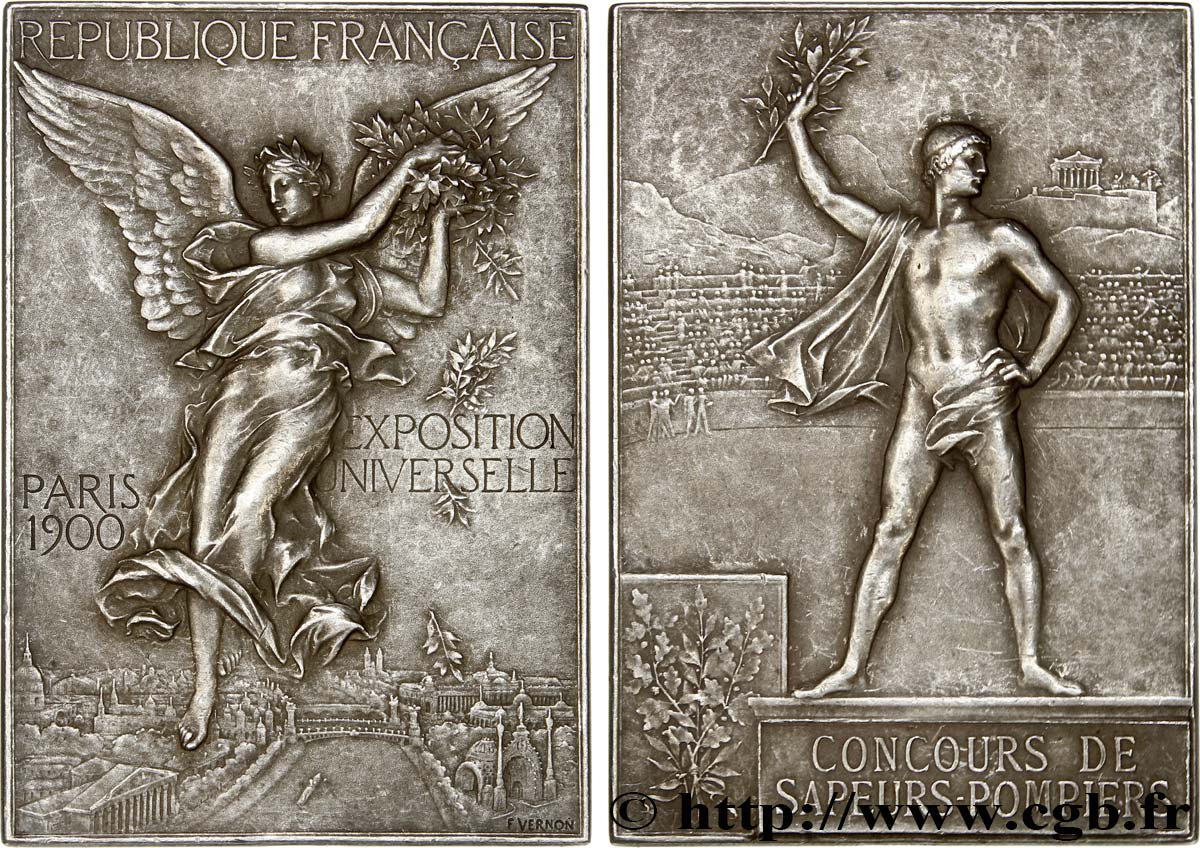
The rectangular bronze medal from the 1900 Paris Olympics — the most unusual shape in Olympic history
1904 St. Louis marked a watershed moment: gold was introduced for the first time as the top prize, creating the familiar gold-silver-bronze hierarchy. The obverse featured Nike with a victory wreath, while the reverse showed an athlete holding a laurel branch. This three-tiered system has persisted ever since.
1908 London and 1912 Stockholm continued to refine the medal form. London’s medal showed Saint George slaying a dragon on one side and a Greek athlete on the other. Stockholm’s was the first to be issued with a ribbon and clasp.
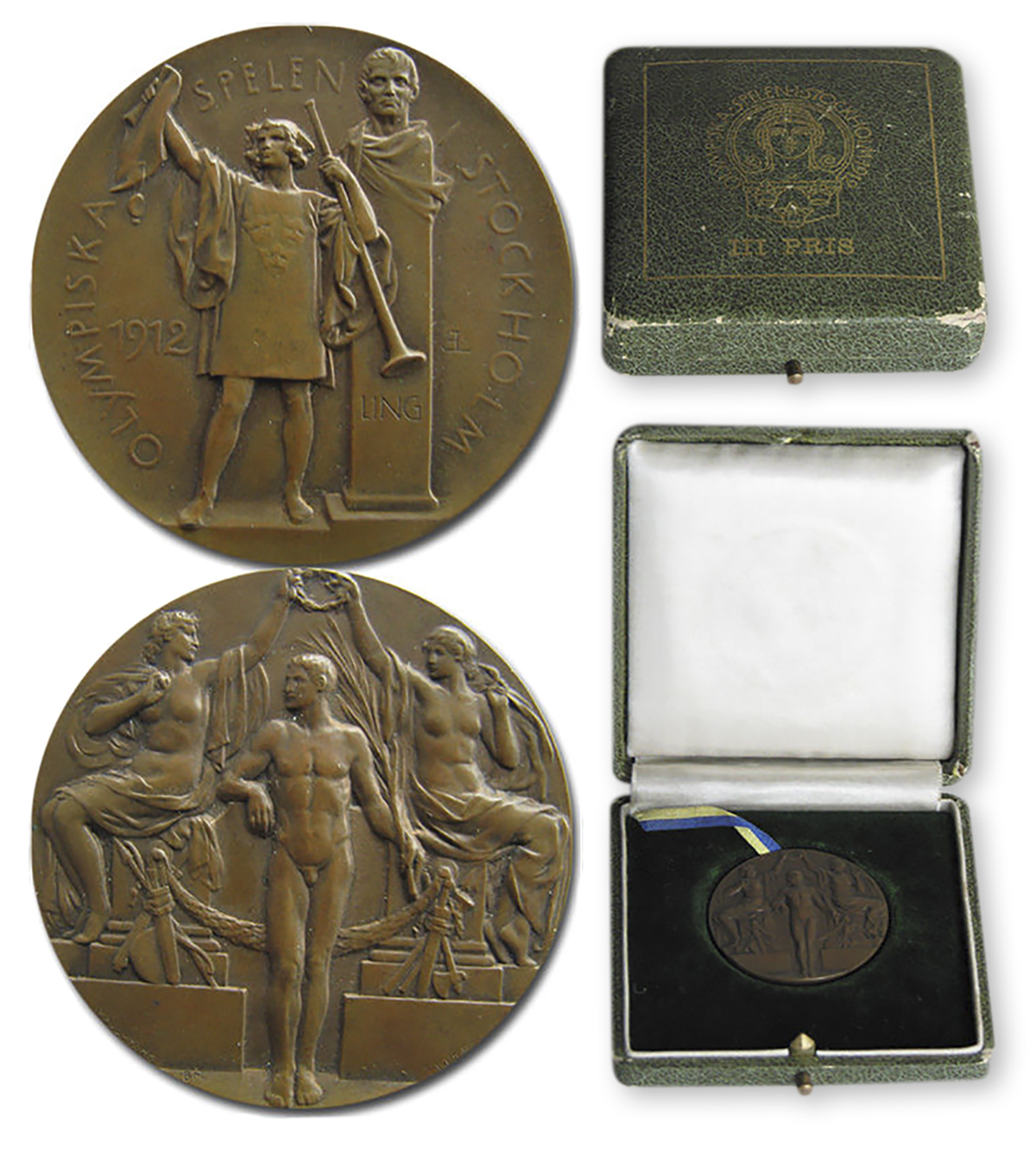
The 1912 Stockholm solid gold Olympic medal — the last pure gold medal ever awarded
The Cassioli Standard: 1928 to 1968
In 1928, the IOC settled on a standard design. Italian artist Giuseppe Cassioli was commissioned to create a unified obverse that would appear on every Olympic medal from 1928 onward. His design was used for 40 years, spanning the Amsterdam 1928 through Mexico City 1968 Games.
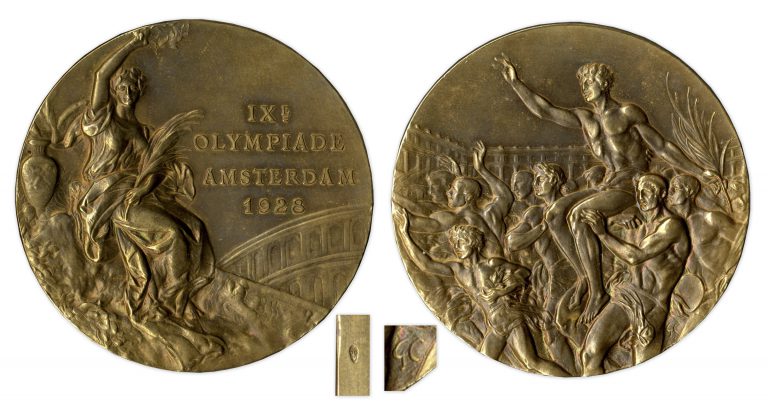
Giuseppe Cassioli’s Olympic medal design used as the standard from 1928 to 1968
The obverse showed the goddess Nike — the Greek goddess of victory — holding victor’s laurels and palm, with the Colosseum as backdrop — a curious choice given the Games’ Greek origins. The reverse featured an athlete carried by a jubilant crowd.
By the 1970s, the IOC began requiring medals to meet specific physical standards: at least 60mm diameter and 3mm thickness. Over the decades, Cassioli’s design became so familiar it was almost invisible, until the 1972 Munich Games finally broke the mold.
The Modern Break: 1972 to 2000
1972 Munich represented the first deliberate break from Cassioli’s long reign — but only on the reverse. German Bauhaus artist Gerhard Marcks created a bold new back design featuring Castor and Pollux, the twin sons of Zeus and patrons of sports, depicted as two naked youths. For the first time, the medal was hung from a metal chain instead of a ribbon. It was minimal, bold, and unmistakably modern.
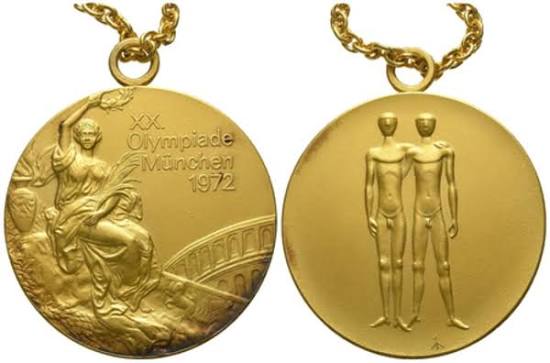
The 1972 Munich Olympic medal with Castor and Pollux design and metal chain
1976 Montreal medals were thinner and lighter than predecessors, the first to weigh under 200g. 1980 Moscow incorporated a seashell motif on the reverse, reflecting the host city’s nautical influences. 1984 Los Angeles returned to a hand-held design featuring Nike in a more stylized, less classical form.
1992 Barcelona medals featured an abstract, engraved Nike, while 1996 Atlanta was widely criticized for a design that many considered uninspired — a generic Nike figure with little connection to the host city.
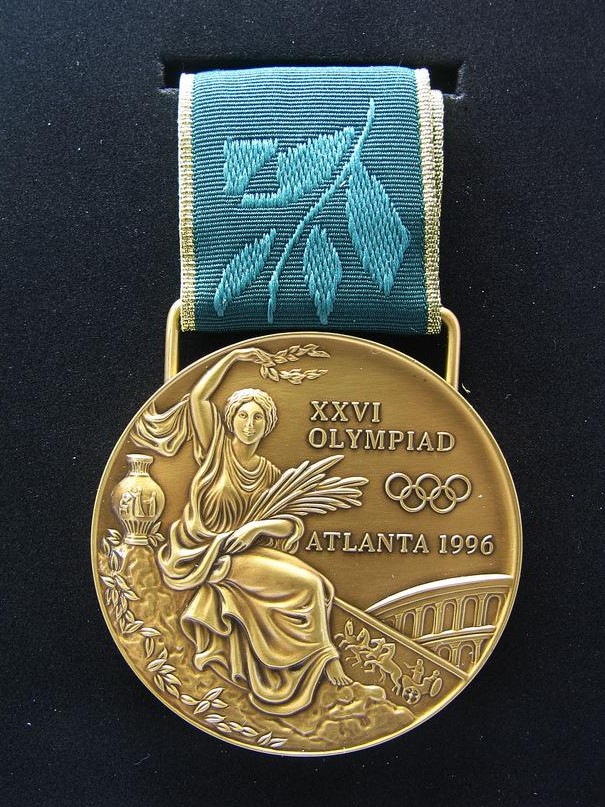
The 1996 Atlanta Olympic medal — widely criticized as one of the least inspired designs
The New Standard: Athens 2004 and Beyond
2004 Athens — the Games returning to their birthplace — introduced a new standard. Designer Elena Votsi replaced Cassioli’s goddess with the Panathenaic Stadium, the actual venue that hosted the first modern Olympics in 1896. The image showed the stadium’s curved entryway, flanked by the Greek key pattern. This design became the new IOC-sanctioned obverse, used from 2004 onward, finally retiring Cassioli’s work after 76 years.
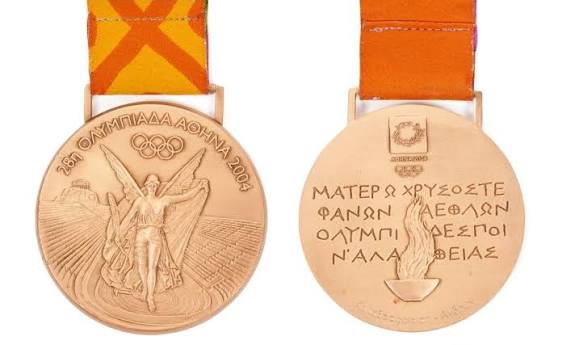
The 2004 Athens Olympic medal featuring the Panathenaic Stadium — the new IOC standard obverse
2008 Beijing created one of the most distinctive medals in Olympic history: a gold medal with a jade inlay. The jade — a stone of deep cultural significance in China — was set into the back of the medal, framed by a metal bezel. It was the first time a non-metallic material had been incorporated into an Olympic medal. The design was universally praised.
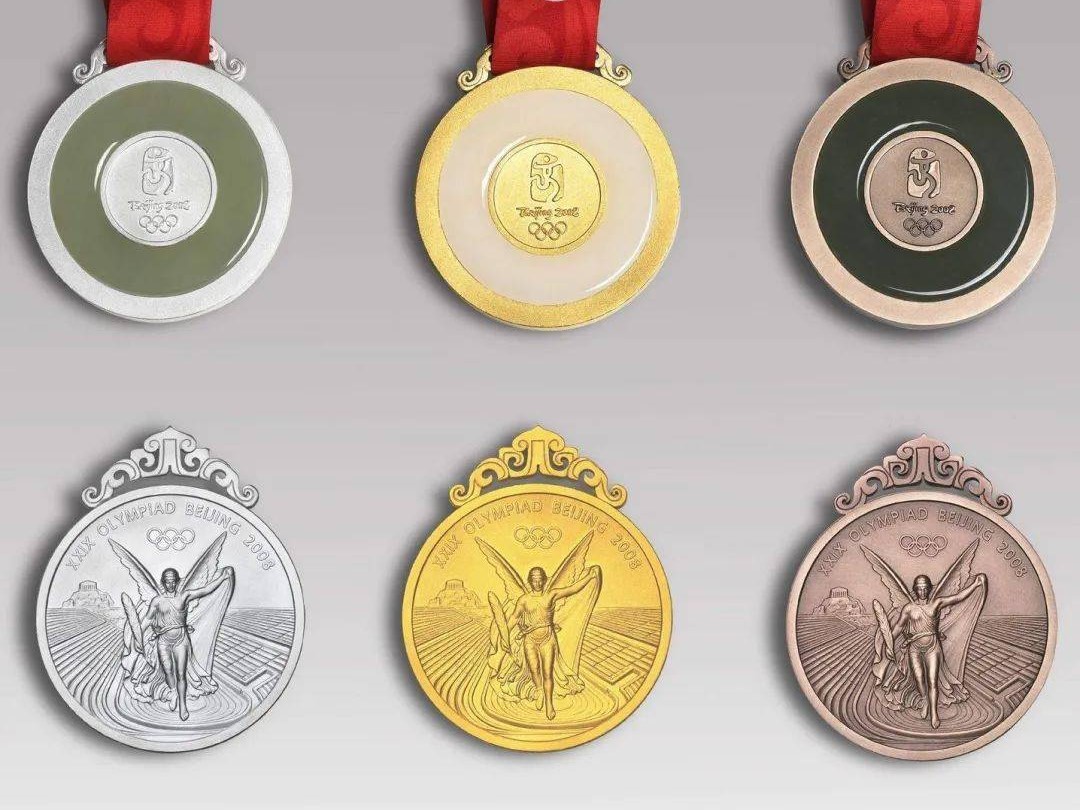
The Beijing 2008 Olympic gold medal with jade inlay — a historic first
Sustainable Medals: Rio, Tokyo, and Beyond
2016 Rio produced medals made from sustainable materials: the silver and bronze were 30% recycled, and the gold was mined without the use of mercury. Even the ribbons were made from recycled plastic bottles.
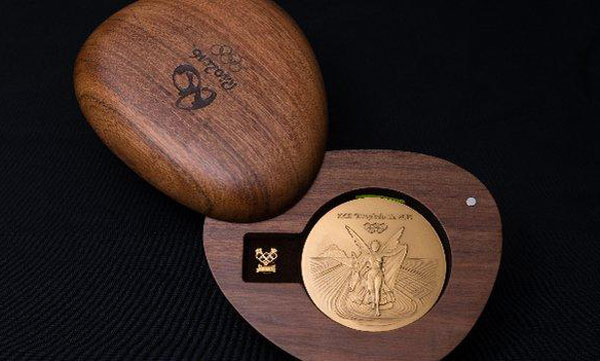
The 2016 Rio Olympic gold medal and packaging — made from sustainable materials
2020 Tokyo went further, manufacturing the entire medal set from recycled electronics — smartphones, laptops, and other devices donated by the Japanese public. The program collected approximately 30kg of gold, 4,100kg of silver, and 2,700kg of bronze from discarded electronics. The medals themselves featured a faceted design that captured and reflected light, symbolizing the energy of athletes.
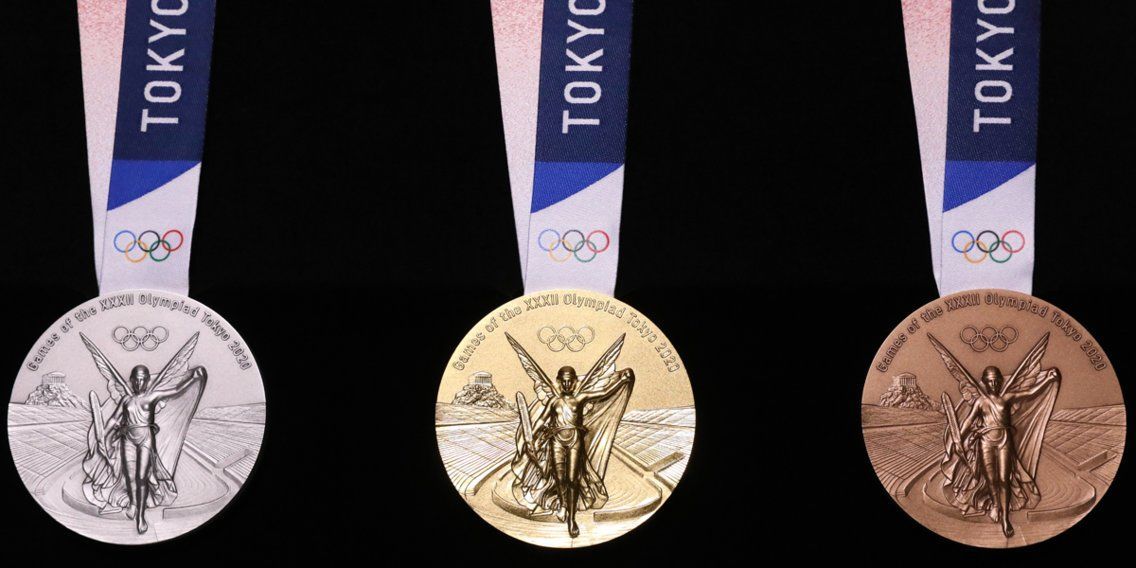
The Tokyo 2020 Olympic medal made from recycled electronics
Vancouver 2010 had produced medals that were not perfectly circular — each was cast with an undulating surface inspired by ocean waves of British Columbia, creating a unique sculptural form. The design was a radical departure from the rigid circles of the past.
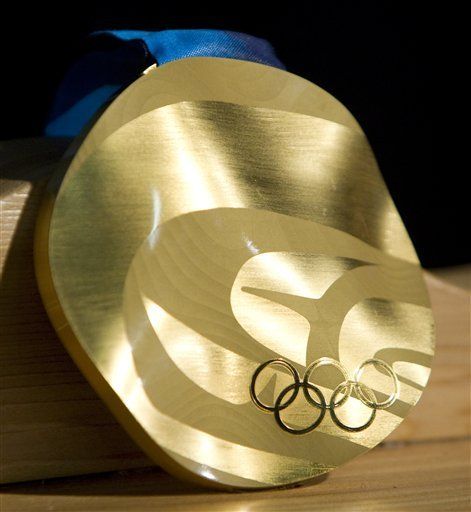
The Vancouver 2010 Olympic medal with wave-inspired undulating surface
Quality Control Failures: When Medals Don’t Last
Design aside, medal quality has not always been flawless. Multiple Olympic Games have seen athletes complain about their prizes deteriorating.
London 2012 was the first major scandal. British athletes noticed their medals peeling shortly after the Games. Bronze medalist Karina Bryant posted a photo of her flaking medal on Twitter with the sarcastic caption “great quality.” Others reported rust spots and exposed silver beneath the coating. Organizers initially blamed “contact with a chemical substance,” but later conceded the coating was defective.
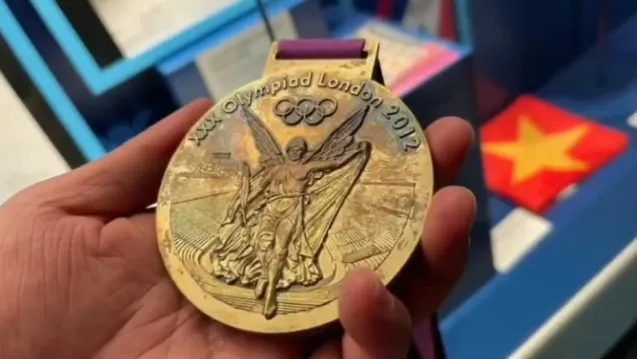
A Chinese athlete shows the oxidized and peeling London 2012 Olympic medal
Tokyo 2020 had its own problems. Chinese trampoline gold medalist Zhu Xueying posted a video showing her gold medal peeling — “you can peel off a layer,” she said. Two years later, canoeist Zheng Pengfei showed his silver medal had oxidized so badly he called it “scrap metal.”
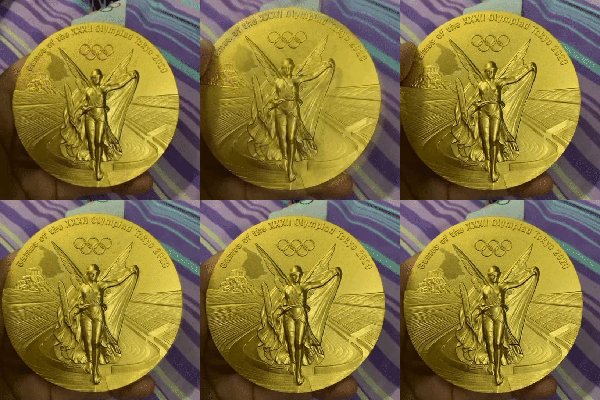
Chinese gold medalist Zhu Xueying shows her Tokyo 2020 medal peeling on social media
Paris 2024 was the worst yet. Within months of the Games, over 100 medals were returned to the Paris Mint after athletes reported peeling, oxidation, and cracking. The culprit was unusual: an EU ban on chromium trioxide, a chemical used in protective lacquer coatings, had forced the Mint to switch to an untested alternative. The result was medals that looked decades old after just weeks.
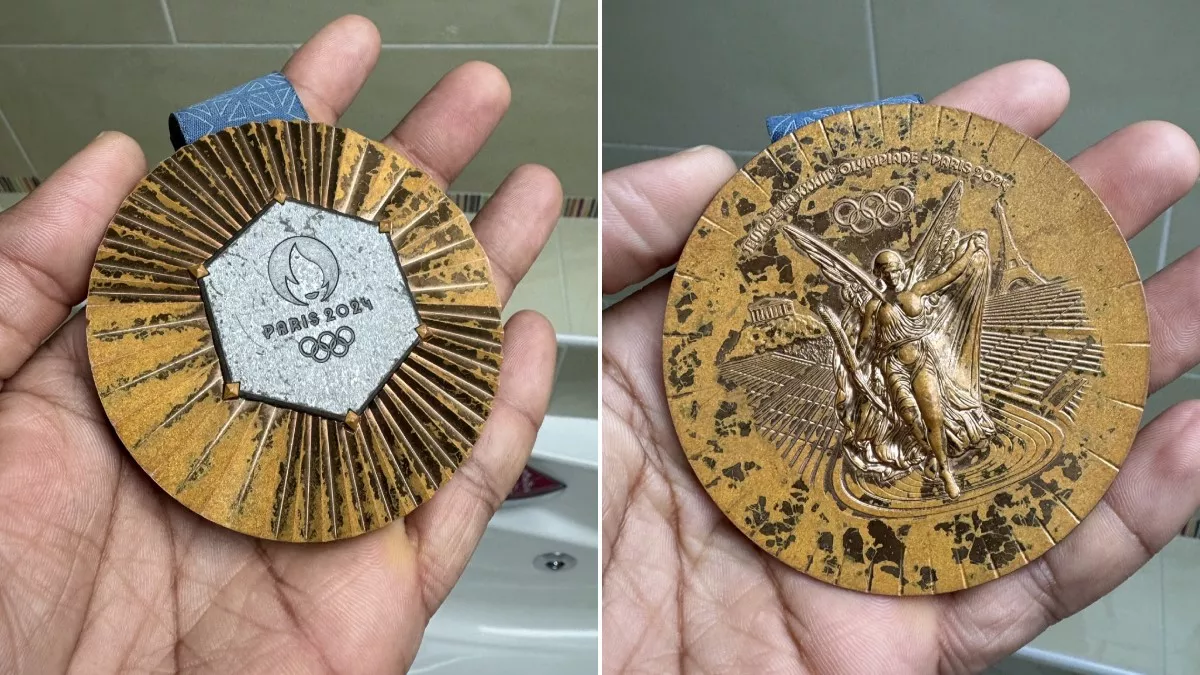
French swimmer showing oxidized and peeling Paris 2024 Olympic medal
Not every Olympics had these problems. Beijing 2008’s “jade inlay” medals proved their quality in the most dramatic way imaginable. In January 2021, Russian rhythmic gymnast Daria Shkurikhina — a Beijing 2008 gold medalist — suffered a house fire that destroyed her apartment. Walls were blackened, furniture reduced to ash, her laptop melted. But her “金镶玉” (gold with jade) medal emerged completely unscathed — not even the ribbon was burned. The story went viral in China as proof that “true gold fears no fire.”
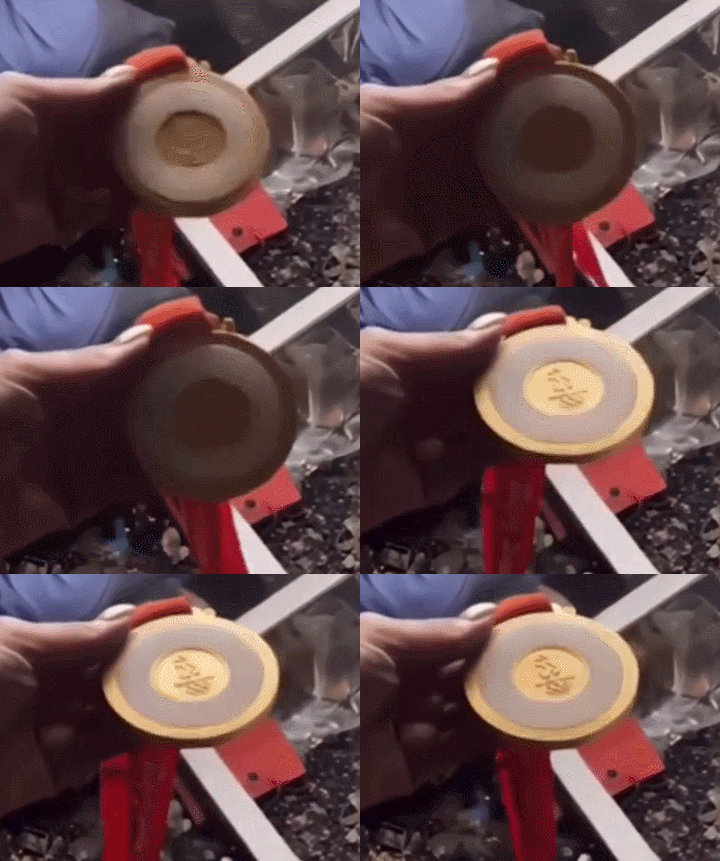
Daria Shkurikhina’s Beijing 2008 gold medal survived a house fire completely unscathed
These incidents serve as a reminder: medals carry the weight of an athlete’s life dream, but they are still made by human hands — some more skilled than others.
The Design Process and the Future
Today, medal design is a collaborative process between the host city’s organizing committee and the IOC. The obverse must feature the Panathenaic Stadium design (established in 2004), the Olympic rings, and the official name of the Games. The host city has creative freedom for the reverse. The final design must be approved by the IOC Executive Board.
The evolution of Olympic medals tells a story bigger than hardware. From the simple silver discs of 1896 to the recycled electronics of Tokyo 2020, from the jade inlay of Beijing to the failed lacquer of Paris, each medal reflects not just the host city’s ambition, but the values and vulnerabilities of its time. The best medals become iconic not because they are perfect, but because they capture a moment — in design, in craftsmanship, and in the endless human pursuit of excellence.
References
- International Olympic Committee. Olympic Medals: Design Through the Years. IOC Museum Publications, 2021.
- Wallechinsky, David. The Complete Book of the Olympics. Aurum Press, 2016.
- Olympic Studies Centre. The History of Olympic Medal Design. IOC, 2020.
- Tokyo 2020 Organizing Committee. The Medal Project: Recycling Electronics for the Olympic Games. 2021.
- Beijing 2008 Organizing Committee. The Design and Production of the Beijing 2008 Olympic Medals. 2008.
- BBC Sport. “London 2012: Athletes Complain About Peeling Medals.” BBC News, August 2012.