
The German Who Helped Jesse Owens in Front of Hitler

—
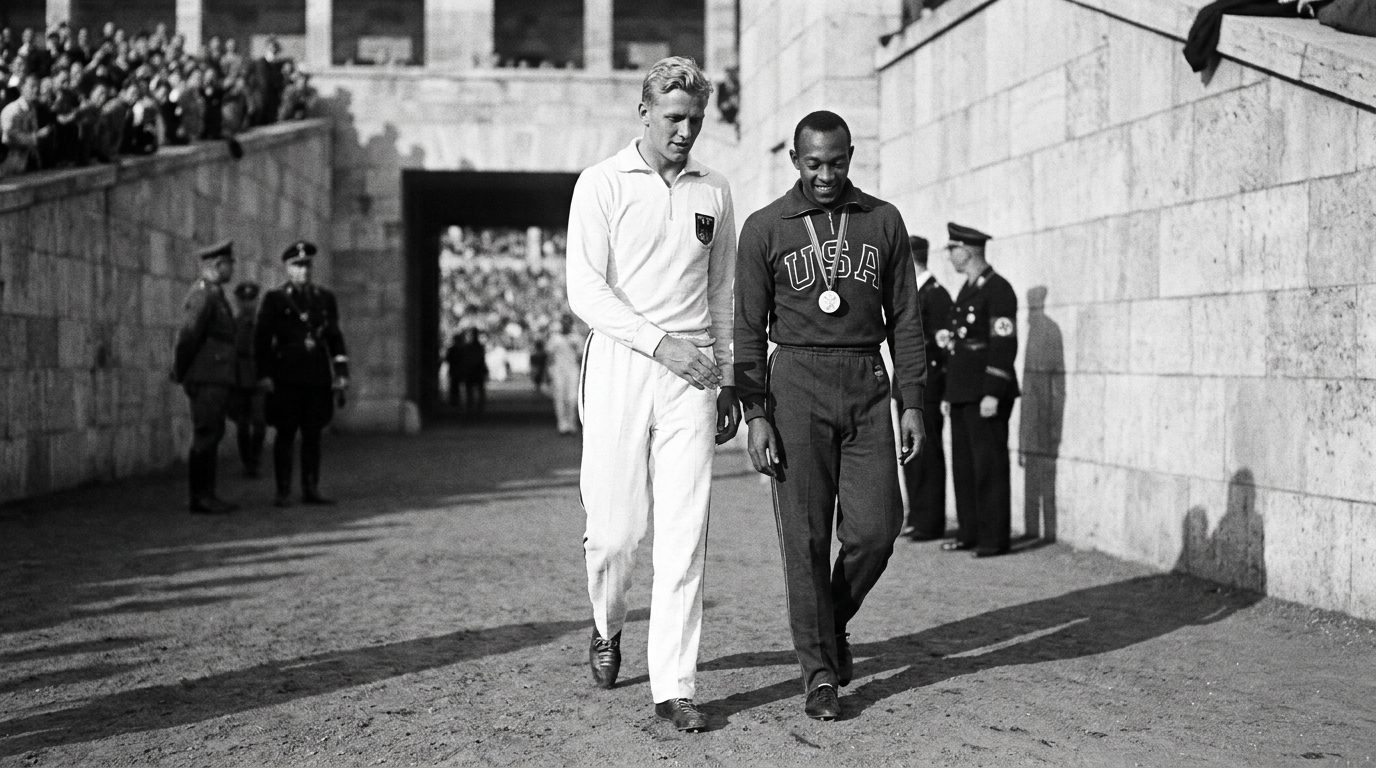
August 4, 1936. Berlin Olympic Stadium. A hundred thousand spectators. Adolf Hitler in the stands. The Nazi regime had orchestrated this spectacle as a showcase of Aryan racial superiority.
Men’s long jump qualifying round. Jesse Owens, the black American athlete—classified as subhuman by Nazi racial propaganda—stood at the runway. He had committed two fouls. One attempt remaining. If he fouled again, he was out of the Games. The German crowd roared—not for him, but for his failure.
In the stands, one German did not cheer. His name was Luz Long. Blond, blue-eyed, six feet tall, built like a Greek statue. The perfect Aryan image from a Nazi propaganda poster. Germany’s gold-medal hope in the long jump. Owens’s most dangerous rival.
Long rose from the German team area and walked toward the pit. He approached Owens and spoke a few words in German-accented English. What he said, in essence, was this: your takeoff is too close to the foul line. With your speed, you don’t need to jump from the edge of the board to qualify. Move back a few inches, launch from a safer spot, and you’ll make the final. Owens looked at him. A blond German was helping him—a black man—in full view of the world, in full view of Hitler.
Owens moved back a few inches. He sprinted, jumped, and did not foul. He advanced to the final. Then, in the final, he beat Long and won gold.
Long took silver.
After the competition, with the entire stadium still present, Long did something. He walked across the sand pit, past the eyes of a hundred thousand Germans and the Führer himself, and reached Owens. He shook his hand. Then they walked back to the locker room together.
Long later said in a radio interview—one that the Gestapo kept on file—”I made friends with him not for politics, but because he was an athlete and so was I.” How much courage those words required, perhaps only a German of that era could know.
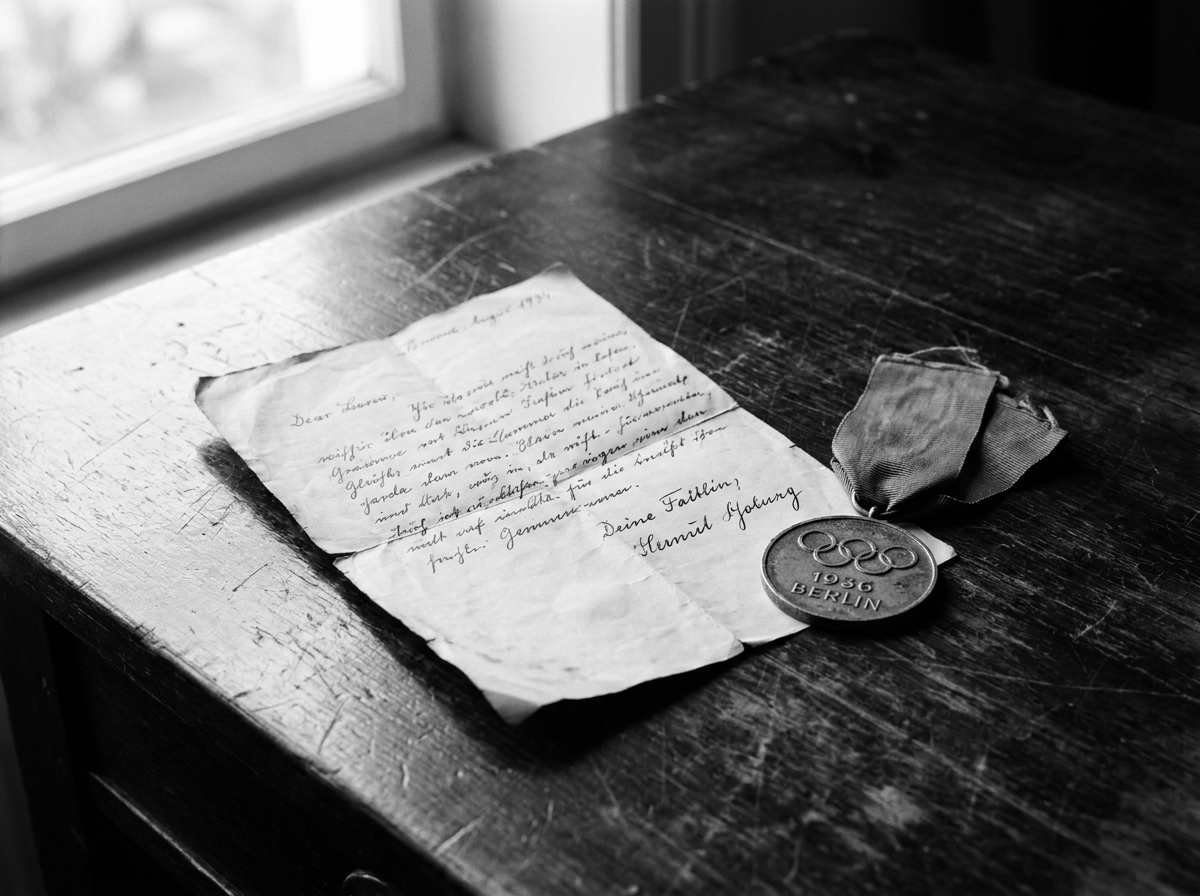
After the war broke out, Long was conscripted. In July 1943, on the island of Sicily, he was hit by machine-gun fire from Allied forces. He died on the battlefield at thirty. Before he died, in a field hospital, he wrote a letter to Owens. The letter traveled for years before it finally reached its recipient. In it, Long asked Owens—if he did not live to see the end of the war—to find his son and tell him what kind of man his father had been. Owens did exactly that. After the war, he found Long’s son, became his friend, and served as the best man at his wedding.
Luz Long made one gesture that everyone in that stadium saw. He issued no political manifesto. He declared no resistance to the Nazi regime. He simply did, on the ground he knew best, what a person does when another person needs help. The gesture itself was nothing remarkable—one athlete telling another to take a few steps back. But in that moment, in that place, under the gaze of a hundred thousand, a simple act weighed more than any anti-fascist pamphlet.
Long did not survive the war. He died on a Mediterranean island in 1943, far from the roar of Berlin. But what he did on that afternoon beside the long jump pit in 1936 did not die with him in foreign soil.
**Tags:** #LuzLong #JesseOwens #BerlinOlympics #1936 #SportsAndHumanity
**Sources:** 1936 Berlin Olympic Games official records; Jesse Owens’s autobiography, descriptions of Long; Long’s final letter to Owens (archived at the United States Olympic Museum).