
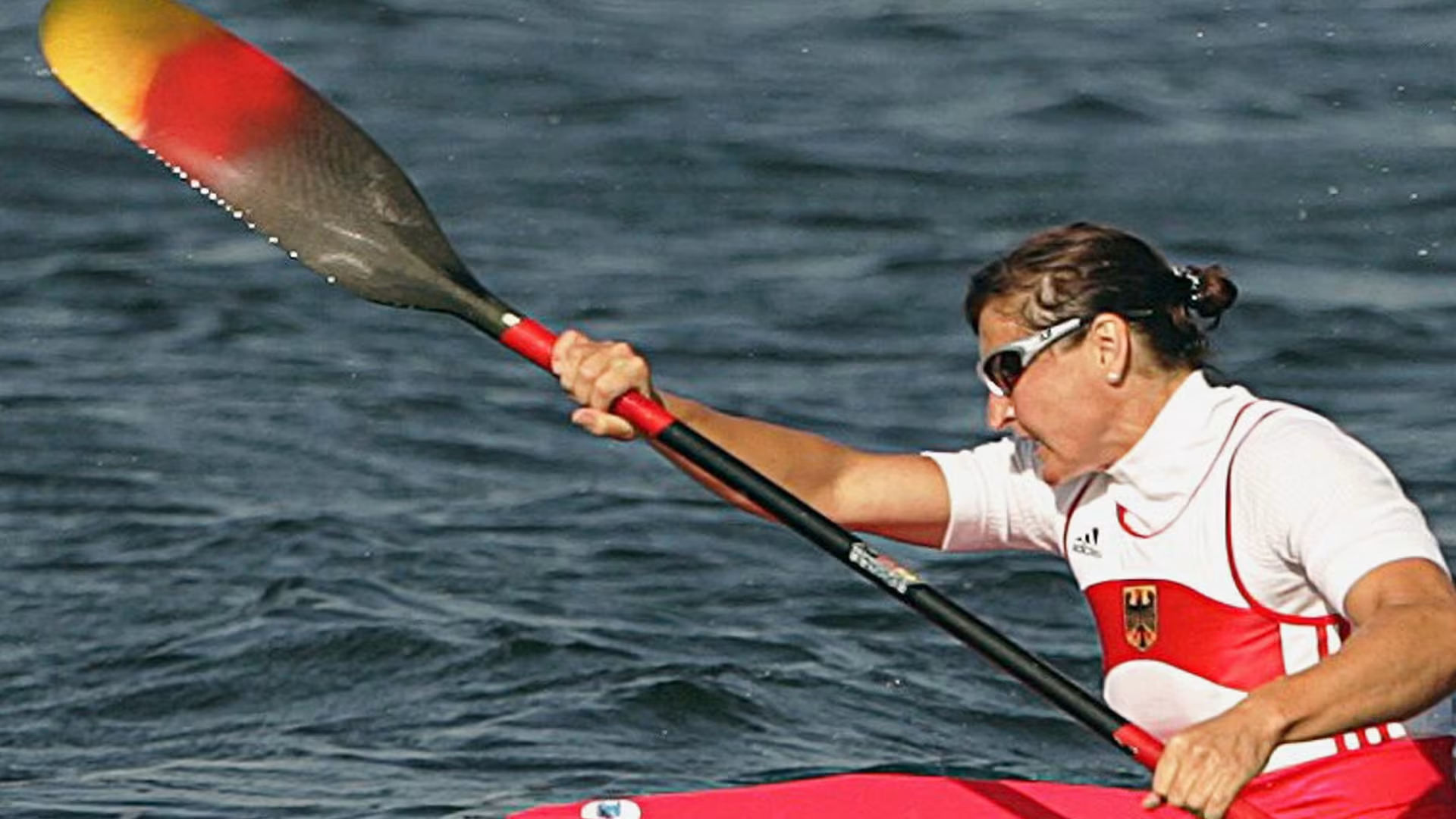
Birgit Fischer: The Woman Who Won Olympic Gold at 42 — Across Six Games and Two Countries

The Girl from Brandenburg
Birgit Fischer was born on February 25, 1962, in Brandenburg an der Havel, a small city in East Germany. She grew up near the Havel River and took to the water naturally. In a state that identified athletic talent early and channeled it ruthlessly, Fischer’s gift was unmistakable.
By age 16, she was already racing internationally. In 1979, at 17, she won her first world championship. The following year, she was selected for the East German Olympic team heading to Moscow.
Moscow 1980: Gold at 18
At the 1980 Moscow Olympics, an 18-year-old Birgit Fischer won gold in the women’s K-1 500 meters. She was the youngest paddler on the water. Her time of 1:57.96 set an Olympic record. She returned to East Germany a national hero.
In 1988 at the Seoul Olympics, she won gold again in the K-2 500m and silver in the K-1 500m and K-4 500m. Four medals in one Games. Then she stepped away.
When the Country She Raced For Disappeared
In 1989, the Berlin Wall fell. East Germany collapsed. The sports system that had produced Fischer — state-funded, ruthless, effective — dissolved overnight. In 1990, Germany reunified. Fischer, still in her prime, now raced for a new country.
Many athletes from the former East Germany struggled with the transition. Fischer adapted. She returned to competition and won gold in the K-1 500m at the 1992 Barcelona Olympics — this time for unified Germany. She won silver in the K-4 500m. At 30, she was the oldest woman in the field.
Dominating Through the 1990s
At the 1996 Atlanta Olympics, Fischer won gold in the K-4 500m and silver in the K-2 500m. She kept training. In 2000 at the Sydney Olympics, she won gold in the K-2 500m and K-4 500m and silver in the K-1 500m. She was 38. Most of her competitors were in their early twenties.
After Sydney, she retired — for the second time. She had first retired after 1988, then come back. Now she was 38, with eight Olympic Games behind her. Retirement lasted four years.
Athens 2004: Gold at 42
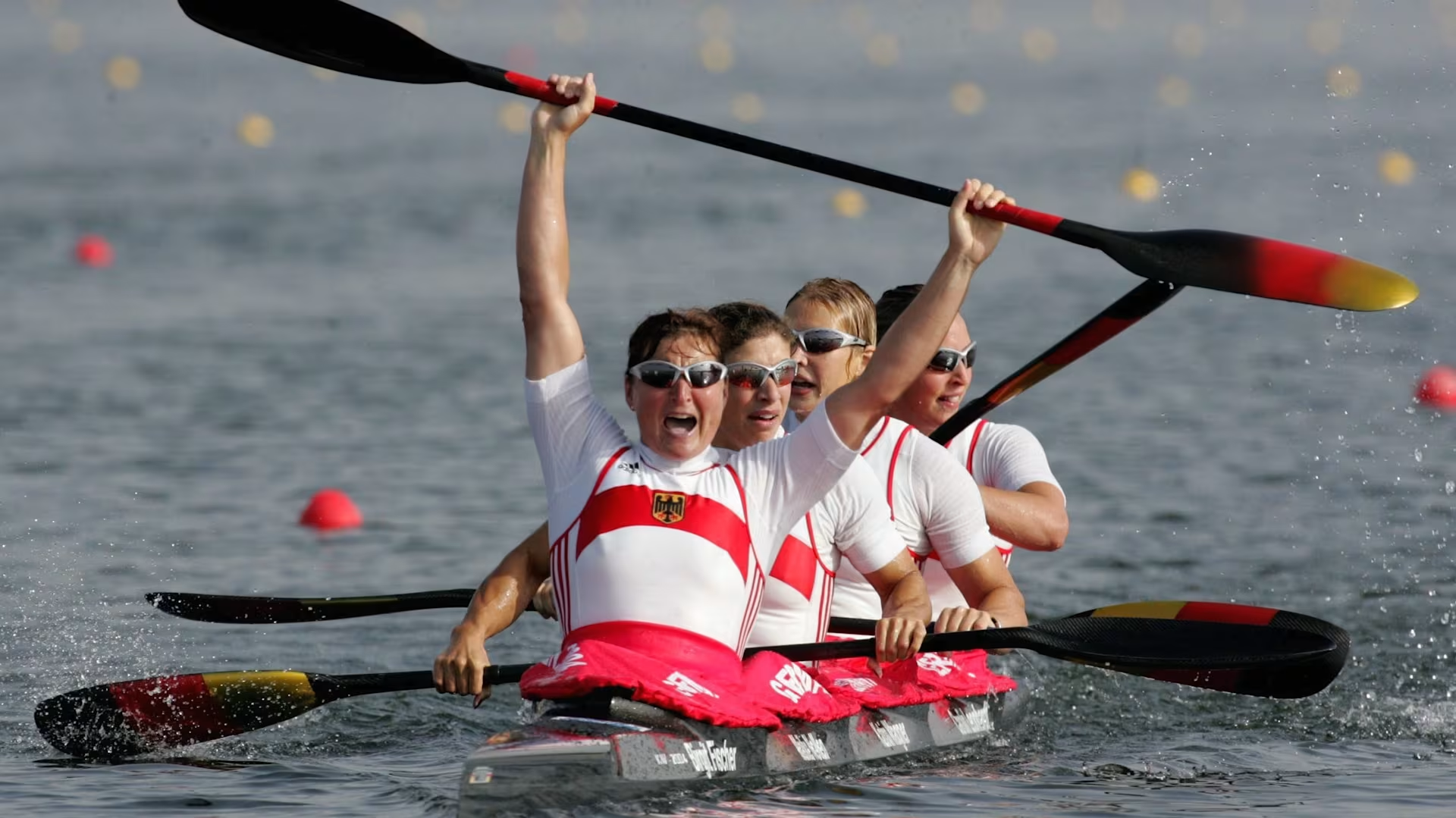
In 2004, at age 42, Fischer decided to try for one more Olympics. She qualified for the Athens Games as a member of the German K-4 500m team alongside Maike Nollen (born 1977), Katrin Wagner (born 1977), and Carolin Leonhardt (born 1984). Leonhardt had not been born when Fischer won her first Olympic medal.
On August 27, 2004, Fischer and her crew crossed the line in 1:34.340 — gold. At 42, she became one of the oldest women to win an Olympic gold medal. Her opponents were half her age.
After the race, Fischer said: “I didn’t come back to prove anything. I came back because I still love the water.”
The Secret to 24 Years at the Top
Fischer’s longevity had no single secret. She trained intelligently, avoided major injuries, and adapted her technique as she aged. She raced in an era before carbon fiber paddles and high-tech hull designs changed the sport — and she adapted to each change. She won world championship medals across four decades: the 1970s through the 2000s. Her last world championship medals came in 2005 — two bronzes, at age 43.
What She Left Behind
Birgit Fischer’s Olympic medal count — 8 gold, 4 silver — makes her the most decorated female Olympian in any sport from Germany, and one of the most decorated in history. She competed for a country that no longer exists, then for a country that replaced it. She outlasted coaches, teammates, and an entire political system.
The girls she raced against in Athens were children when she won her first Olympic gold. They grew up watching her on television. Then they raced beside her. And she still won.
References
- Olympedia — Birgit Fischer
- International Canoe Federation — Athlete Profile
- Olympics.com — Birgit Fischer
- Wallechinsky, David. *The Complete Book of the Olympics*