
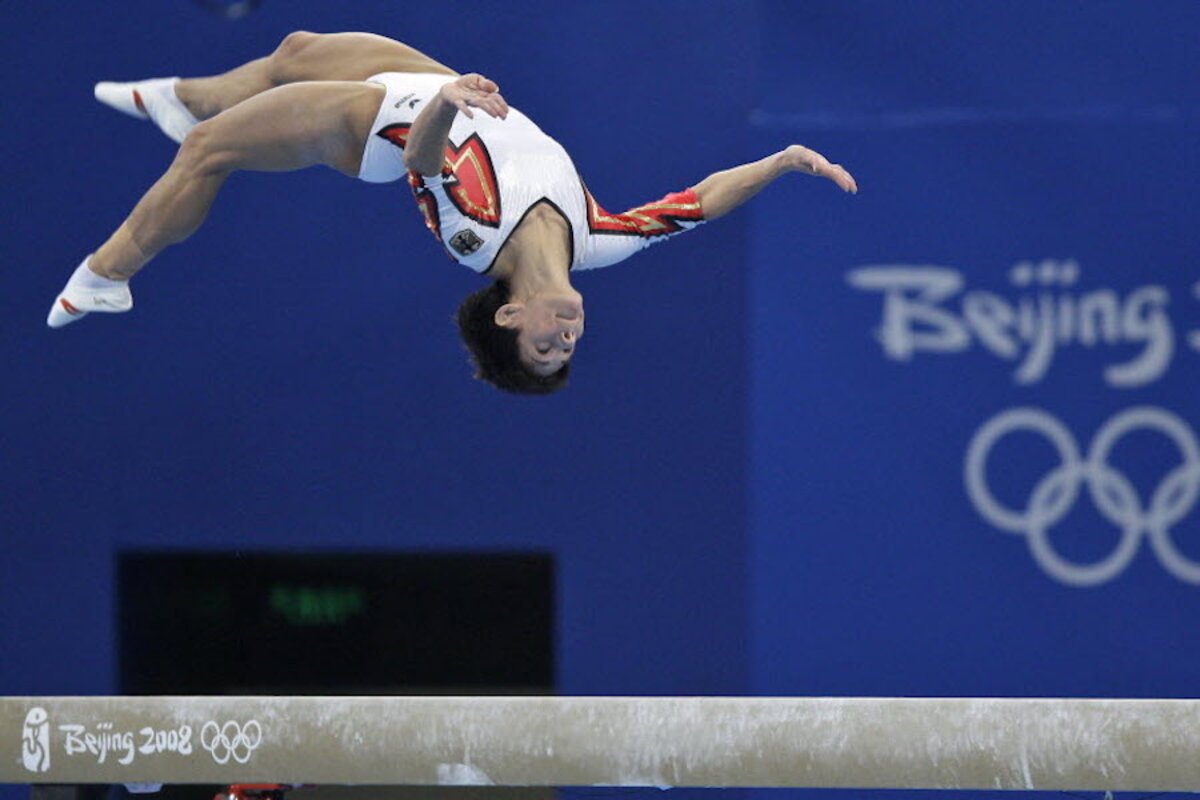
Eight Olympics, One Son: The Gymnast Who Refused to Stop
Oksana Chusovitina (Оксана Чусовитина) (born June 19, 1975) is an Uzbek gymnast who competed in a record eight Olympic Games — spanning 30 years from 1992 to 2020. She continued competing into her mid-40s to fund her son’s leukemia treatment, becoming the oldest female gymnast in Olympic history and a symbol of a mother’s love.
The Beginning: A Gold Medal at 17
Oksana Chusovitina was born on June 19, 1975, in Bukhara, Uzbek SSR, then part of the Soviet Union. She began gymnastics at age 5 and showed exceptional talent early. By the time she was a teenager, she had earned a place on the Soviet national team.
Her breakthrough came at the 1992 Barcelona Olympics. Competing for the Unified Team — the temporary flag under which athletes from the former Soviet republics competed — Chusovitina helped secure gold in the team competition. At 17, she was an Olympic champion, with her entire career ahead of her.
Few could have predicted that this gold medal would be merely the first chapter of a story that would stretch across three decades.
The Diagnosis That Changed Everything
In 2002, Chusovitina’s world was shattered. Her three-year-old son, Alisher, was diagnosed with acute lymphoblastic leukemia. The medical costs for treatment were staggering. In Uzbekistan, the necessary medical infrastructure and financial support were simply not available.
Faced with the reality that her son would likely die without expensive treatment abroad, Chusovitina did what any desperate parent would do: she looked for every possible option. At 27, Chusovitina was already considered ancient by gymnastics standards. But giving up was never an option.
She made a decision that would define the rest of her career: she would keep competing, keep earning, keep fighting — for as long as it took to save her son.
A German Lifeline
Chusovitina accepted an offer to relocate to Cologne, Germany, where Alisher could receive treatment at a specialized cancer clinic. The German Gymnastics Federation provided support, covering medical expenses and enabling Chusovitina to train and compete while her son underwent chemotherapy.
To access the medical care her son needed, Chusovitina made the difficult decision to compete for Germany. She obtained German citizenship in 2006 and represented her adopted country at the 2006 World Championships, winning a bronze medal on vault.
Alisher’s treatment was ultimately successful. By 2008, he was declared cancer-free — a triumph that Chusovitina credits not just to German medical expertise but to the gymnastics community that rallied around her family.
Beijing 2008: The Silver Medal That Meant Everything
At the 2008 Beijing Olympics, Chusovitina stepped onto the Olympic stage for the fourth time — now at age 33, representing Germany. In the vault final, she delivered two powerful performances, earning a silver medal behind North Korea’s Hong Un-jong.
The image of Chusovitina in tears after the final is one of the most enduring in Olympic gymnastics history. It was not just an athletic achievement; it was the culmination of a six-year fight for her son’s life. “This medal is for my son,” she said. “He is healthy now, and this is the most important thing for me.”
Defying Time: Competing in Her 40s
Most female gymnasts peak in their teens and retire by their early twenties. Chusovitina rejected that timeline entirely.
After Beijing, she continued competing, returning to represent Uzbekistan in 2013. She competed at the 2012 London Olympics (age 37), the 2016 Rio Olympics (age 41), and the 2020 Tokyo Olympics (age 46).
Her longevity became her hallmark. At the 2018 Asian Games in Jakarta, she won silver on vault — at age 43. When reporters asked about retirement, she laughed. “I have been thinking about retirement since I was 30. Every year I say this is my last. But here I still am.”
Tokyo 2020: The Final Bow at 46
The 2020 Tokyo Olympics, postponed to 2021 due to the COVID-19 pandemic, was Chusovitina’s eighth Olympic appearance. At 46, she competed in the vault event. Although she did not reach the final, the standing ovation she received from athletes, coaches, and officials across the arena spoke louder than any score.
Chusovitina broke down in tears after her final vault. “This is my last Olympics,” she confirmed. “Gymnastics gave me everything. It saved my son’s life. I am grateful for every moment.”
Legacy: A Mother’s Love, A Champion’s Heart
Her Olympic record — eight Games across three decades — is unmatched in artistic gymnastics and unlikely to ever be broken.
But her legacy goes beyond statistics. Chusovitina demonstrated that a mother’s love is a force of nature — powerful enough to redefine what is possible in elite sport. She showed that longevity, resilience, and purpose can coexist with peak athletic performance. She proved that a gymnast does not need to choose between being a mother and being a champion.
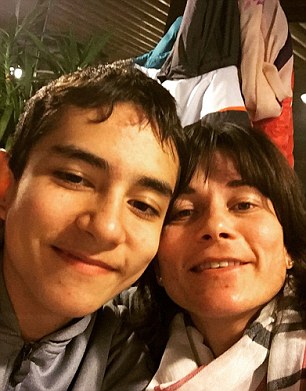
Chusovitina and her son
References
- Olympedia — Oksana Chusovitina Biography and Olympic Results
- International Gymnastics Federation (FIG) — Athlete Profile
- Olympics.com — “Chusovitina: The Gymnast Who Wouldn’t Quit” (2021)
- BBC Sport — “Oksana Chusovitina: The Mother Who Competed at Eight Olympics” (2021)
- Deutsche Welle — “From Uzbekistan to Germany: Chusovitina’s Journey” (2008)