The Gobi Marathon That Two Countries Forgot

# The Marathon Erased by Two Nations
September 1962. The Gobi Desert. Temperature: above 35 degrees Celsius.
A marathon race took place on the border. The starting line was at Zamyn-Üüd on the Chinese side. The finish line was at Erenhot on the Mongolian side. The distance was 42.195 kilometers—but that number was not published in any official document. It was retrieved decades later from the crumbling pages of a notebook kept by a Mongolian sports researcher. The course was a gravel road across the Gobi. No spectators. No aid stations. No timing clock. On either side, a handful of men in military uniforms stood watching.
The race was part of a “China-Mongolia Border Friendship Meet”—1962, a year when two socialist neighbors still maintained a surface temperature of diplomatic goodwill. By then, the Sino-Soviet split had already gone public. Mongolia was caught in the vise. This race, staged on the border, was less a sporting exchange than a political symbol. But the men on the starting line did not know that. They only knew they were running a marathon today.
Fewer than ten men toed the line. One of them was a Mongolian named Dambadarjaagiin Baatar. His age was uncertain—some sources say twenty-five, others say thirty. He was already known in Mongolian distance running circles, a national marathon champion with no domestic rivals. But beyond Mongolia’s borders, the country’s sporting presence was almost nonexistent. Before 1962, Mongolia had never sent an athlete to the Olympics. Mongolian sports history existed at the edge of the world, so quiet it barely had words.
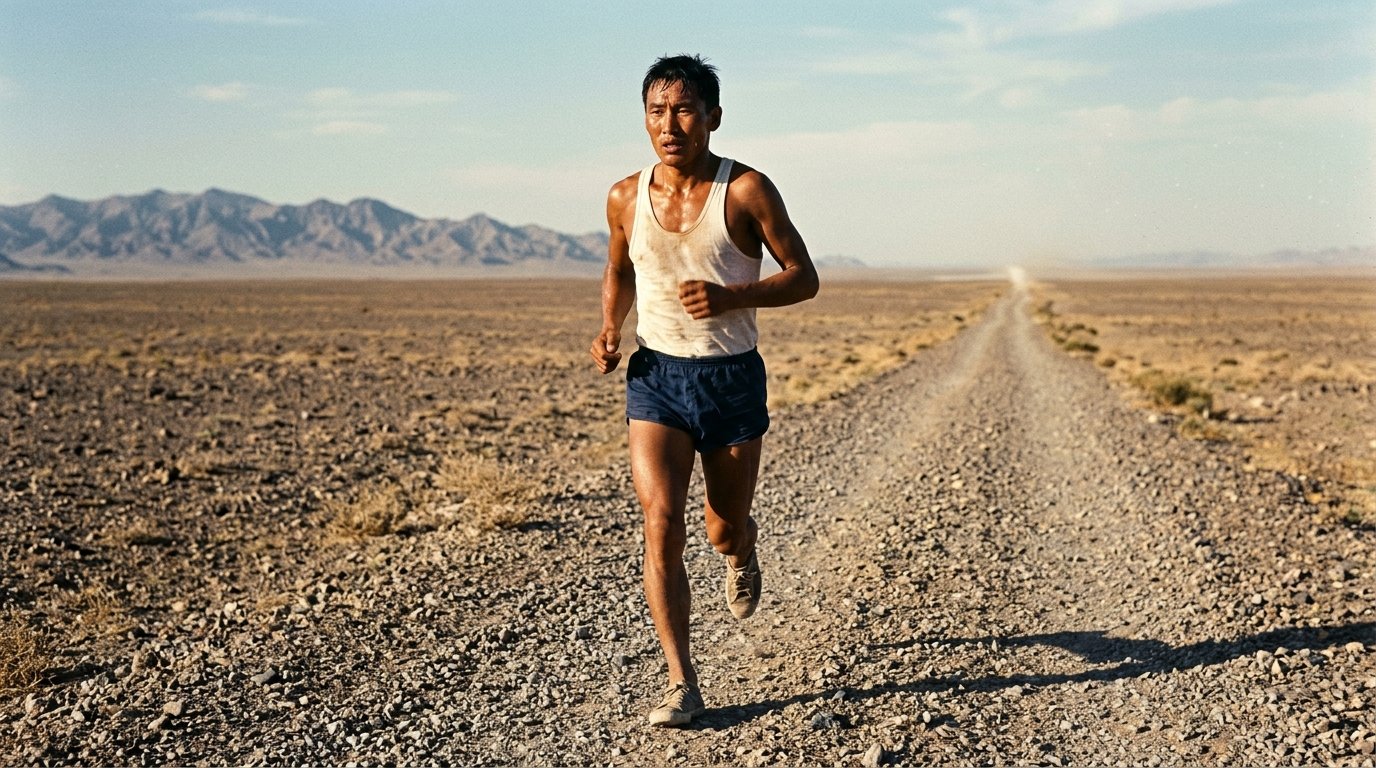
Baatar won the race. He ran ahead, dropped every Chinese competitor, and crossed the finish line first. His time was roughly two hours and forty minutes—again unofficial, recorded on a wristwatch by a Mongolian translator standing near the finish. No official result. No medal. Photographs: uncertain. The race record—in the Chinese sports archive, it was abbreviated to a single entry. In the Mongolian sports archive, it was summarized and set aside. The 1962 China-Mongolia Border Friendship Marathon disappeared from both countries at the same time.
Why? Because 1962 was the year the Sino-Soviet split became irreparable. Because Mongolia, under immense pressure, was forced to choose—and chose the Soviet side. Because the outcome of a border friendship race, in the face of geopolitics, had to be forgotten.
Baatar was not forgotten. But he was placed in a strange position. In Mongolia, he remained the most respected distance runner in the country. Two years later, at the 1964 Tokyo Olympics—Mongolia’s first-ever Olympic appearance—Baatar stood on the marathon start line wearing the Mongolian colors. He finished eighth. Mongolia’s first top-eight Olympic finish. History was supposed to remember him.
But outside Mongolia, no one knows his name. The Olympic results sheet reads “Baatar, D.”—an abbreviation that looks like a placeholder on a form, not a man who won a marathon across the Gobi with no one watching. His athletic career continued for several more years. He retired and became a coach. The year of his death varies across sources—a small footnote in the uneven record-keeping of Mongolian sport during the Cold War.
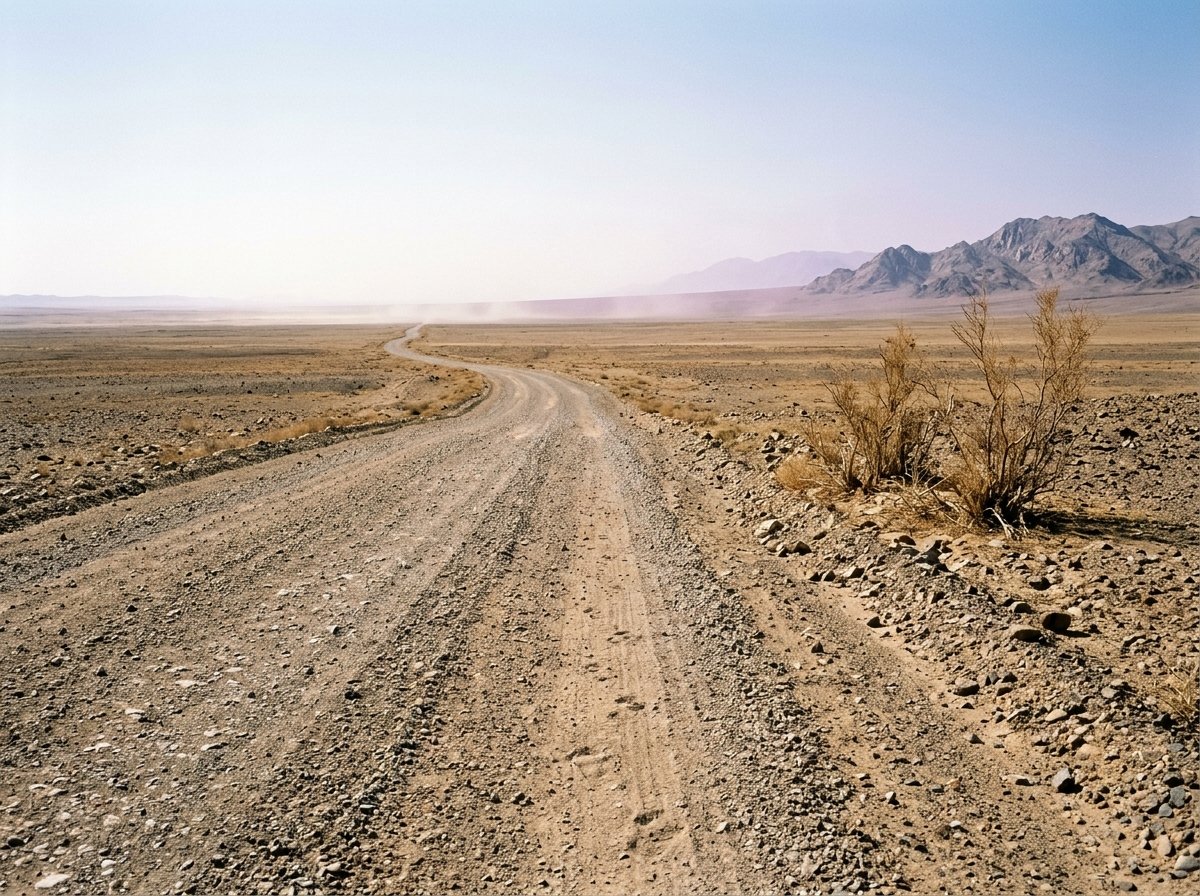
The 1962 race, the gravel road across the Gobi—it is still there. The direction from Zamyn-Üüd to Erenhot has not changed. If you stand on that road today, what you see is a desolate stretch of desert, scoured flat by the wind. At noon in summer, the ground temperature can exceed fifty degrees. Sandstorms sweep through occasionally and erase every old footprint.
Baatar ran on this road. He beat every man who lined up. No one kept his time—except a Mongolian translator pressing a watch button. No one gave him a medal—except the wind of the Gobi. Both countries’ sports histories deleted the race, but he still showed up in Tokyo in 1964, stood on the Olympic start line, and ran eighth.
He was not the first to leave a mark anywhere. He was the kind of person who ran through a desert, won everything before anyone was keeping score, and kept running. On that gravel road across the 1962 China-Mongolia border, there was no timer, no crowd, no photographer at the finish line. The wind was strong, lifting sand off the surface and stinging his legs with every gust. Every step sank into loose gravel.
He was running at the front.
**Tags:** #DambadarjaagiinBaatar #MongolianMarathon #1962BorderRace #Tokyo1964 #ForgottenCompetitions
**Sources:** 1964 Tokyo Olympic marathon official results; Mongolian national sports archive fragmentary records on Baatar; Mongolia-China sports exchange history scholarship (Mongolian and English abstracts).